Count the Objects and Write the Number Worksheet Grade 1 Free PDF
Updated: October 2026
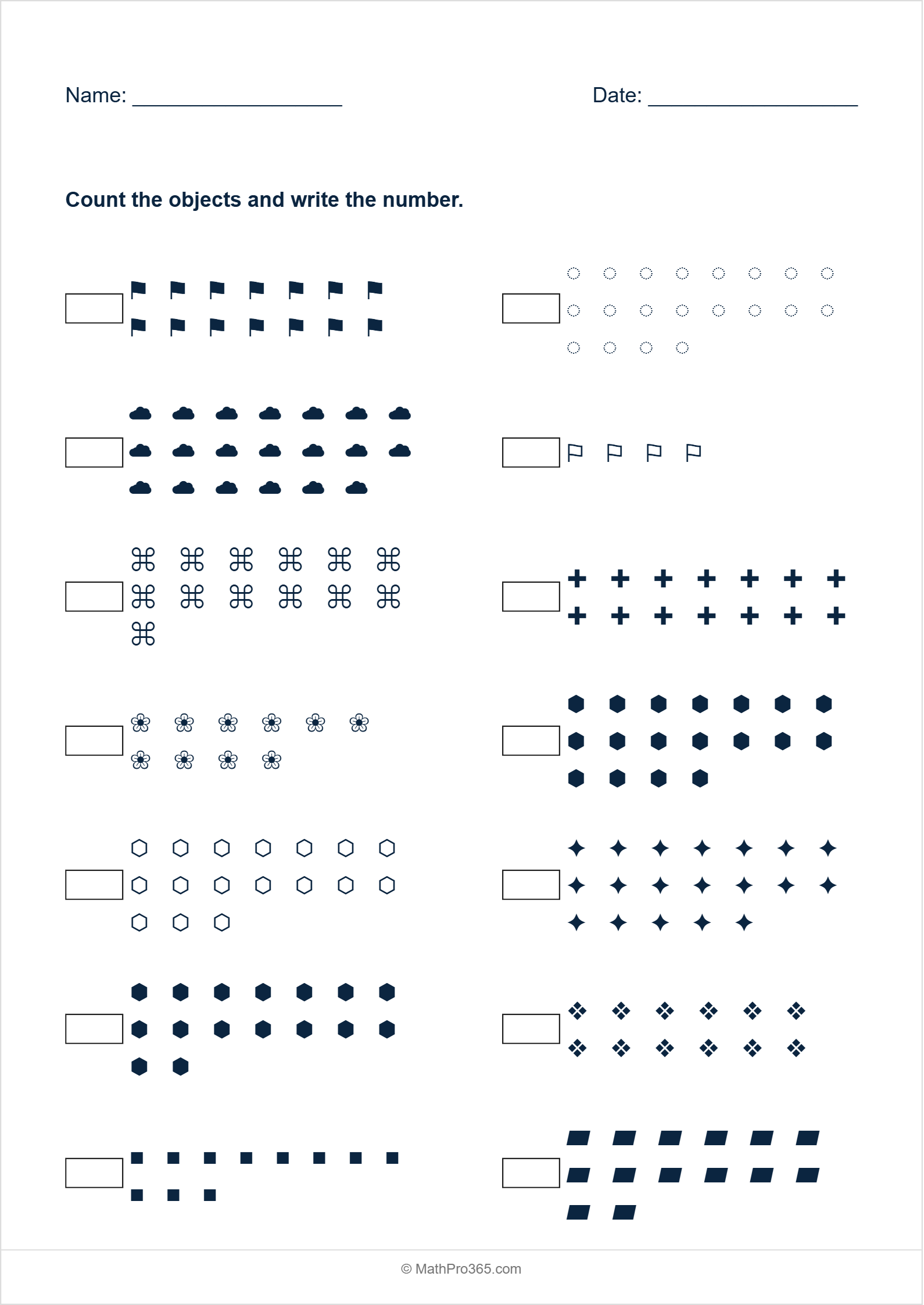
This Grade 1 math worksheet helps children practice counting objects and writing the correct number. It strengthens early number recognition and counting skills with simple visual exercises.
More Counting Objects Worksheets (Grade 1) →Counting Objects and Writing the Number for Grade 1
Learning to count objects and write the correct number is one of the first and most important milestones in early mathematics. This worksheet gives young learners an opportunity to carefully observe groups of pictures, count each object one by one, and record the matching numeral. As children complete these activities, they strengthen their understanding that numbers represent quantities, not just symbols written on a page.
Designed for Grade 1 learners, this printable activity encourages careful counting, visual attention, and number recognition. The objects are arranged in different patterns and groups so students practice counting accurately even when the pictures are not lined up in perfect rows.
Building Strong Number Sense
Number sense develops when children repeatedly connect real quantities with written numbers. Rather than memorizing numerals alone, students learn that every number tells exactly how many objects are in a group.
For example, if a child counts:
- 🍎 🍎 🍎 🍎 = 4
- ⭐ ⭐ ⭐ ⭐ ⭐ ⭐ = 6
- 🐦 🐦 🐦 🐦 🐦 🐦 🐦 = 7
They begin to recognize that each counted object matches one counting word. This important concept, called one-to-one correspondence, forms the basis for all future math learning.
Connecting Counting and Numerals
When students count twelve objects and write "12," they are linking a concrete quantity with an abstract symbol. Repeating this process with many different groups helps children recognize numbers quickly and confidently.
Why Counting Skills Matter
Counting appears in everyday life more often than many children realize. Whether they are sharing snacks, collecting toys, organizing school supplies, or helping set the dinner table, counting allows them to solve practical problems independently.
Strong counting skills also prepare students for:
- Addition
- Subtraction
- Comparing numbers
- Place value
- Measurement
- Graphing
- Money concepts
- Time
Mastering counting now makes later math lessons much easier.
Learning Goals for This Worksheet
While completing this activity, students work toward several important learning objectives.
- Count objects carefully.
- Use one-to-one correspondence.
- Recognize written numerals.
- Write numbers correctly.
- Develop careful observation skills.
- Improve concentration.
- Strengthen visual discrimination.
- Build confidence with early math.
Examples of Careful Counting
Children often benefit from seeing simple examples before working independently.
Example 1:
● ● ● ● ●
Count: 1, 2, 3, 4, 5
Write: 5
Example 2:
▲ ▲ ▲ ▲ ▲ ▲ ▲ ▲
Count: 1 through 8
Write: 8
Example 3:
★ ★ ★ ★ ★ ★ ★ ★ ★ ★
Write: 10
These examples reinforce the connection between counting objects and recording the correct numeral.
Helpful Counting Strategies
Young learners sometimes rush through counting and accidentally skip objects or count the same picture twice. Teaching simple strategies helps improve accuracy.
Point to Each Object
Encourage children to touch each picture with a finger or pencil while saying each counting number aloud.
Move Across the Page
Students should count from left to right whenever possible. If the objects are arranged in rows, they should finish one row before moving to the next.
Count Slowly
Slowing down helps children avoid mistakes, especially when counting groups with more than ten objects.
Double Check the Total
After writing the number, students can count the objects again to confirm their answer.
Common Mistakes Students Make
Beginning mathematicians often experience similar challenges. Recognizing these mistakes allows adults to provide helpful guidance.
- Skipping one object while counting.
- Counting one picture twice.
- Writing the wrong numeral after counting correctly.
- Starting in the middle instead of the beginning.
- Counting too quickly.
- Losing track when objects are spread apart.
These mistakes are a normal part of learning and usually improve with regular practice.
Using This Worksheet in the Classroom
This printable worksheet works well during math centers, independent practice, partner activities, or small-group instruction.
Teachers might begin by modeling one problem together. Students can discuss how they counted before completing the remaining questions independently.
During small-group lessons, educators can observe counting habits closely and provide immediate feedback when students lose track or miscount.
Partner Counting Activity
Pair students together.
- One student counts aloud.
- The partner watches carefully.
- Both agree on the final number.
- The first student writes the numeral.
- Partners switch roles.
This cooperative approach builds mathematical communication and confidence.
Ideas for Homeschool Learning
Families can easily extend this worksheet beyond the printed page by finding opportunities to count real objects throughout the day.
Children might count:
- Books on a shelf.
- Spoons in the kitchen.
- Toy cars.
- Building blocks.
- Stuffed animals.
- Leaves outside.
- Crayons in a box.
- Steps while climbing stairs.
These everyday experiences reinforce the same counting skills practiced on the worksheet.
Supporting Children at Home
Parents can make counting enjoyable by turning ordinary routines into simple math games. Instead of asking only for the total, encourage children to explain how they counted.
Helpful questions include:
- Where did you start counting?
- Did you count every picture once?
- Can you check your answer again?
- How did you know the final number?
Talking through the counting process helps children become more thoughtful and accurate mathematicians.
Skills Strengthened Through This Activity
Although this worksheet focuses on counting objects, students develop many additional abilities.
- Visual tracking
- Fine motor control
- Number writing
- Attention to detail
- Logical thinking
- Observation skills
- Persistence
- Independent work habits
Each completed problem provides another opportunity to combine mathematical thinking with careful observation.
Extension Activities Beyond the Worksheet
After students finish counting the printed pictures, they can continue practicing in creative ways.
- Draw a group of 9 stars and label it.
- Create a collection of 12 circles.
- Ask a friend to count your drawing.
- Find 15 classroom objects and record the number.
- Sort buttons by color and count each group.
- Count coins, cubes, or paper clips.
These activities reinforce counting while encouraging creativity and hands-on exploration.
Encouraging Mathematical Confidence
Children become more confident when they experience success with manageable challenges. Praise careful counting rather than speed. If a mistake occurs, encourage students to recount instead of simply correcting the answer for them.
Celebrating effort helps learners understand that improving their counting skills comes through practice, patience, and persistence.
Frequently Asked Questions
How can I help my child avoid counting the same object twice?
Encourage your child to point to each picture while counting aloud and move in a consistent direction across the page.
Why are the objects arranged in different patterns?
Different layouts help students practice counting accurately instead of relying on memorized patterns or rows.
Should students recount after writing the answer?
Yes. Checking the count is an excellent habit that improves accuracy and builds confidence.
What should I do if my child still struggles with counting larger groups?
Practice with smaller collections first, then gradually increase the number of objects as confidence grows. Hands-on materials such as blocks or counters can also make counting easier.
Download and Print
This printable Grade 1 counting worksheet offers meaningful practice for developing number recognition, one-to-one correspondence, and accurate counting skills. Whether used in the classroom, during homeschool lessons, as homework, or for extra practice, it provides young learners with valuable opportunities to strengthen foundational math abilities. Download, print, and enjoy helping children build confidence as they count each group of objects and write the correct number.
Worksheet Preview
Today's Challenge
Frequently Asked Questions
Who is this worksheet for?
This worksheet is designed for Grade 1 students practicing counting-objects skills.
Can I print this worksheet?
Yes. The worksheet is available as a printable PDF download.
Can teachers use this worksheet in class?
Yes. Teachers, homeschool users and parents can use it for classroom practice and homework.
Related Worksheets
Counting Objects 1 to 9 Worksheet Grade 1 Sheet 2 Free PDF
Grade 1 Counting Objects to 10 Worksheet | Free Printable
Grade 1 Counting Objects Worksheet | Numbers 1-20
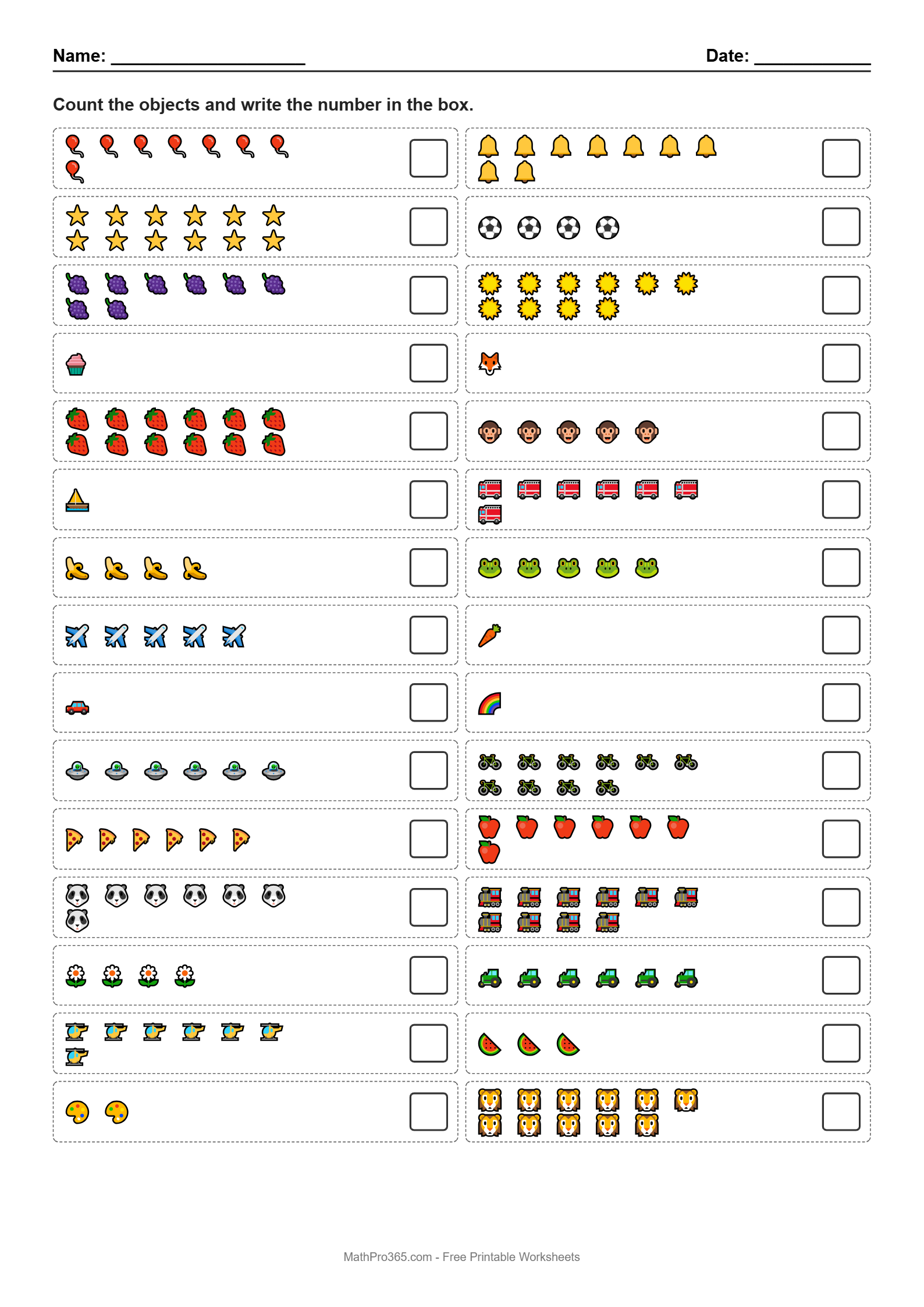
Grade 1 Counting Objects & Number Sequence Worksheet
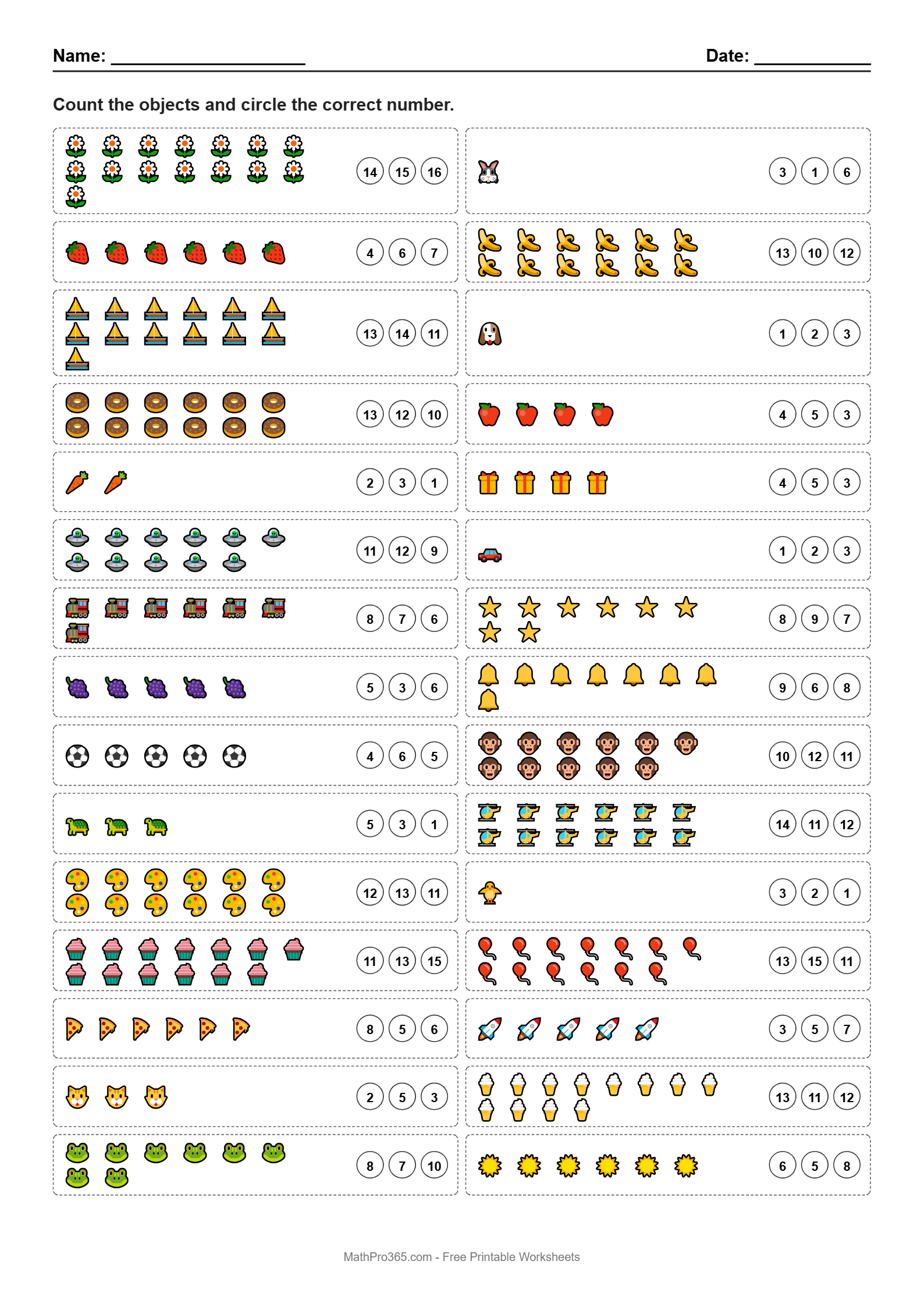
Grade 1 Counting Objects & Number Matching Worksheet
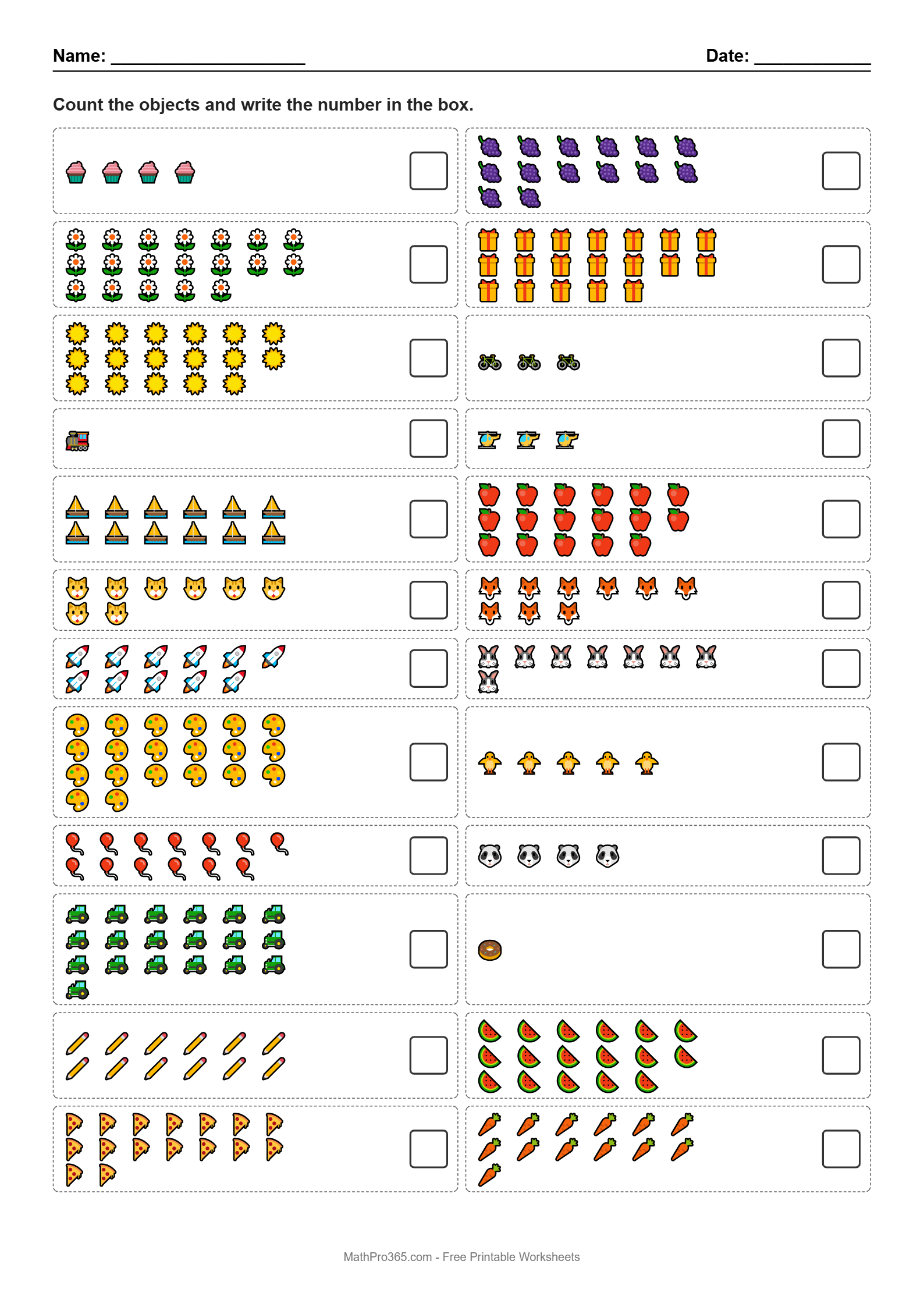
Grade 1 Counting Objects and Number Writing Worksheet
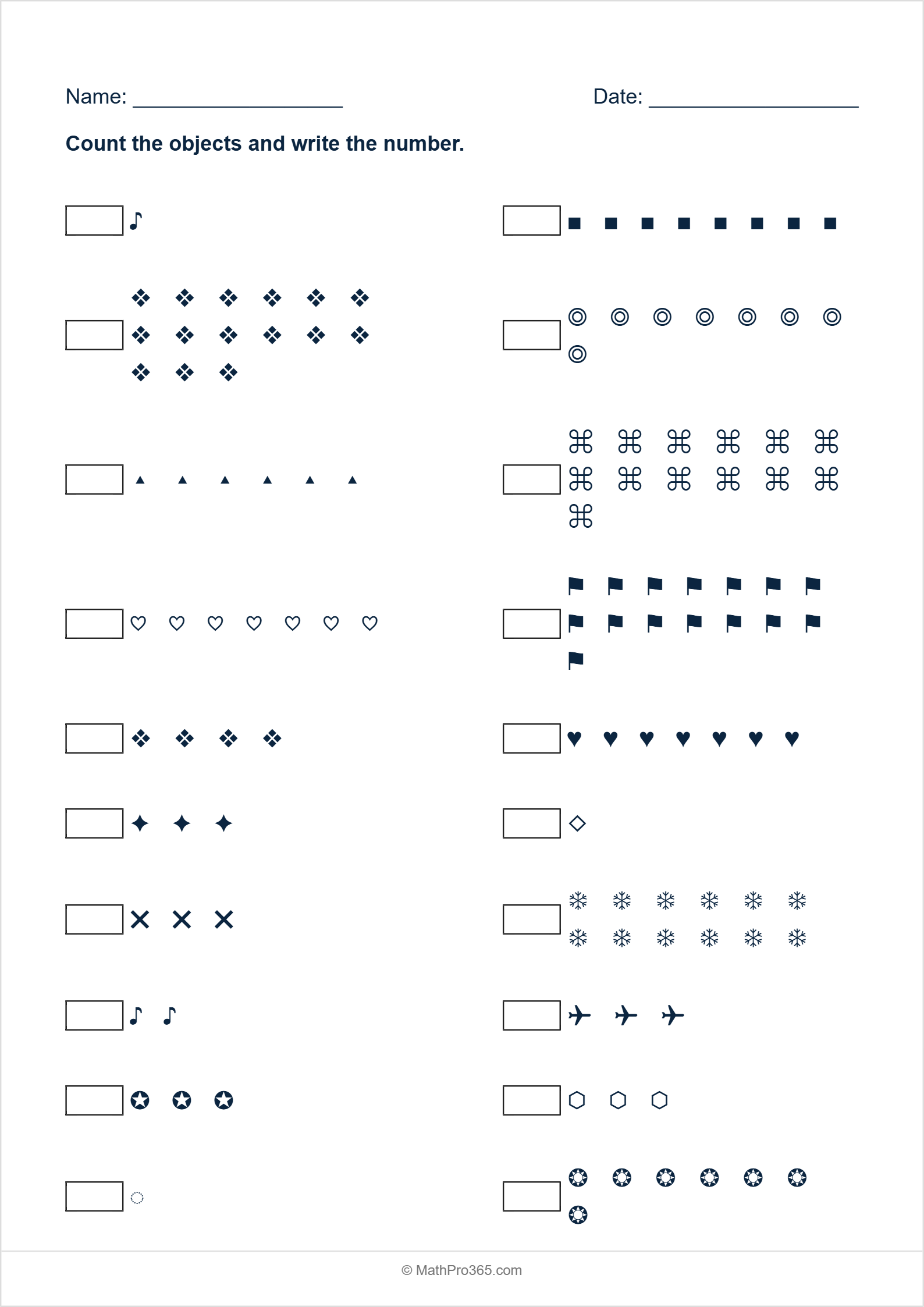
Grade 1 Counting Objects Worksheet | Math Practice
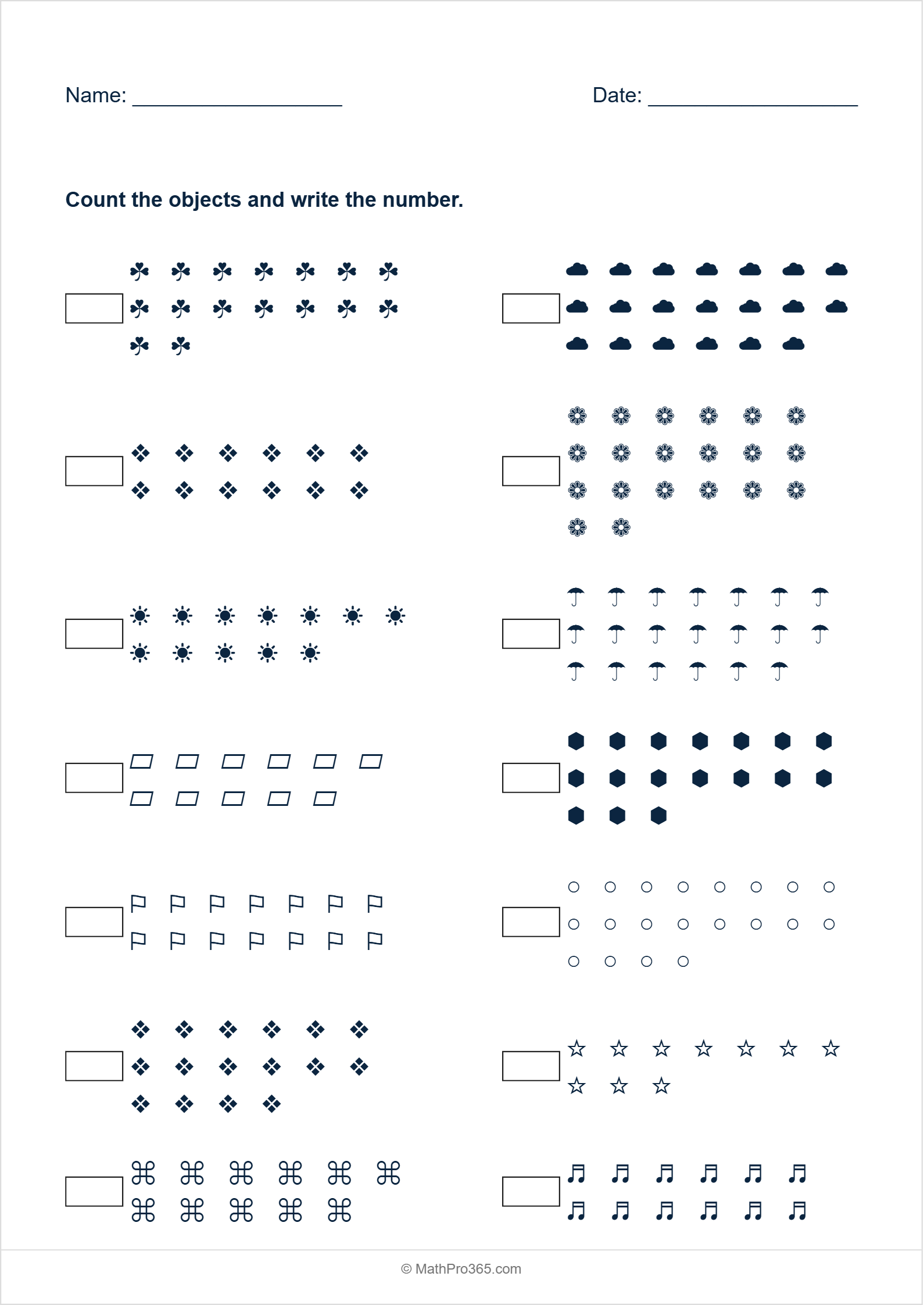
Count and Write Objects 1 to 20 Worksheet Grade 1 Free PDF
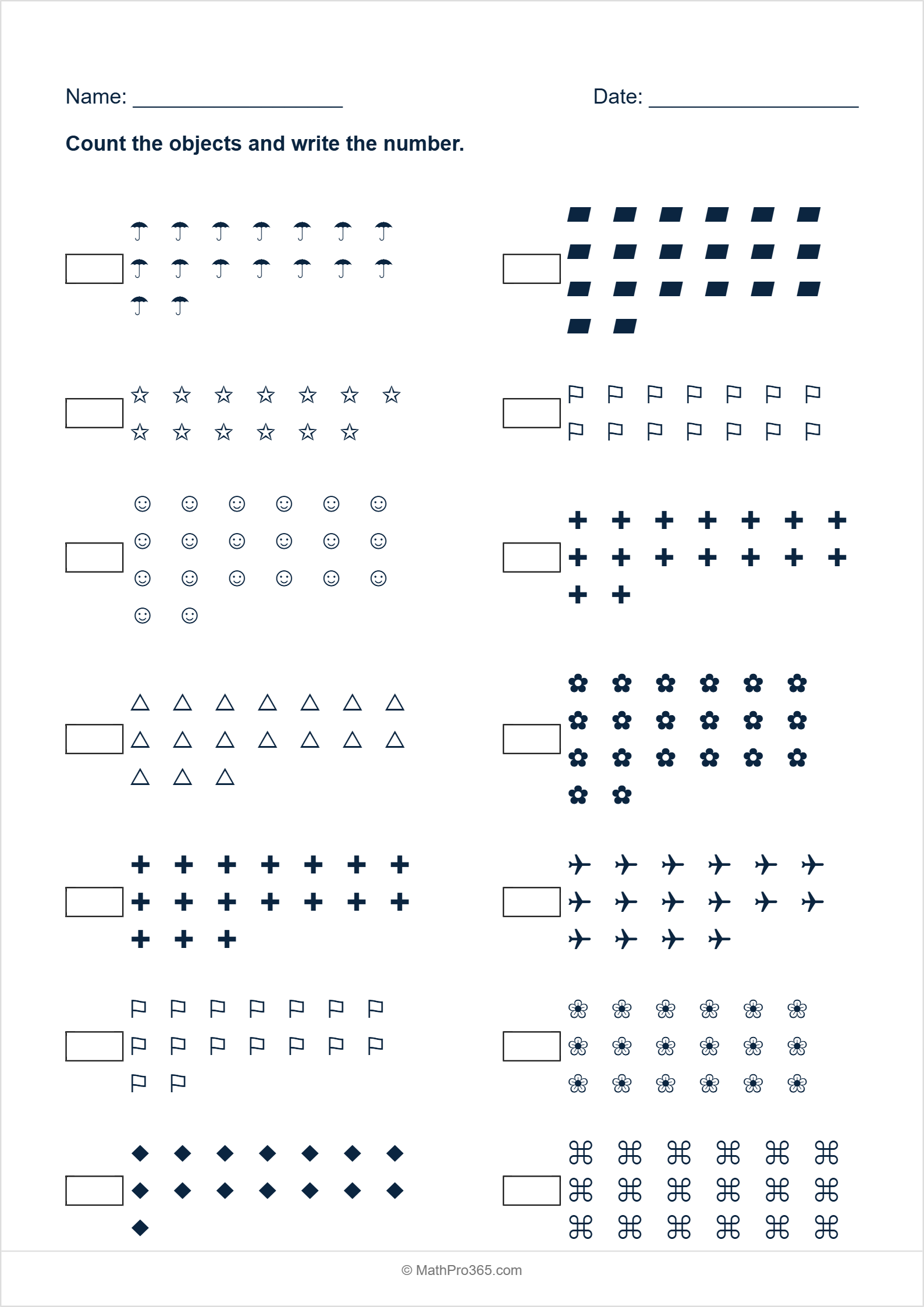
Counting Objects 11 to 20 Practice Sheet Grade 1
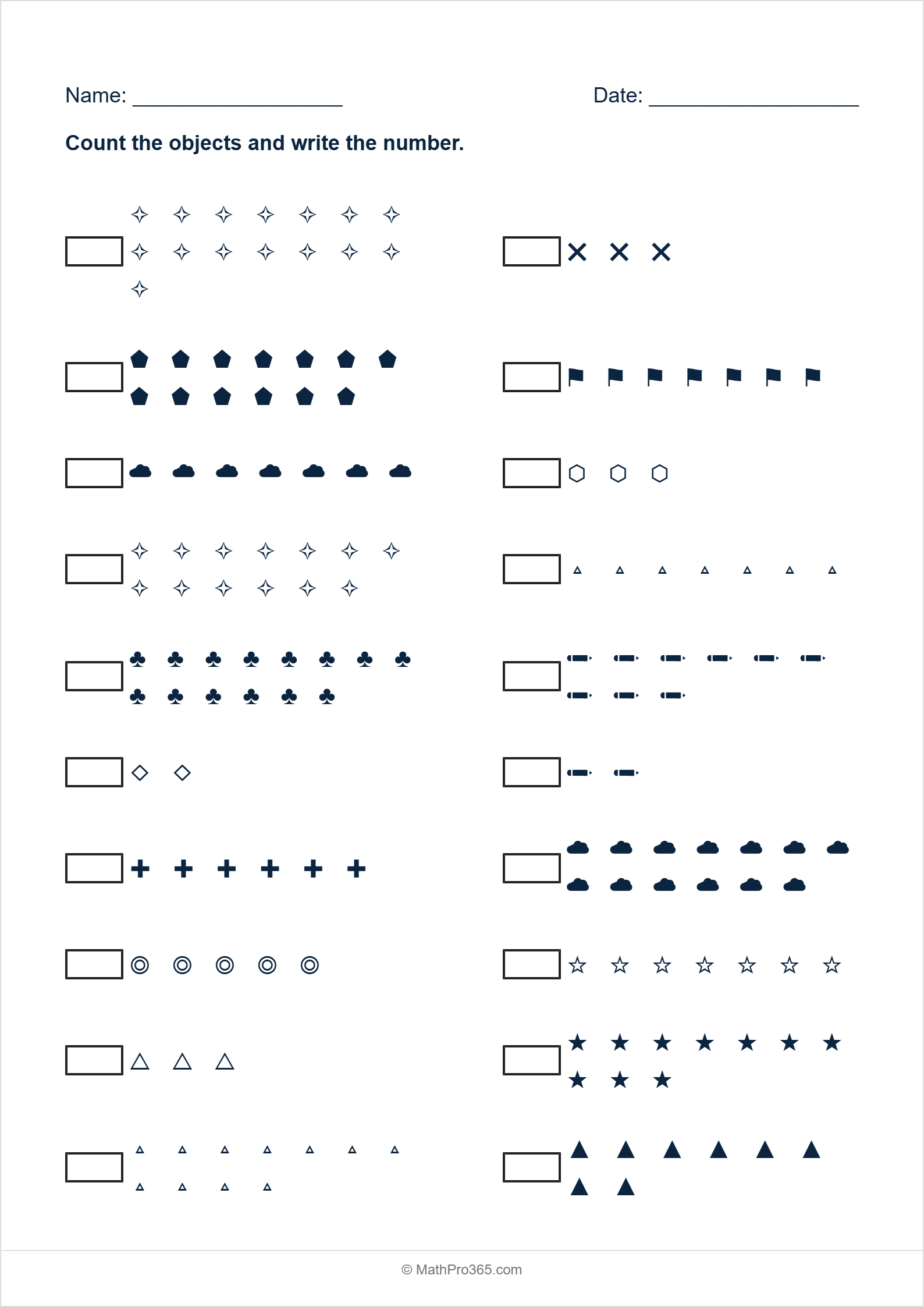
Grade 1 Counting Objects & Number Writing Worksheet
Interactive worksheets can be customized before downloading.