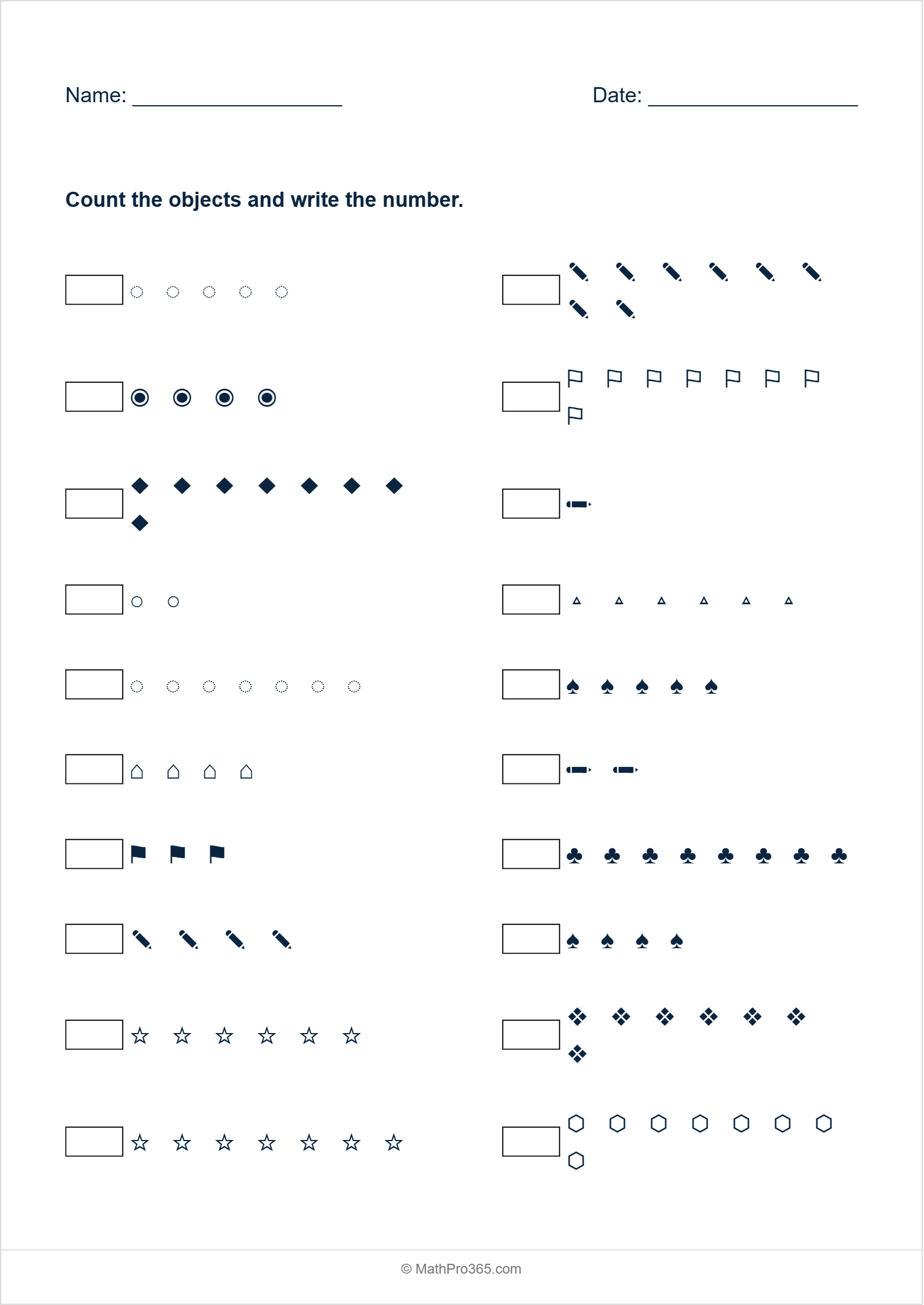
Counting Objects 1 to 9 Worksheet Grade 1 Sheet 2 Free PDF
Updated: October 2026
Support long-term math success through structured counting accuracy practice with this classroom resource.
More Counting Objects Worksheets (Grade 1) →Counting Objects 1 to 9 Worksheet Grade 1 Sheet 2 Free PDF
Every small counting success builds a stronger foundation for future math learning. When children confidently recognize and count groups of objects, they begin connecting numbers with real quantities instead of simply reciting them from memory. This printable worksheet gives first-grade learners opportunities to carefully observe pictures, count each object one by one, and record the correct numeral. The activities focus on quantities from 1 through 9, making them ideal for strengthening early number sense without overwhelming young learners. The worksheet includes a variety of familiar pictures that keep practice engaging while encouraging careful observation and accurate counting. :contentReference[oaicite:0]{index=0}
Understanding Counting from 1 to 9
Counting is one of the first mathematical skills children develop. Before students can confidently add, subtract, compare numbers, or solve word problems, they need a solid understanding that every number represents a specific amount. This worksheet emphasizes counting actual objects instead of simply identifying written numerals.
As children point to each picture while counting aloud, they strengthen one-to-one correspondence. This important skill means every object is counted exactly once and matched with one number word. Once every item has been counted, the final number spoken tells how many objects are in the group.
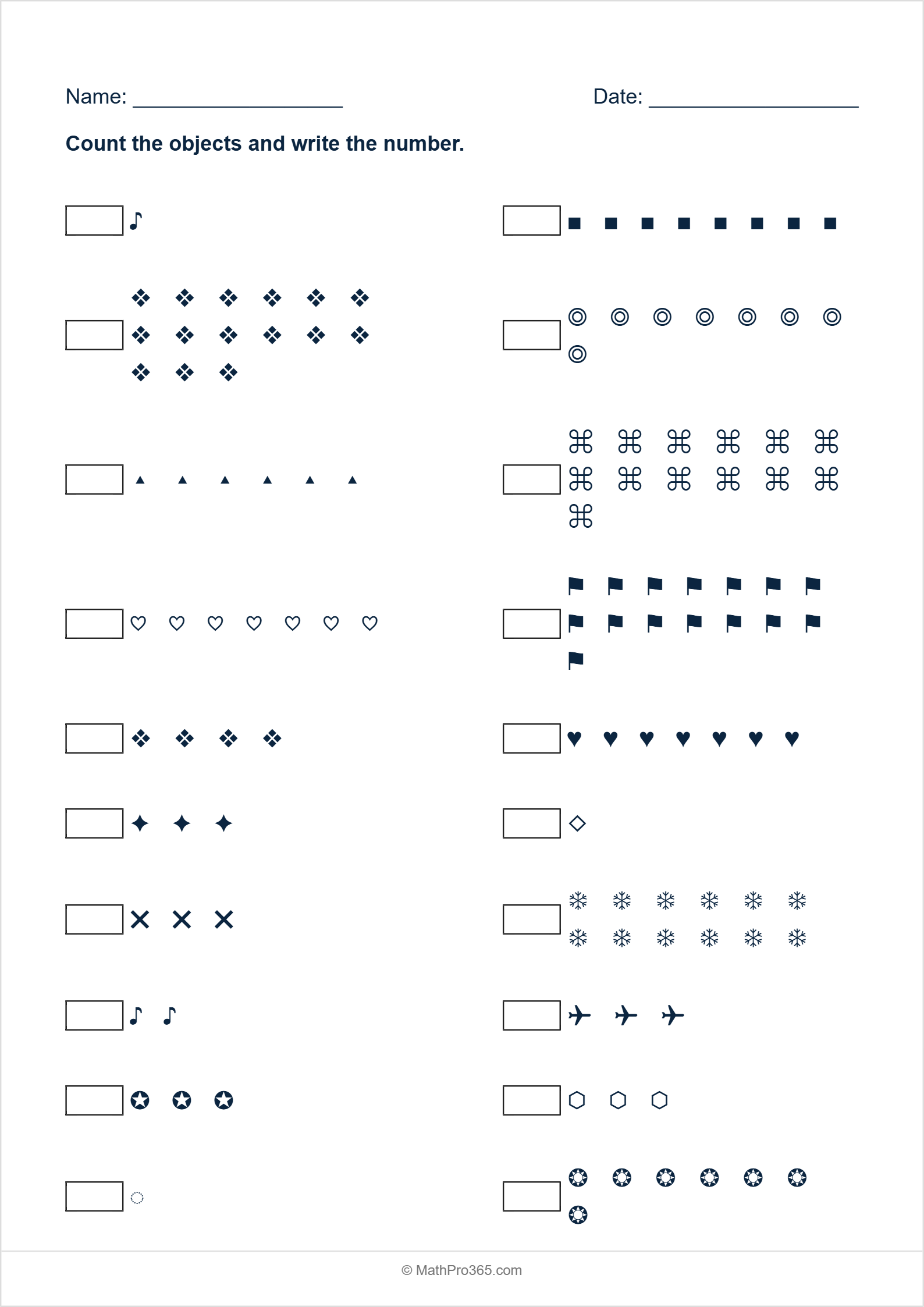
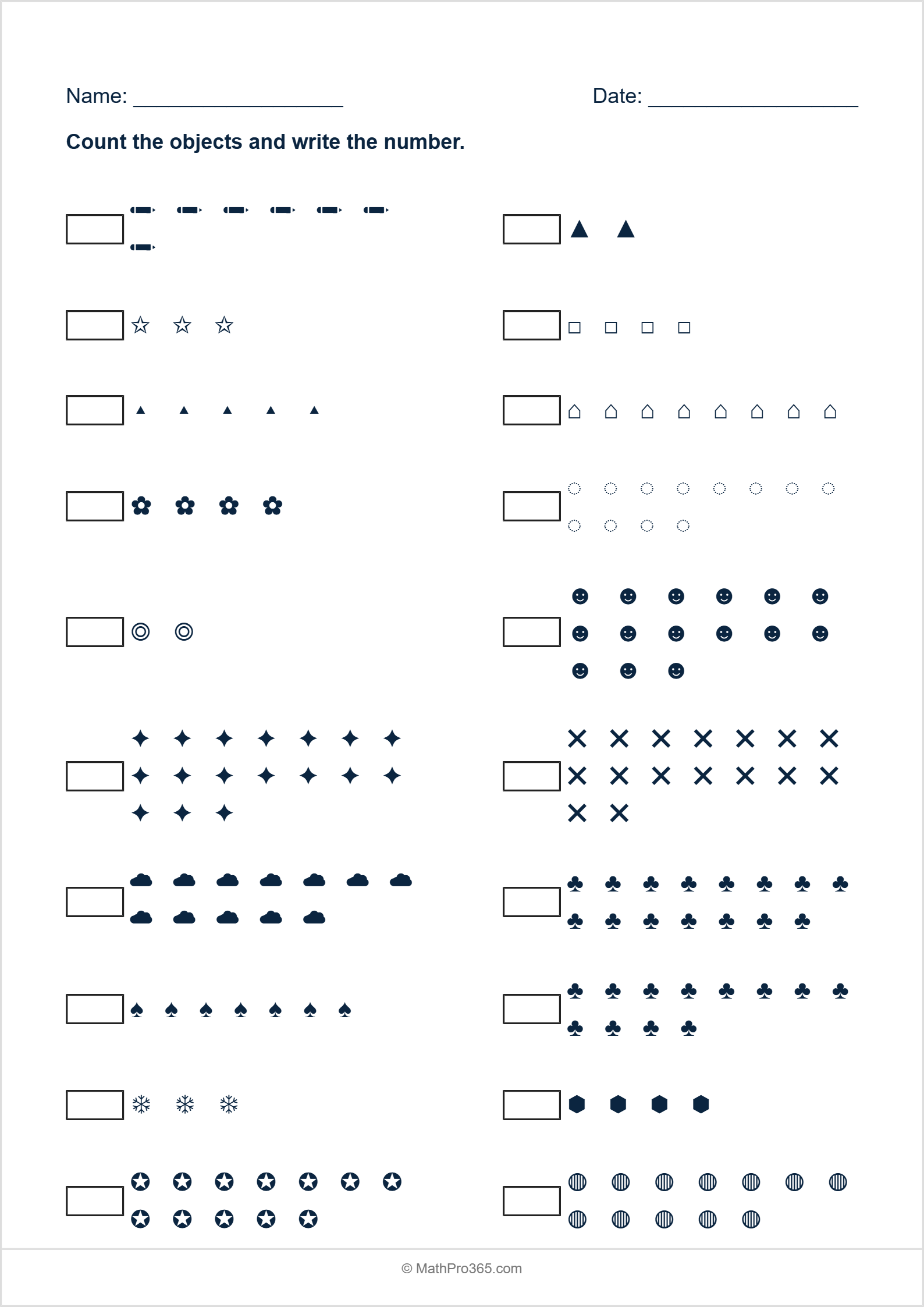
The worksheet includes several different picture sets such as stars, pencils, shapes, flags, playing card symbols, circles, and other simple objects. Changing the images encourages children to focus on counting rather than memorizing patterns, helping develop flexible number recognition across many situations.
Why Number Sense Matters
Number sense goes beyond memorizing numbers. It helps children understand what numbers actually mean and how they relate to one another. When students repeatedly count groups containing between one and nine objects, they begin recognizing quantities more quickly and understanding that larger numbers represent larger collections.
Strong number sense supports many future math skills, including addition, subtraction, skip counting, place value, measurement, fractions, and even multiplication. Early practice with counting also builds confidence, making later math lessons feel more familiar and approachable.
Children who understand quantities instead of simply repeating number words often become more accurate problem solvers because they can visualize numbers in meaningful ways.
Strategies for Accurate Counting
Young learners sometimes rush through counting activities. Encouraging slow, thoughtful counting helps reduce mistakes and builds confidence. Parents and teachers can remind children to use simple counting strategies while completing the worksheet.
- Point to each object as it is counted.
- Say each number aloud clearly.
- Avoid counting the same picture twice.
- Check the total by counting again if unsure.
- Write the matching numeral carefully inside the box.
These habits develop careful mathematical thinking that will benefit students throughout elementary school.
Examples of Counting Objects
Simple examples help children connect counting with everyday experiences. Consider practicing with familiar items before or after completing the worksheet.
- 🍎 Count 4 apples and write the number 4.
- 🖍 Count 7 crayons and write the number 7.
- ⭐ Count 6 stars and write the number 6.
- 📚 Count 2 books and write the number 2.
- 🧸 Count 9 toys and write the number 9.
Using everyday objects reinforces the same counting concepts found throughout the printable activity.
Common Mistakes Young Learners Make
Beginning counters often experience similar challenges. Recognizing these early allows adults to provide gentle guidance while encouraging independent thinking.
- Skipping an object while counting.
- Counting one picture more than once.
- Saying numbers out of order.
- Writing the wrong numeral after counting correctly.
- Guessing instead of recounting when uncertain.
Rather than immediately correcting mistakes, ask questions such as, "Can you point to each object while counting again?" This encourages children to discover and fix errors independently.
Ideas for Classroom Practice
Teachers can extend this worksheet into engaging classroom activities that reinforce counting concepts through movement and discussion.
One effective activity is partner counting. One student points to each object while another says the counting sequence aloud. They then switch roles and compare answers before checking together.
Another option is a counting station where students rotate through baskets containing classroom objects like cubes, counters, buttons, or blocks. After counting each collection, students write the matching numeral on a recording sheet.
Teachers may also display enlarged versions of picture groups and invite volunteers to explain how they counted carefully. Hearing different counting approaches strengthens mathematical communication skills.
Helpful Ideas for Parents and Homeschool Educators
Math practice becomes more meaningful when children connect counting with daily routines. Families do not need special materials to reinforce these skills at home.
Ask children to count spoons while setting the table, shoes near the door, fruit in a bowl, pencils in a backpack, or stuffed animals on a bed. Encourage them to say the total number after counting and compare it with the written numeral.
Short practice sessions of five to ten minutes are often more effective than longer lessons. Frequent opportunities to count everyday objects naturally strengthen understanding while keeping learning enjoyable.
Learning Objectives
After completing this worksheet and similar counting activities, children should be able to:
- Count collections containing 1 through 9 objects.
- Use one-to-one correspondence accurately.
- Recognize numerals from 1 to 9.
- Write the correct numeral after counting.
- Develop confidence with independent counting tasks.
- Improve attention to detail while observing picture groups.
Extend the Learning Beyond the Worksheet
Once children finish the printable page, continue building counting confidence through playful activities. Hide small objects around a room and ask children to find and count them. Roll a number cube and collect that many building blocks. Create simple picture cards with different numbers of stickers and ask children to identify the matching numeral.
Board games that involve moving spaces also reinforce counting naturally. Children practice saying numbers in sequence while connecting movement with quantity. Even outdoor activities, such as counting flowers, leaves, birds, or playground steps, provide valuable opportunities to strengthen early math skills.
As children become more comfortable counting groups up to nine, encourage them to compare collections by asking questions such as, "Which group has more?" or "Which group has fewer?" These conversations gently prepare learners for future comparison and addition concepts.
Frequently Asked Questions
What age is this counting worksheet designed for?
This worksheet is primarily intended for Grade 1 students, although kindergarten learners who are comfortable counting to 9 and older children needing extra practice can also benefit.
Why are only numbers from 1 to 9 included?
Limiting the range allows children to focus on accurate counting, one-to-one correspondence, and numeral recognition before progressing to larger quantities.
Should children count silently or aloud?
Counting aloud is recommended for most beginning learners because it helps coordinate number words with each object being counted. As confidence grows, students may naturally begin counting more quietly or mentally.
How often should children practice counting activities?
A few minutes of consistent practice several times each week is usually more beneficial than completing many worksheets at once. Regular exposure helps children build lasting number sense and counting confidence.
Download and Print
Print this Counting Objects 1 to 9 Worksheet Grade 1 Sheet 2 for classroom lessons, homework, math centers, tutoring sessions, or homeschool instruction. The simple layout allows children to focus on carefully counting each group of objects and writing the correct numeral. Repeating similar counting activities throughout the school year helps strengthen number recognition, improve accuracy, and build the confidence needed for future mathematical success.
Worksheet Preview
Today's Challenge
Frequently Asked Questions
Who is this worksheet for?
This worksheet is designed for Grade 1 students practicing counting-objects skills.
Can I print this worksheet?
Yes. The worksheet is available as a printable PDF download.
Can teachers use this worksheet in class?
Yes. Teachers, homeschool users and parents can use it for classroom practice and homework.
Related Worksheets
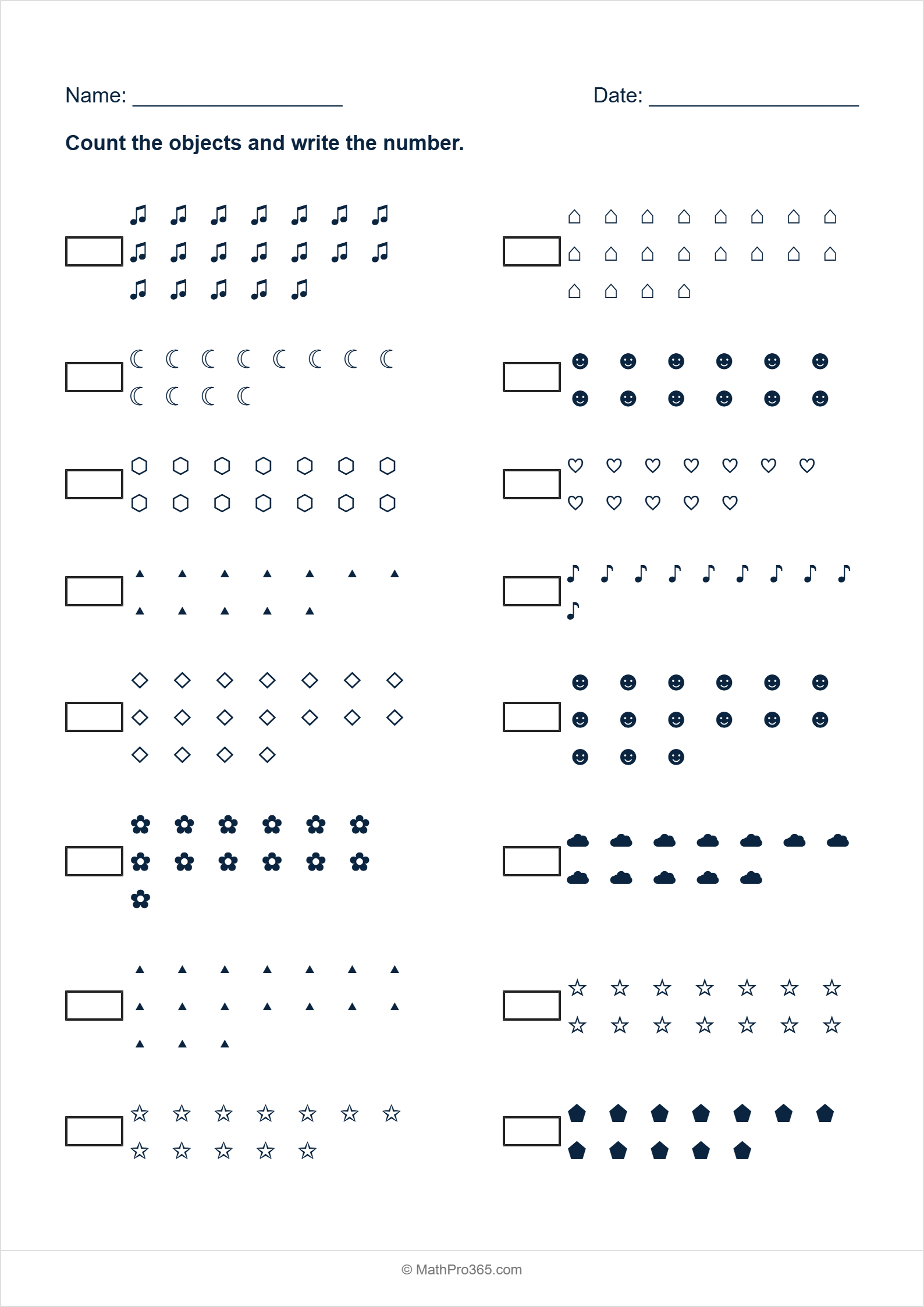
Count and Write Numbers to 20 Worksheet | Grade 1 Math
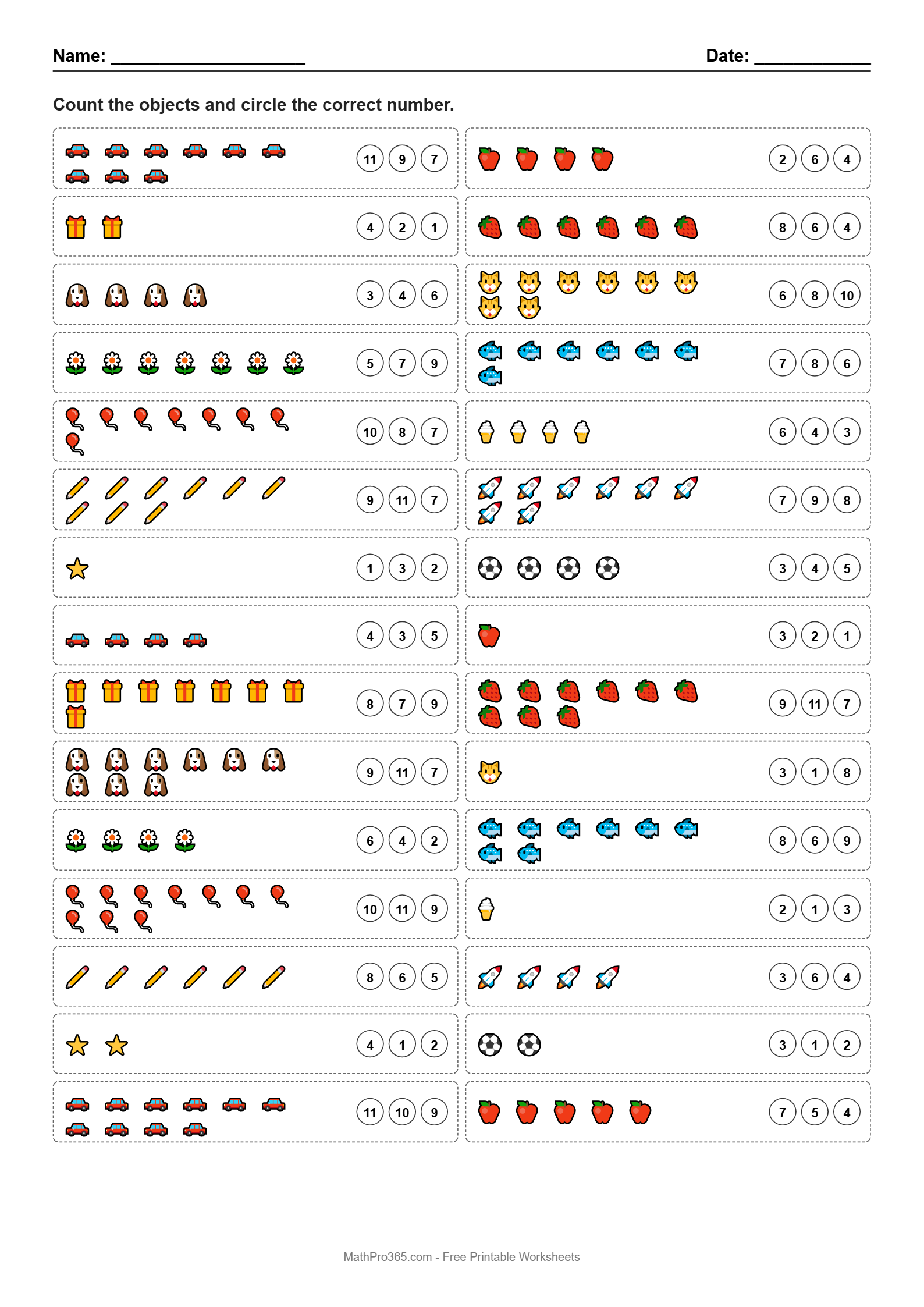
Grade 1 Counting Objects to 12 Worksheet | Free Printable
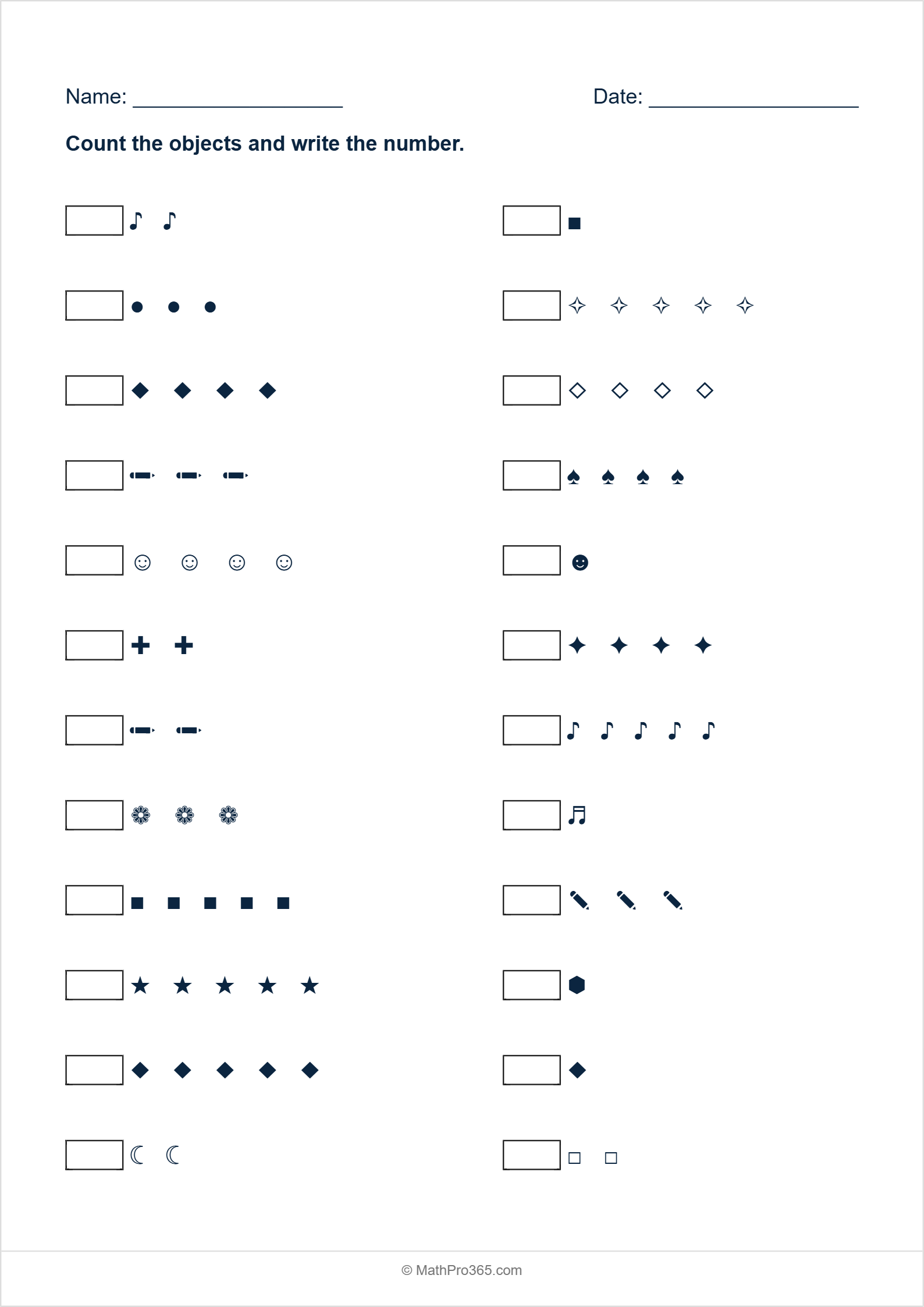
Grade 1 Counting Objects to 5 Worksheet | MathPro365
Grade 1 Counting Objects Worksheet | Math Practice
Count and Write Objects 1 to 20 Worksheet Grade 1 Free PDF
Grade 1 Counting Objects & Number Writing Worksheet
Counting Objects 11 to 20 Practice Sheet Grade 1
Count the Objects and Write the Number Worksheet Grade 1 Free PDF
Grade 1 Counting Objects Worksheet | Free Math Printable
Grade 1 Counting Objects Worksheet | Numbers 1-20
Interactive worksheets can be customized before downloading.