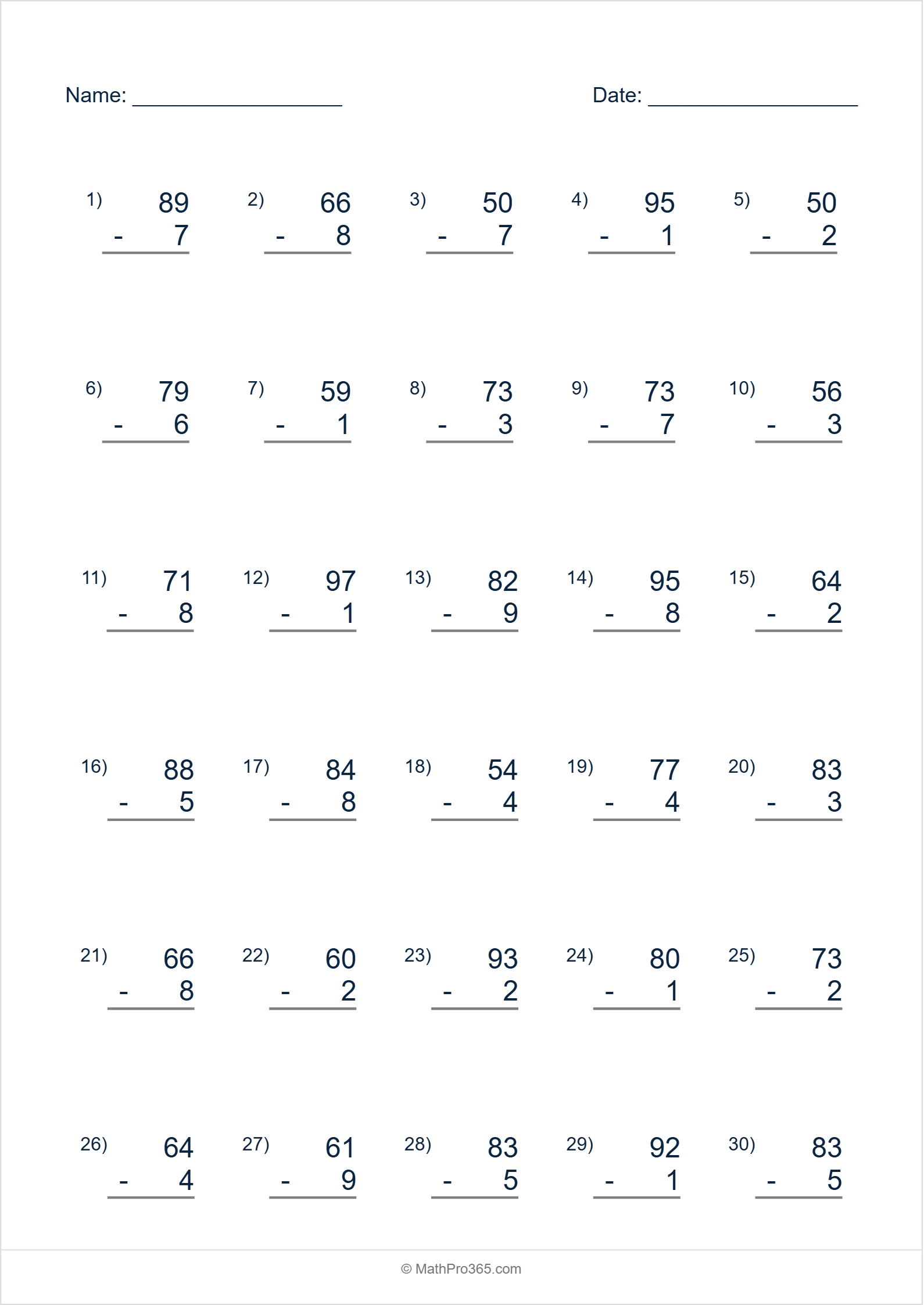
2 Digit (50-99) Minus 1 Digit (1-9) Subtraction Worksheet Grade 1 Sheet 2 Free PDF
Updated: October 2026
Ideal for homework, this printable math worksheet gives young learners extra opportunities to improve calculation accuracy.
More Subtraction Worksheets (Grade 1) →2 Digit (50-99) Minus 1 Digit (1-9) Subtraction Worksheet Grade 1 Sheet 2 Free PDF
Strong subtraction skills are built through many small successes. This printable Grade 1 worksheet gives children another opportunity to practice subtracting single-digit numbers from two-digit numbers between 50 and 99. Each problem encourages young learners to think carefully about place value while improving accuracy and confidence. The worksheet contains 30 subtraction questions that focus on straightforward subtraction without overwhelming students, making it an excellent choice for classroom practice, homework, math centers, tutoring sessions, or homeschool lessons. The printable page includes space for a student's name and date, making it easy to organize assignments and monitor progress over time. :contentReference[oaicite:0]{index=0}
Understanding the Math Concept
Subtraction tells us how many are left after taking some away. In this worksheet, every problem begins with a two-digit number from 50 to 99. A single-digit number from 1 to 9 is then subtracted. Since children have already learned to count and recognize numbers, this practice helps them connect counting skills with place value.
For example:
- 68 − 4 = 64
- 92 − 1 = 91
- 75 − 5 = 70
- 83 − 2 = 81
Children begin to notice that the tens digit often stays the same while the ones digit changes. As they solve more examples, they become more comfortable recognizing patterns and performing subtraction mentally.
Why Regular Practice Matters
Repeated subtraction practice strengthens number sense. Instead of relying only on counting backward, children gradually recognize subtraction facts more quickly. This frees up their attention for more challenging math concepts later, including regrouping, multi-digit subtraction, multiplication, and problem solving.
Consistent practice also develops confidence. Completing a page of carefully selected problems shows children that they are capable mathematicians. Small improvements each day often lead to noticeable growth over several weeks.
Teachers and parents can use worksheets like this one as quick daily reviews, warm-up activities, independent practice, or assessment tools to identify concepts that may need additional support.
Simple Strategies for Success
Young learners benefit from using clear problem-solving strategies rather than rushing through each question. Encourage children to work carefully and check each answer before moving on.
- Read the subtraction problem completely.
- Start with the larger number.
- Subtract only the ones digit.
- Keep the tens digit the same when possible.
- Double-check the answer by counting forward if needed.
For instance, to solve 87 − 5, a child can think: "Seven ones take away five ones leaves two ones, so the answer is 82." This type of thinking reinforces place value understanding.
Learning Objectives
After completing this worksheet several times, children should be able to:
- Subtract one-digit numbers from two-digit numbers with increasing accuracy.
- Recognize how subtraction changes the ones place.
- Develop stronger understanding of tens and ones.
- Improve speed without sacrificing accuracy.
- Build confidence solving independent subtraction problems.
- Apply subtraction skills in everyday situations.
Teacher Recommendations
This worksheet fits easily into a Grade 1 math lesson. Teachers may begin with a short review using a whiteboard or number line before distributing the printable page. After independent work, invite volunteers to explain how they solved selected problems. Listening to different strategies helps deepen mathematical understanding.
For small-group instruction, focus on children who still depend heavily on counting backward one number at a time. Encourage them to identify the tens digit first and then concentrate only on subtracting the ones.
The worksheet can also serve as a quick formative assessment. Reviewing completed pages helps identify common errors and determines whether students are ready for more advanced subtraction involving regrouping.
Ideas for Parents and Homeschool Educators
Math practice does not need to be limited to a worksheet. Families can reinforce subtraction skills throughout the day using simple conversations and everyday activities.
Try asking questions like:
- "You have 63 stickers and give away 2. How many remain?"
- "There are 84 crayons. We use 6 today. How many are left?"
- "We picked 71 apples and ate 5. How many do we still have?"
Connecting subtraction to familiar situations helps children understand that math is useful beyond the classroom.
Common Mistakes to Watch For
Beginning learners sometimes make predictable mistakes while practicing subtraction. Recognizing these errors early helps prevent misunderstandings from becoming habits.
- Subtracting the larger digit from the smaller digit regardless of position.
- Changing the tens digit when it should stay the same.
- Misreading the subtraction sign.
- Writing digits in the wrong place.
- Rushing and making simple calculation errors.
Encourage children to slow down, line up numbers carefully, and review each answer before moving to the next question.
Real-Life Connections
Subtraction appears in many everyday situations. Children naturally encounter opportunities to practice when shopping, cooking, organizing toys, or playing games.
Examples include:
- Counting how many books remain on a shelf after borrowing a few.
- Finding out how many building blocks are left after using several.
- Keeping score during family board games.
- Calculating how many snacks remain after sharing.
These experiences make subtraction meaningful and help children remember what they have learned.
Extension Activities
Once children finish the worksheet, continue the learning with engaging activities that strengthen understanding.
- Create subtraction flashcards using numbers between 50 and 99.
- Roll a number cube to decide how much to subtract from a two-digit number.
- Practice mental subtraction during car rides.
- Play a classroom or family subtraction challenge where players explain their thinking.
- Write simple subtraction word problems using favorite toys or animals.
These activities encourage flexibility and help children apply subtraction in different contexts.
Frequently Asked Questions
1. Who is this worksheet designed for?
This printable is designed primarily for Grade 1 learners who are practicing subtracting one-digit numbers from two-digit numbers between 50 and 99.
2. How long should children spend completing the worksheet?
Most children can complete the page in approximately 10 to 20 minutes, depending on their confidence and pace. Accuracy is more important than speed.
3. Should children use manipulatives while practicing?
Yes. Counters, connecting cubes, number lines, and base-ten blocks can help children visualize subtraction before they become comfortable solving problems mentally.
4. How often should this type of practice be used?
Short, regular practice sessions several times each week are generally more effective than completing many worksheets all at once. Frequent review helps strengthen long-term understanding.
Download and Print
Print this Grade 1 subtraction worksheet for extra classroom practice, homework, homeschool lessons, tutoring sessions, or independent review. The carefully selected problems provide focused practice with subtracting one-digit numbers from two-digit numbers between 50 and 99 while reinforcing place value, building number sense, and increasing confidence with basic subtraction skills. Children can complete the page independently or with guidance, making it a valuable addition to any elementary math program.
Worksheet Preview
Today's Challenge
Frequently Asked Questions
Who is this worksheet for?
This worksheet is designed for Grade 1 students practicing subtraction skills.
Can I print this worksheet?
Yes. The worksheet is available as a printable PDF download.
Can teachers use this worksheet in class?
Yes. Teachers, homeschool users and parents can use it for classroom practice and homework.
Related Worksheets
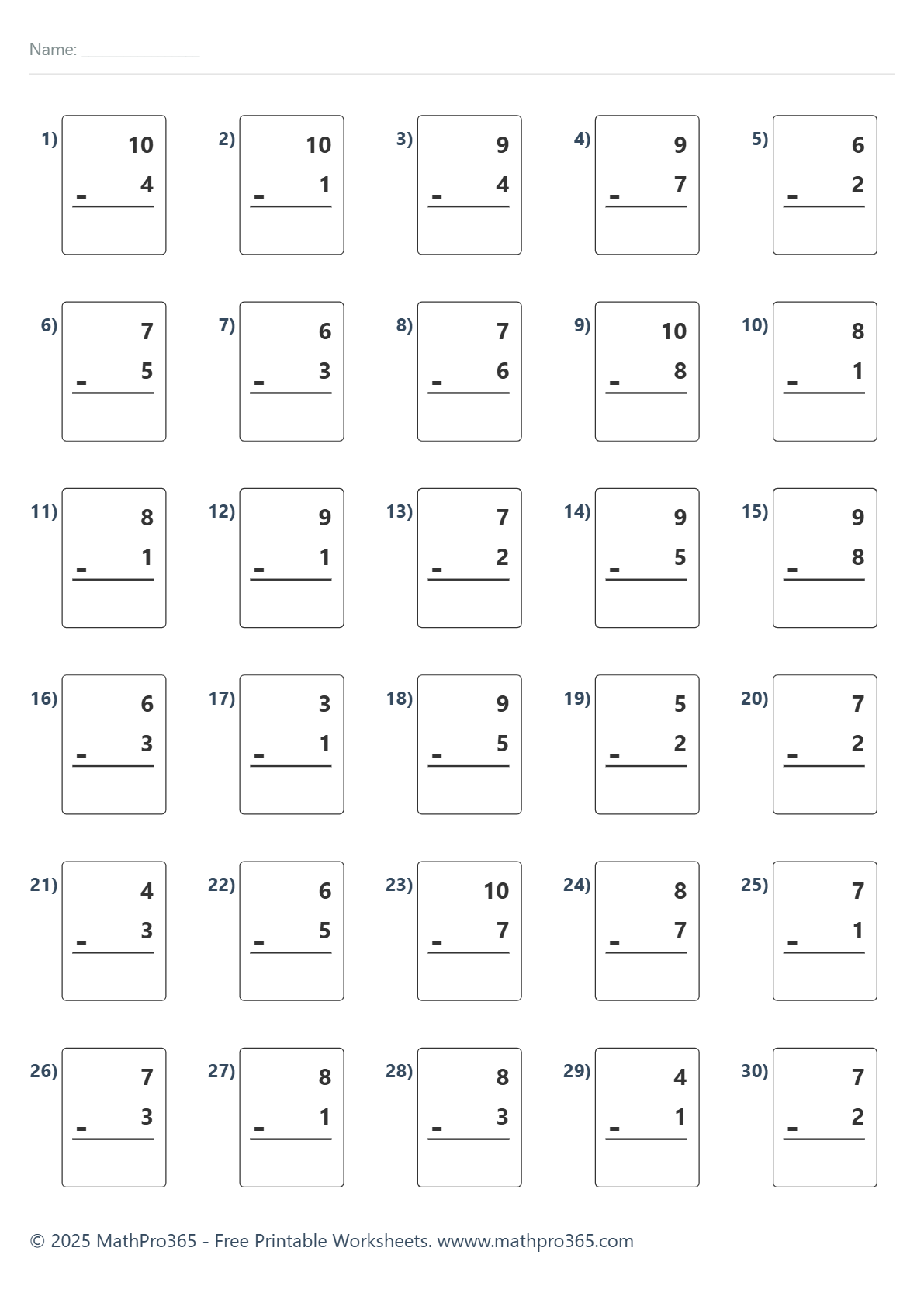
Subtraction Within 10 – 30 Basic Problems (Grade 1) – Free PDF
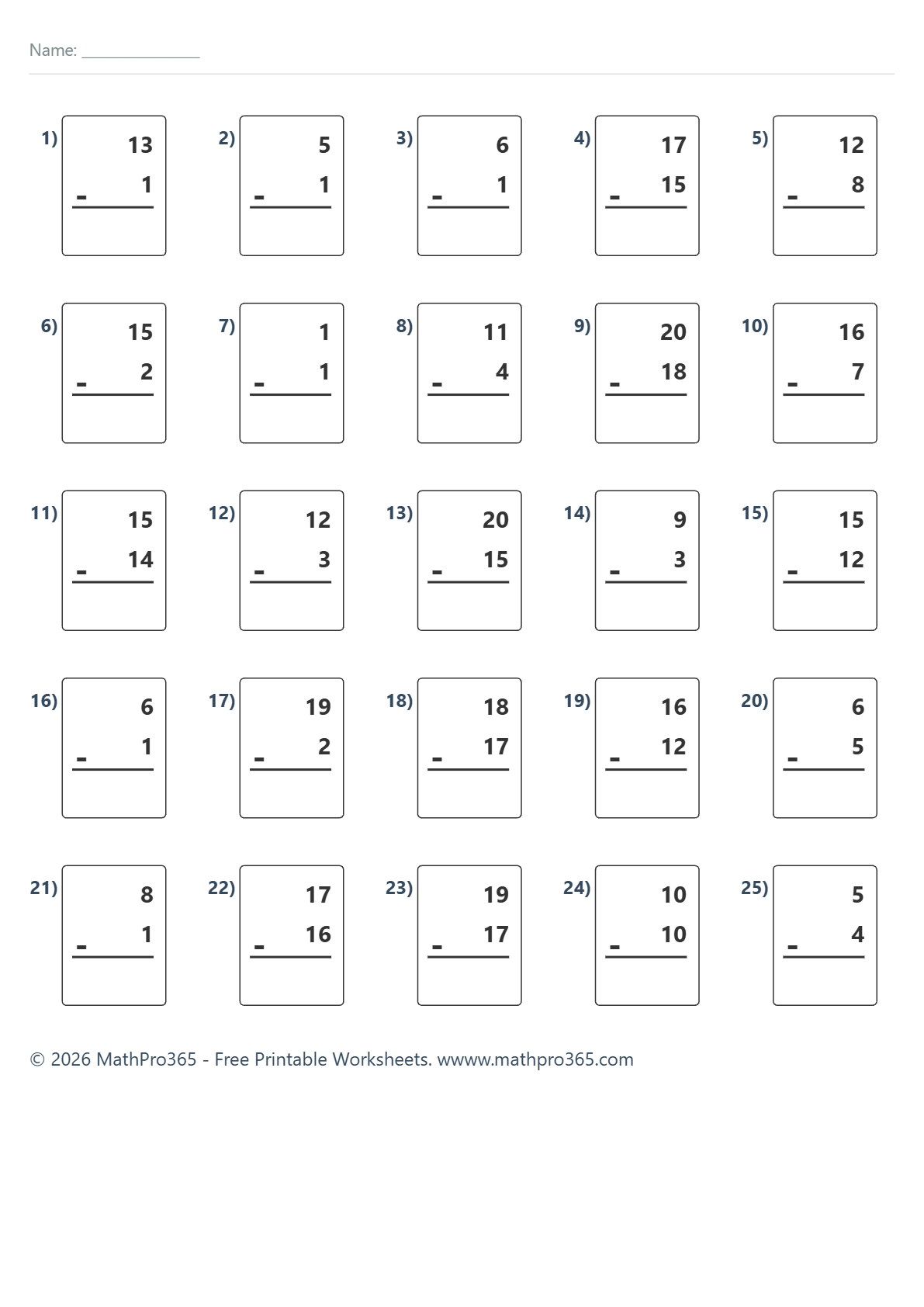
Grade 1 Subtraction Within 20 Worksheet
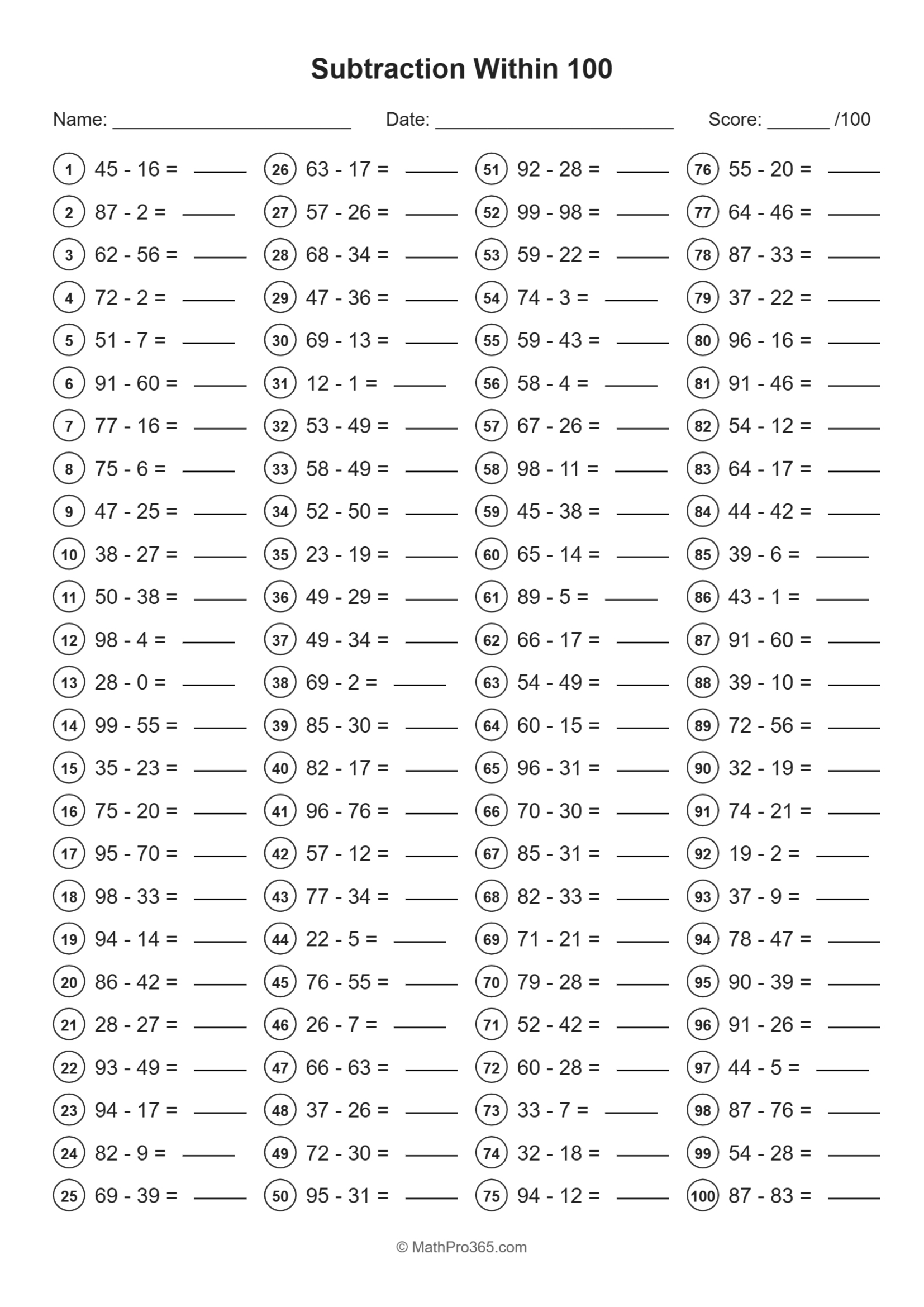
Subtraction Within 100 Worksheet | Print & Practice
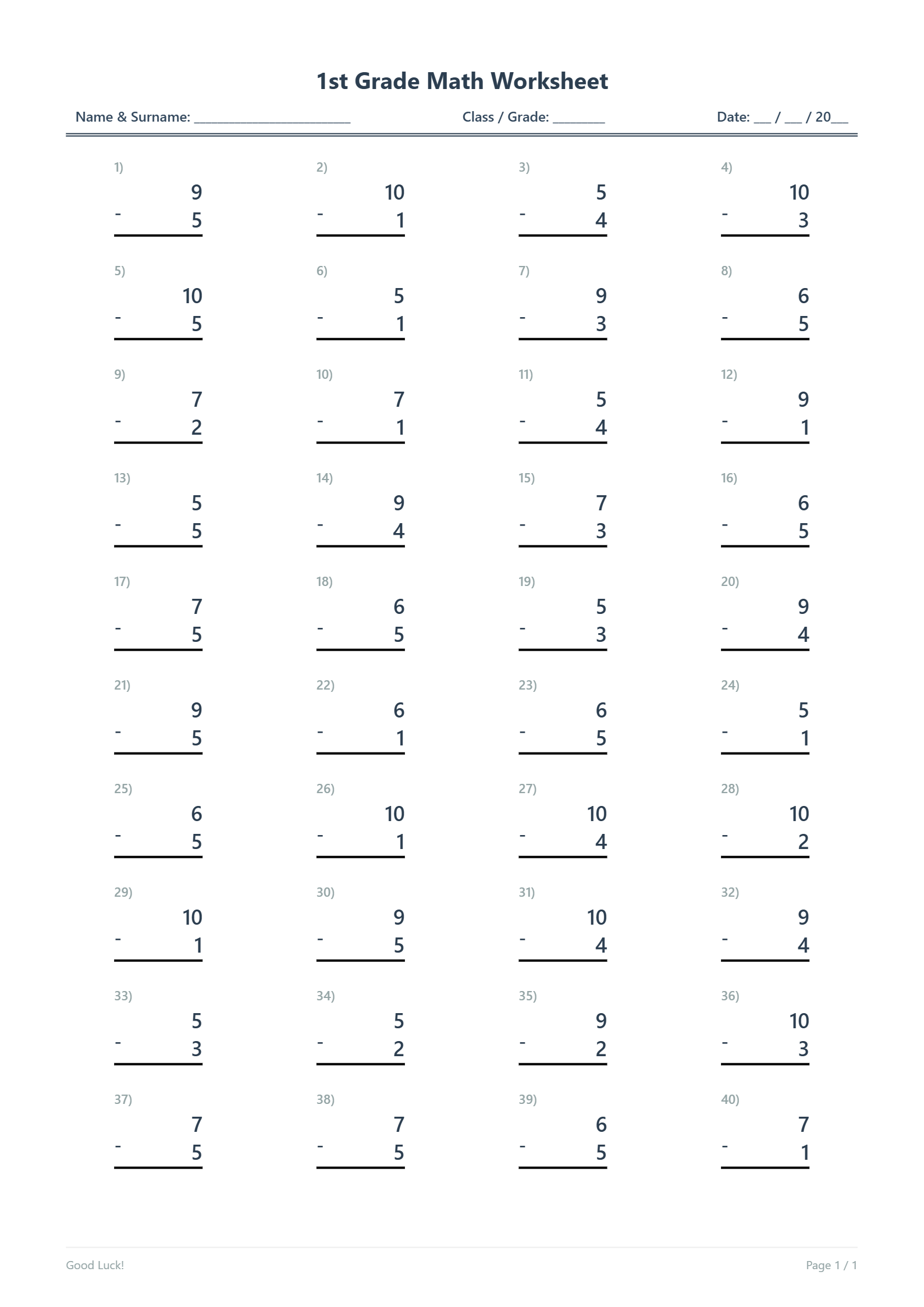
Single-Digit Subtraction Within 10 Worksheet Grade 1 Free PDF
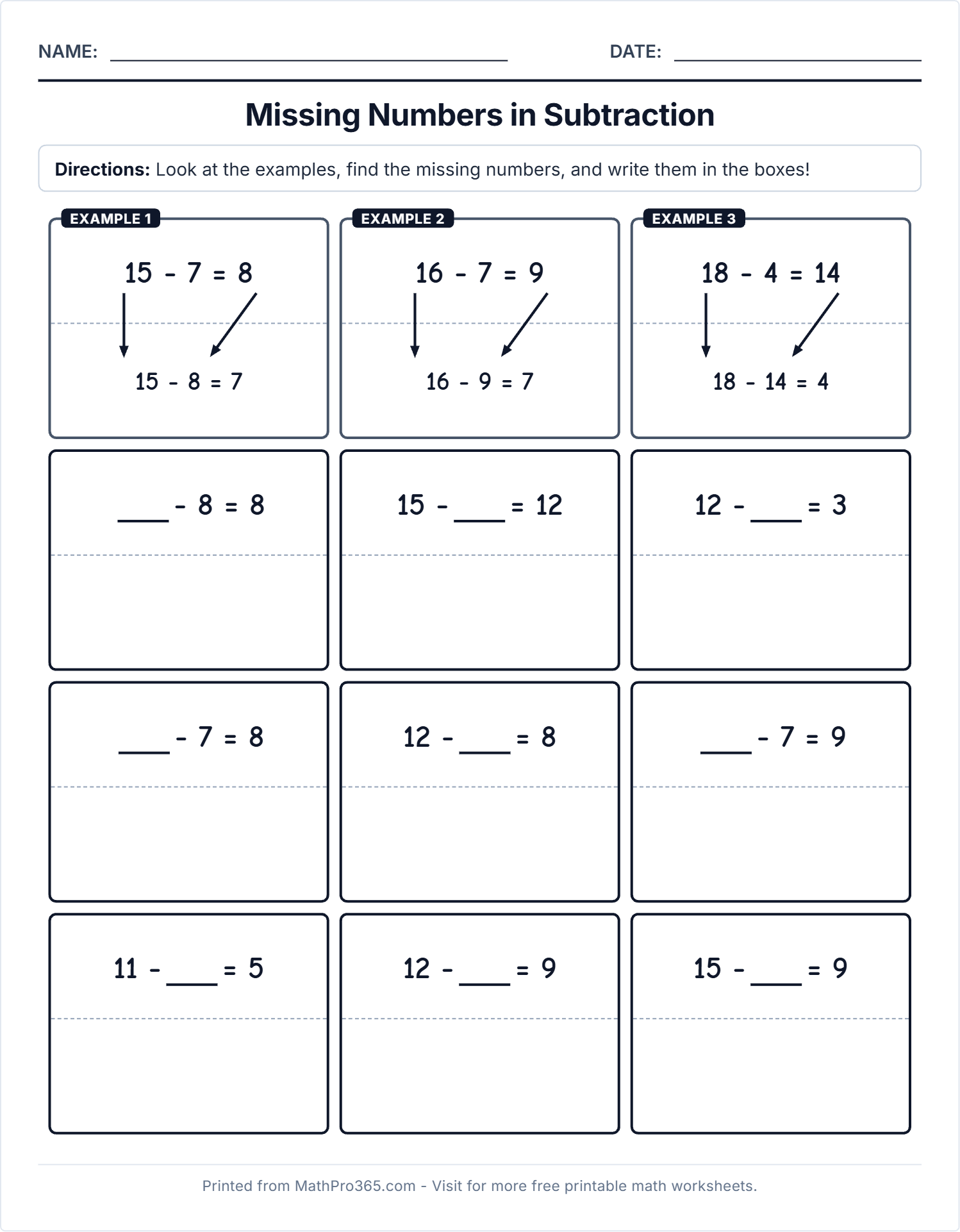
Missing Numbers in Subtraction Grade 1 Free PDF
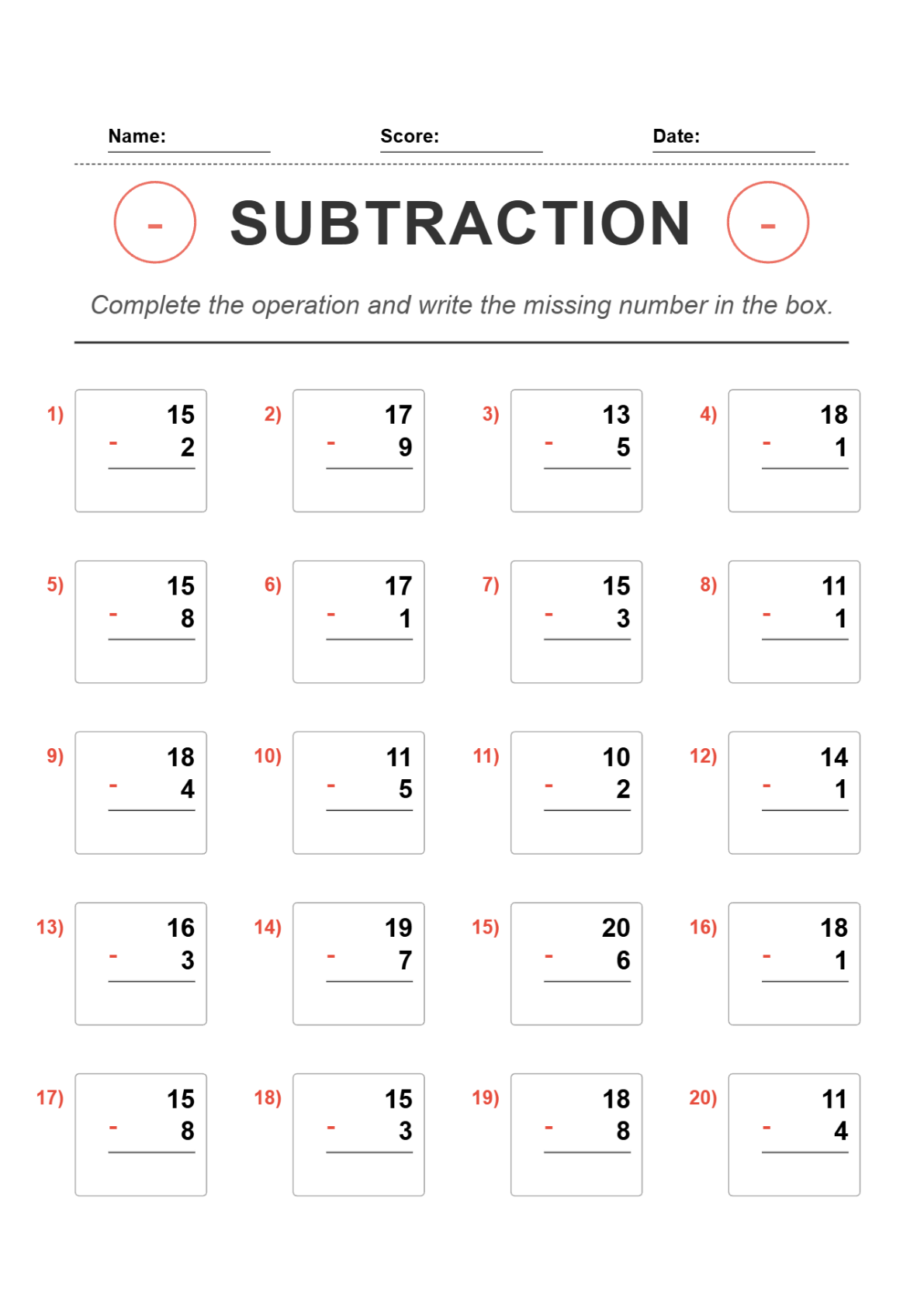
Subtraction Within 20 Worksheets (Grade 1) – Free Printable PDF
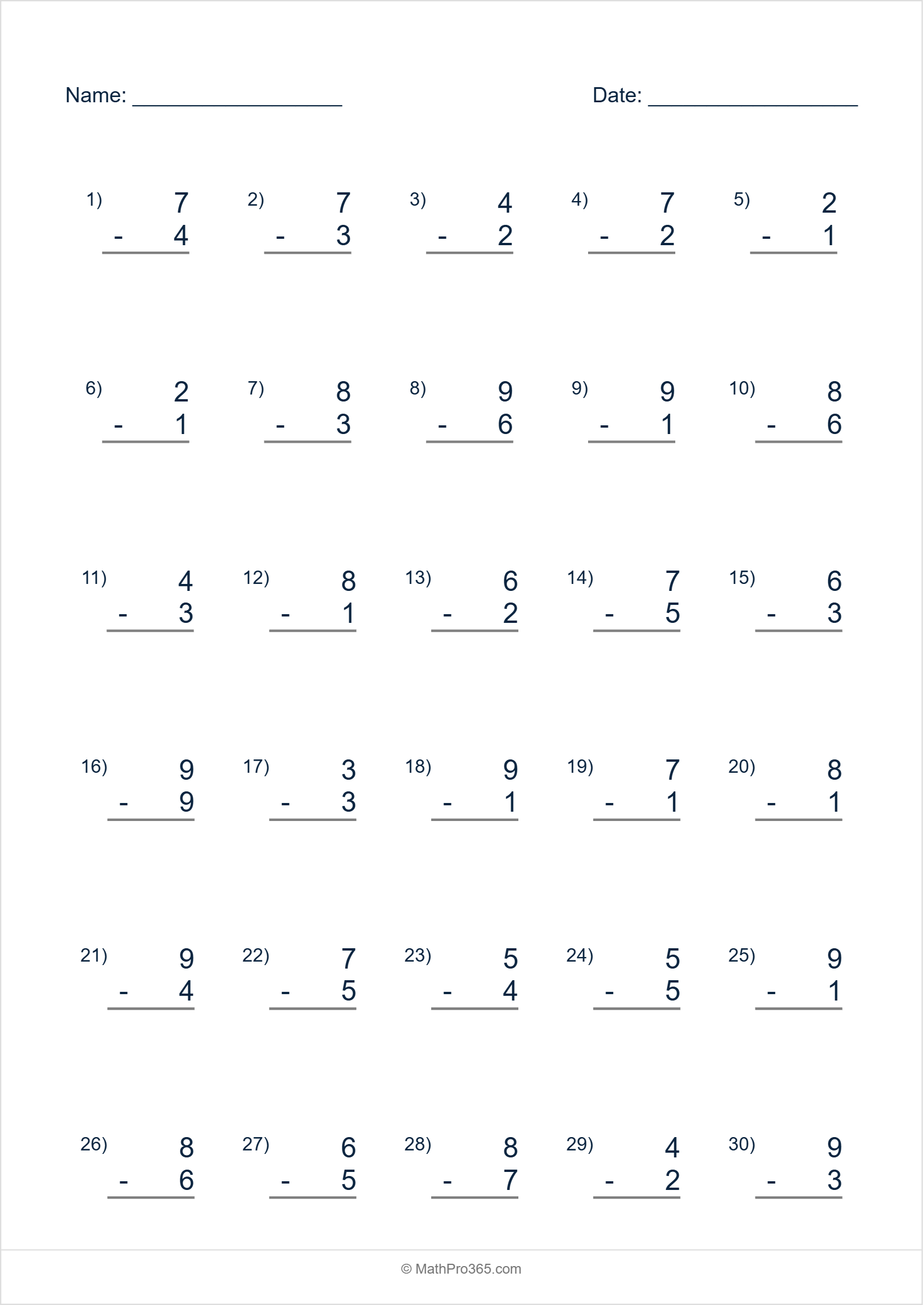
1 Digit (1-9) Minus 1 Digit (1-9) Subtraction Worksheet Grade 1 Sheet 2 Free PDF
Subtraction Within 50 Practice Worksheet (30 Problems) - Grade 1 Free Printable
Subtraction Within 20 – 30 Printable Problems (Grade 1) – Free PDF
Subtraction Within 20 Grade 1 Free PDF
Interactive worksheets can be customized before downloading.