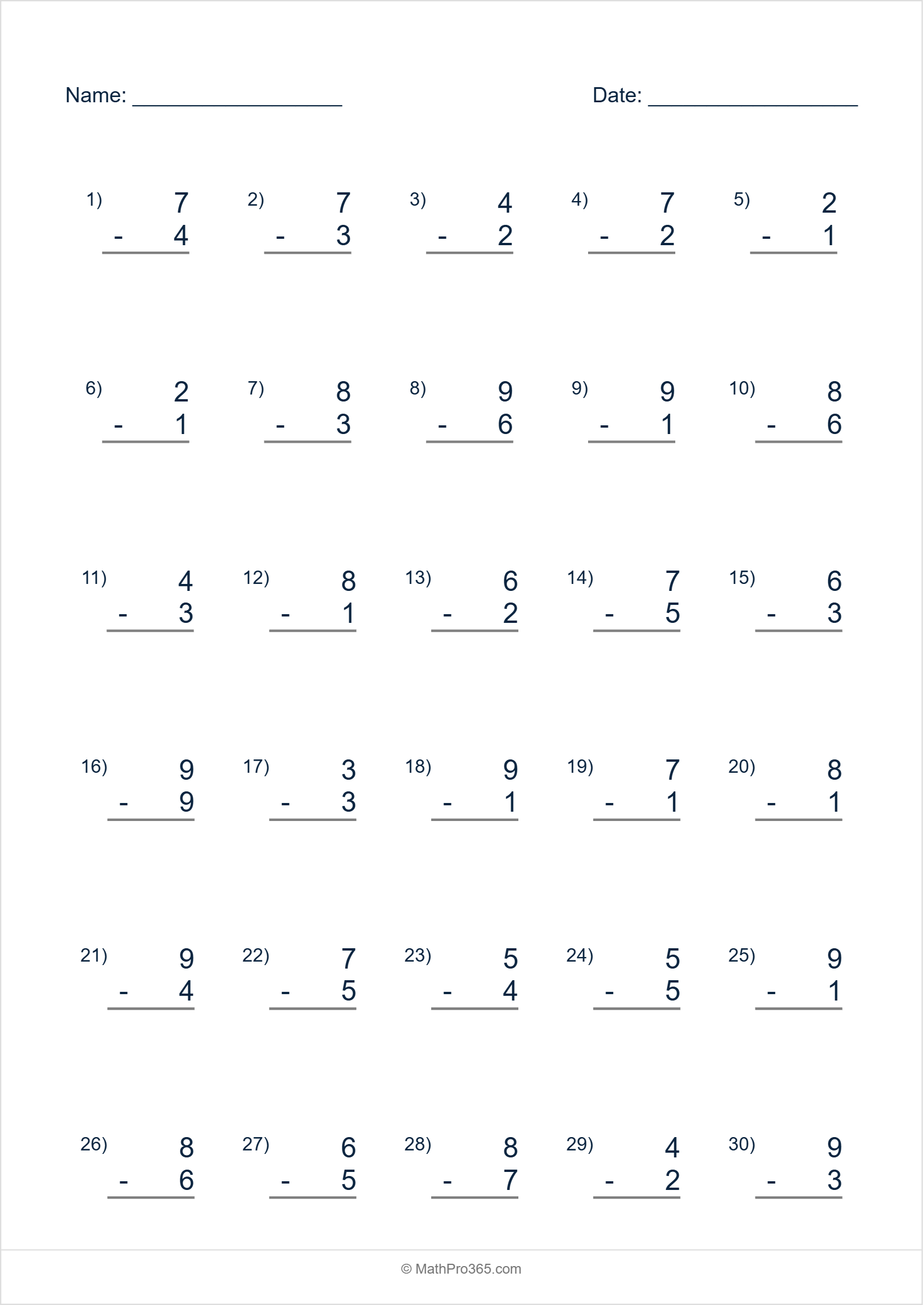
1 Digit (1-9) Minus 1 Digit (1-9) Subtraction Worksheet Grade 1 Sheet 2 Free PDF
Updated: October 2026
Strengthen everyday math understanding through carefully designed subtracting multi-digit numbers practice.
More Subtraction Worksheets (Grade 1) →1 Digit (1-9) Minus 1 Digit (1-9) Subtraction Worksheet Grade 1 Sheet 2 Free PDF
Confidence in mathematics grows one small success at a time. Simple subtraction problems give young learners the opportunity to recognize number patterns, strengthen counting skills, and understand how numbers change when something is taken away. This Grade 1 subtraction worksheet provides a collection of one-digit subtraction problems using numbers from 1 through 9, making it an excellent resource for classrooms, homeschool lessons, tutoring sessions, or extra practice at home. The printable format allows children to work independently while developing accuracy and fluency with basic subtraction facts. :contentReference[oaicite:0]{index=0}
Understanding One-Digit Subtraction
Subtraction is one of the first mathematical operations children learn after becoming comfortable with counting. It teaches the idea of taking away, finding how many remain, and comparing quantities. Since every problem on this worksheet uses only one-digit numbers, children can focus entirely on understanding the subtraction process without worrying about larger numbers or regrouping.
For example:
- 7 − 4 = 3
- 8 − 6 = 2
- 9 − 1 = 8
- 5 − 5 = 0
These examples help children notice that the answer becomes smaller after subtracting. They also learn that subtracting the same number results in zero, an important mathematical concept introduced early in elementary school.
Practice Builds Lasting Skills
Frequent short practice sessions are often more effective than occasional long lessons. A worksheet filled with carefully selected subtraction facts gives children repeated opportunities to strengthen their understanding while becoming more comfortable with basic calculations.
As children complete similar problems, they gradually rely less on counting every object and begin remembering subtraction facts automatically. This automatic recall supports future learning in addition, multiplication, division, fractions, and problem solving.
Teachers often recommend spending just five to ten minutes each day reviewing subtraction facts. Small daily routines help children build confidence without becoming overwhelmed.
Strategies Young Learners Can Use
Children solve subtraction problems in different ways depending on their current level of understanding. Encouraging multiple strategies helps every learner find an approach that makes sense.
- Count Back: Start with the larger number and count backward the number being subtracted.
- Use Fingers: Raise fingers to match the first number and lower the number being taken away.
- Draw Pictures: Sketch simple circles or stars, then cross out the amount being subtracted.
- Number Line: Move backward along a number line one step at a time.
- Think Addition: Ask, "What number plus 4 equals 7?" This builds the connection between addition and subtraction.
Using several methods allows children to deepen their understanding instead of simply memorizing answers.
Connecting Subtraction to Everyday Life
Young learners understand subtraction best when they see it in familiar situations. Parents and teachers can point out subtraction during ordinary daily activities.
Consider these simple examples:
- You have 8 grapes and eat 3. How many grapes remain?
- There are 7 toy cars, and 2 are put away. How many stay on the floor?
- A basket contains 9 apples. One apple is eaten. How many apples are left?
- Five birds sit on a fence, and two fly away. How many birds remain?
Real-life examples help children understand that subtraction is more than solving problems on paper. It is a practical skill used every day.
Ideas for Teachers
This worksheet fits easily into many classroom routines. It works well as morning work, independent practice, math centers, homework, quick assessments, or review before introducing more advanced subtraction concepts.
Teachers may also encourage students to explain how they solved each problem. Listening to children's reasoning provides valuable insight into their understanding and highlights misconceptions before they become habits.
Some extension ideas include:
- Pair students to compare different solving strategies.
- Use counters or linking cubes alongside the worksheet.
- Challenge children to write a matching addition fact for each subtraction problem.
- Create a classroom subtraction game using flashcards.
Support for Parents and Homeschool Families
Parents do not need special teaching materials to reinforce subtraction at home. Everyday household objects make excellent math tools. Buttons, coins, crayons, cereal pieces, toy animals, or building blocks can all demonstrate subtraction in a hands-on way.
Instead of giving answers immediately, ask guiding questions such as:
- What number do you start with?
- How many are being taken away?
- Can you count backward?
- Would drawing a picture help?
- Does your answer make sense?
These questions encourage children to think through the process rather than relying on memorization alone.
Common Mistakes to Watch For
Beginning learners often make predictable errors while practicing subtraction. Recognizing these mistakes allows adults to provide timely support.
- Subtracting the numbers in the wrong order.
- Counting backward too many or too few steps.
- Forgetting that subtracting a number from itself equals zero.
- Rushing through problems without checking answers.
- Confusing addition and subtraction symbols.
When mistakes happen, encourage children to explain their thinking instead of simply correcting the answer. Understanding the reasoning behind an error often leads to stronger long-term learning.
Learning Goals for Grade 1
By completing worksheets like this one, first-grade learners work toward several important mathematical objectives:
- Develop fluency with subtraction facts within 10.
- Recognize subtraction as taking away or finding the difference.
- Improve number sense.
- Build confidence solving problems independently.
- Strengthen logical thinking and reasoning.
- Prepare for more advanced subtraction involving larger numbers.
Each completed page provides meaningful practice while reinforcing concepts taught during regular math instruction.
Extension Activities After Completing the Worksheet
Once children finish the worksheet, additional activities can keep the learning going without feeling repetitive.
- Create subtraction flashcards using index cards.
- Play "Take Away" using small toys or blocks.
- Roll two dice and subtract the smaller number from the larger.
- Write simple subtraction story problems together.
- Race to solve five subtraction facts correctly.
- Sort subtraction facts by answers that are even or odd.
These playful activities strengthen understanding while keeping children engaged and motivated.
Frequently Asked Questions
How long should a Grade 1 child spend practicing subtraction each day?
Five to fifteen minutes of focused practice is usually enough. Short, consistent sessions are more effective than long practice periods.
Should children memorize subtraction facts?
Understanding should come first. Once children understand how subtraction works, repeated practice naturally helps them remember facts more quickly.
What if my child still counts on fingers?
Counting on fingers is a normal developmental strategy. Encourage other methods like number lines and counting backward while allowing children to transition at their own pace.
How can I make subtraction practice more enjoyable?
Use games, everyday objects, story problems, dice, cards, or friendly challenges. Making subtraction interactive keeps children interested while reinforcing important math concepts.
Download and Print
This printable Grade 1 worksheet offers focused practice with one-digit subtraction facts using numbers from 1 to 9. It is suitable for classroom instruction, homeschooling, tutoring, homework, or independent review. Print multiple copies so children can revisit these subtraction facts over time, improving both speed and accuracy while developing a strong mathematical foundation that supports future learning. :contentReference[oaicite:1]{index=1}
Worksheet Preview
Today's Challenge
Frequently Asked Questions
Who is this worksheet for?
This worksheet is designed for Grade 1 students practicing subtraction skills.
Can I print this worksheet?
Yes. The worksheet is available as a printable PDF download.
Can teachers use this worksheet in class?
Yes. Teachers, homeschool users and parents can use it for classroom practice and homework.
Related Worksheets
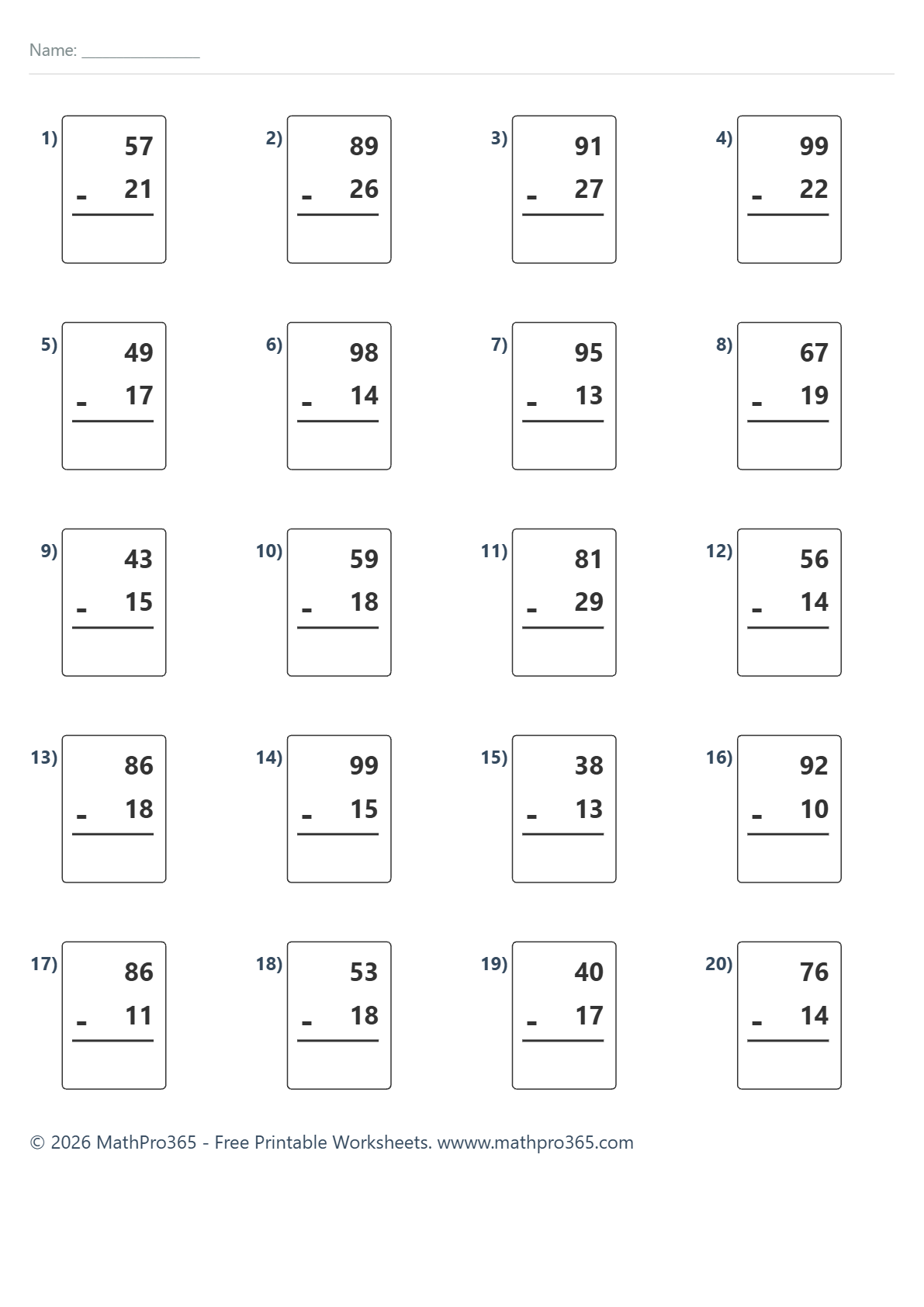
2 Digit Subtraction Without Regrouping Grade 1 Worksheet Free PDF
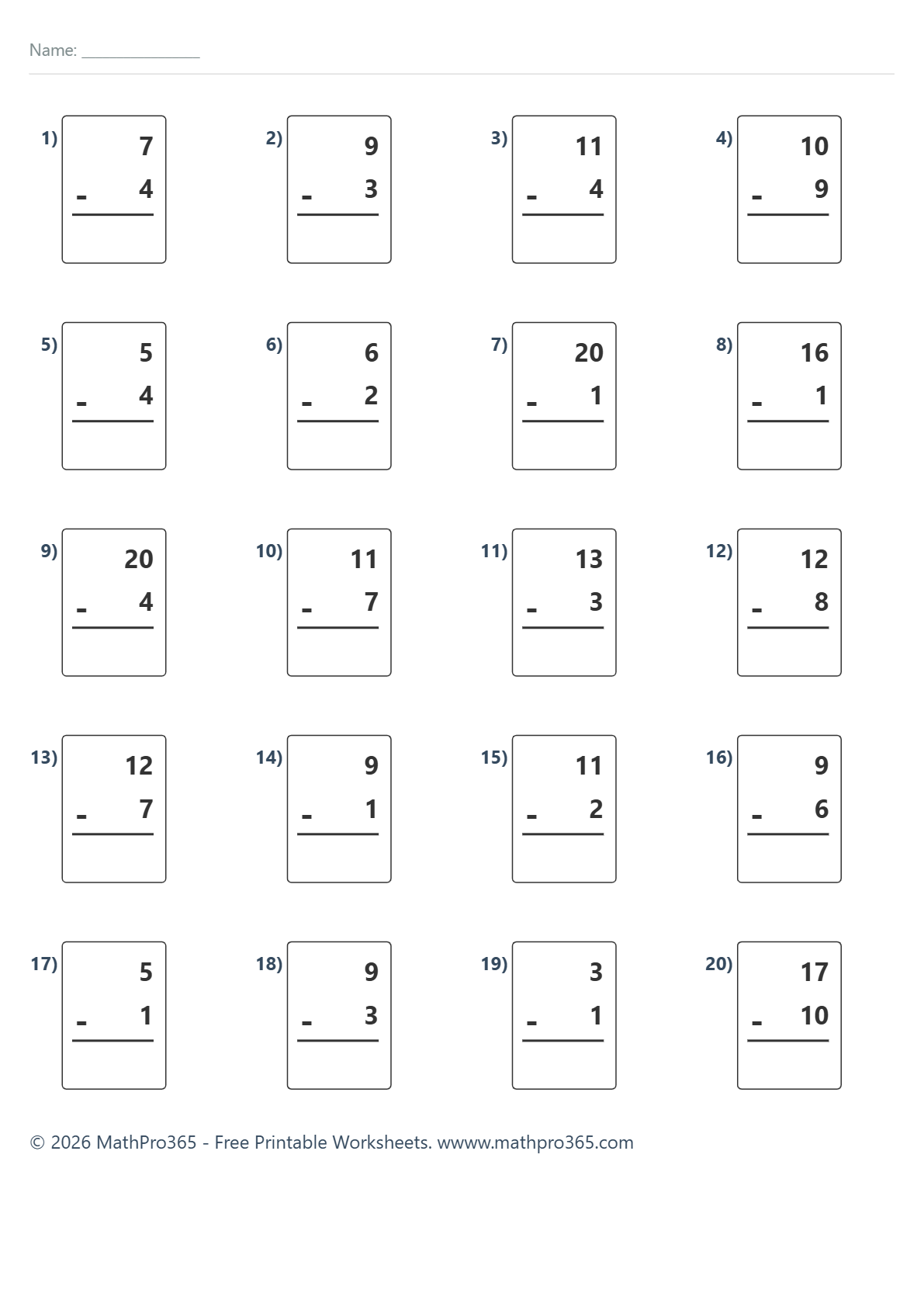
Subtraction Within 20 – No Borrowing (Grade 1) – Free Printable
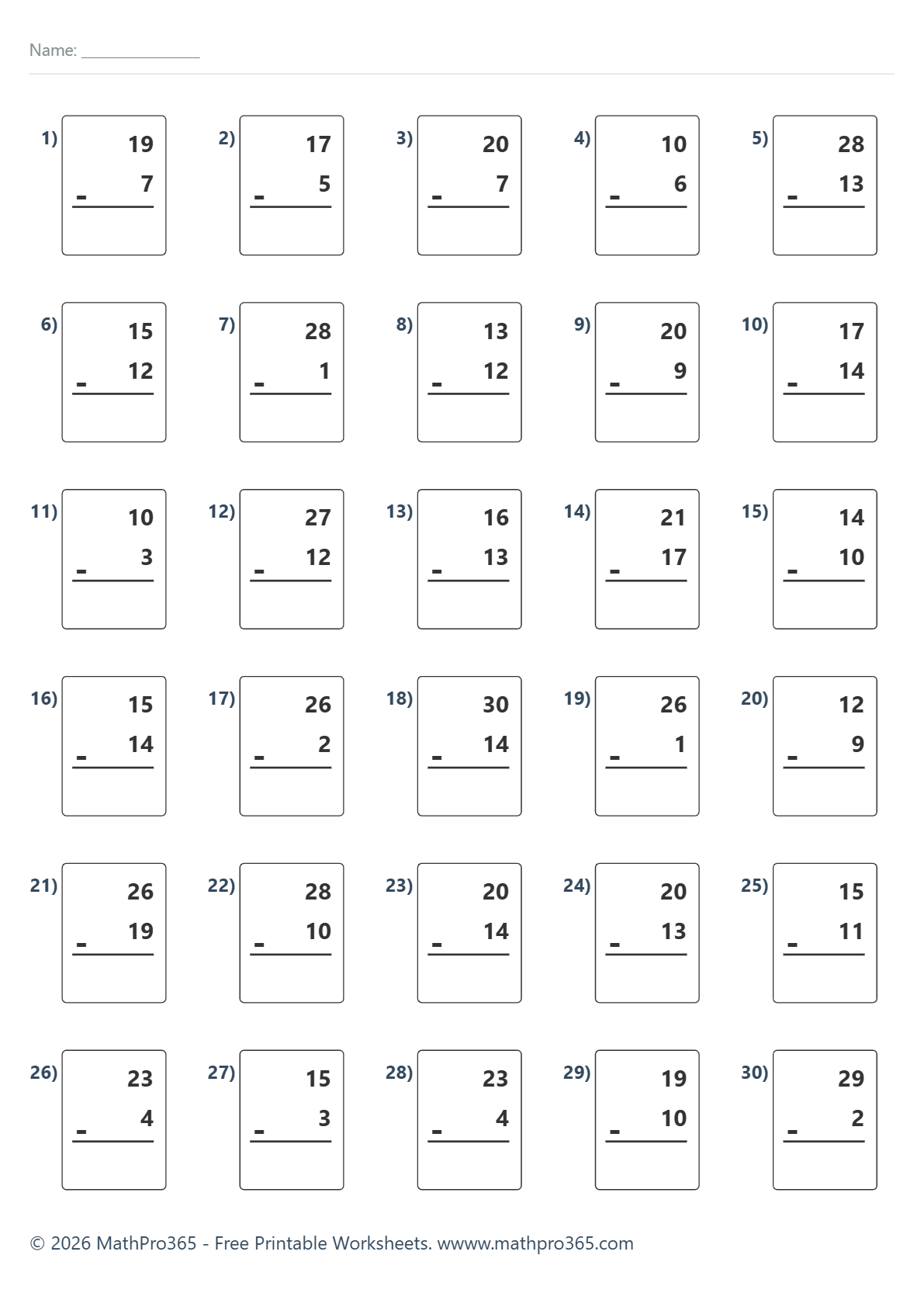
Subtraction Within 30 – No Regrouping (Grade 1) – Free PDF
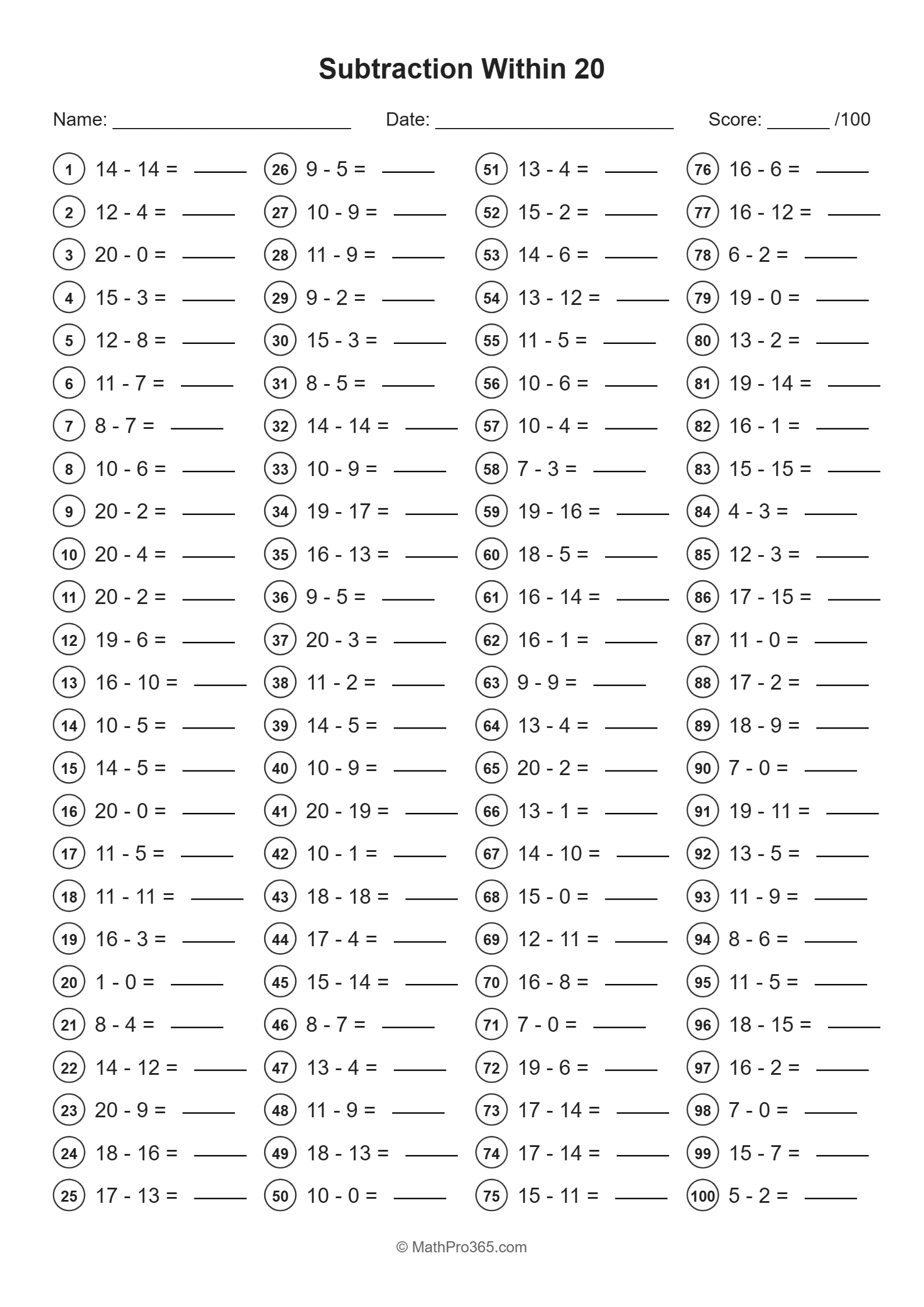
Subtraction Within 20 Grade 1 Free PDF
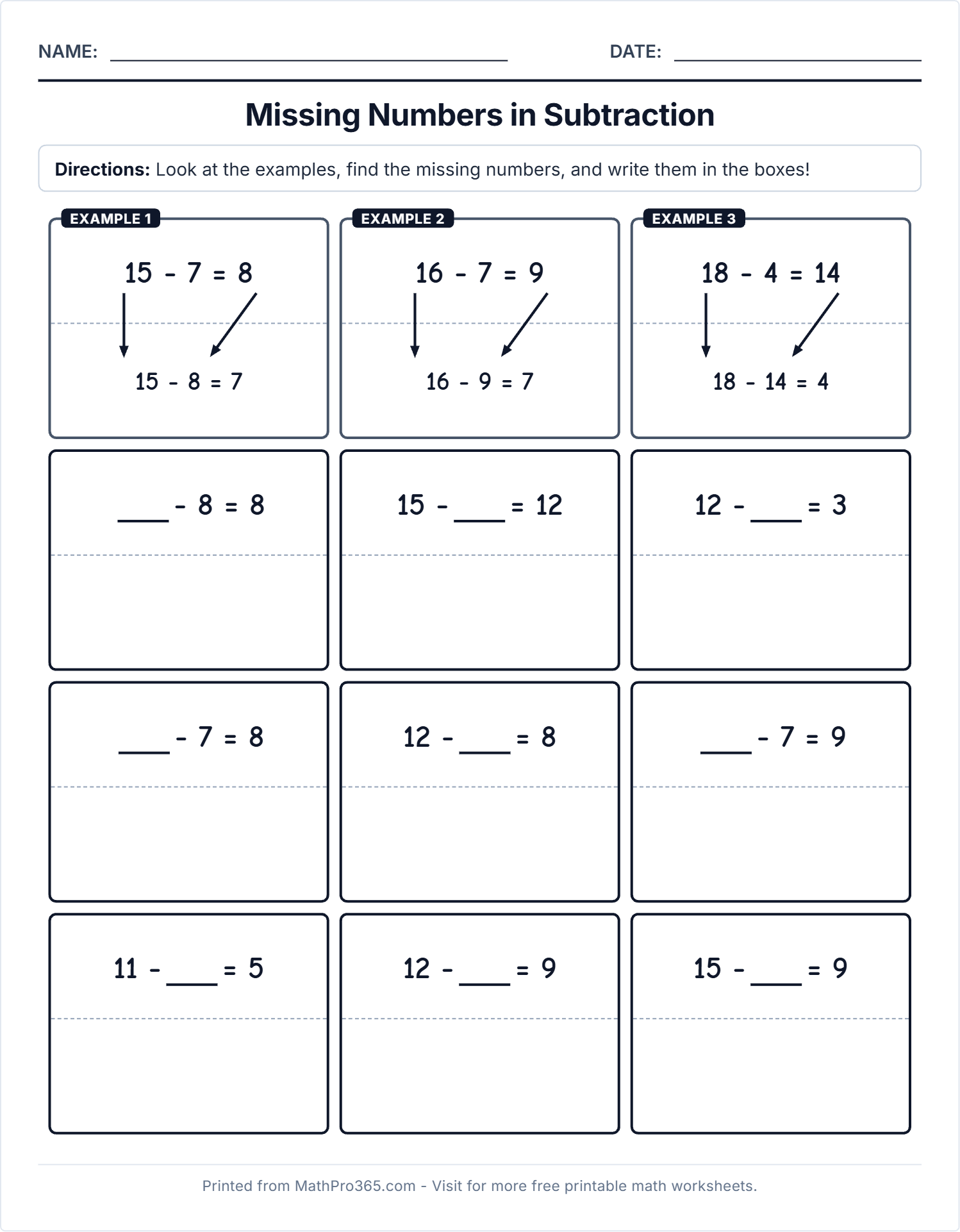
Missing Numbers in Subtraction Grade 1 Free PDF
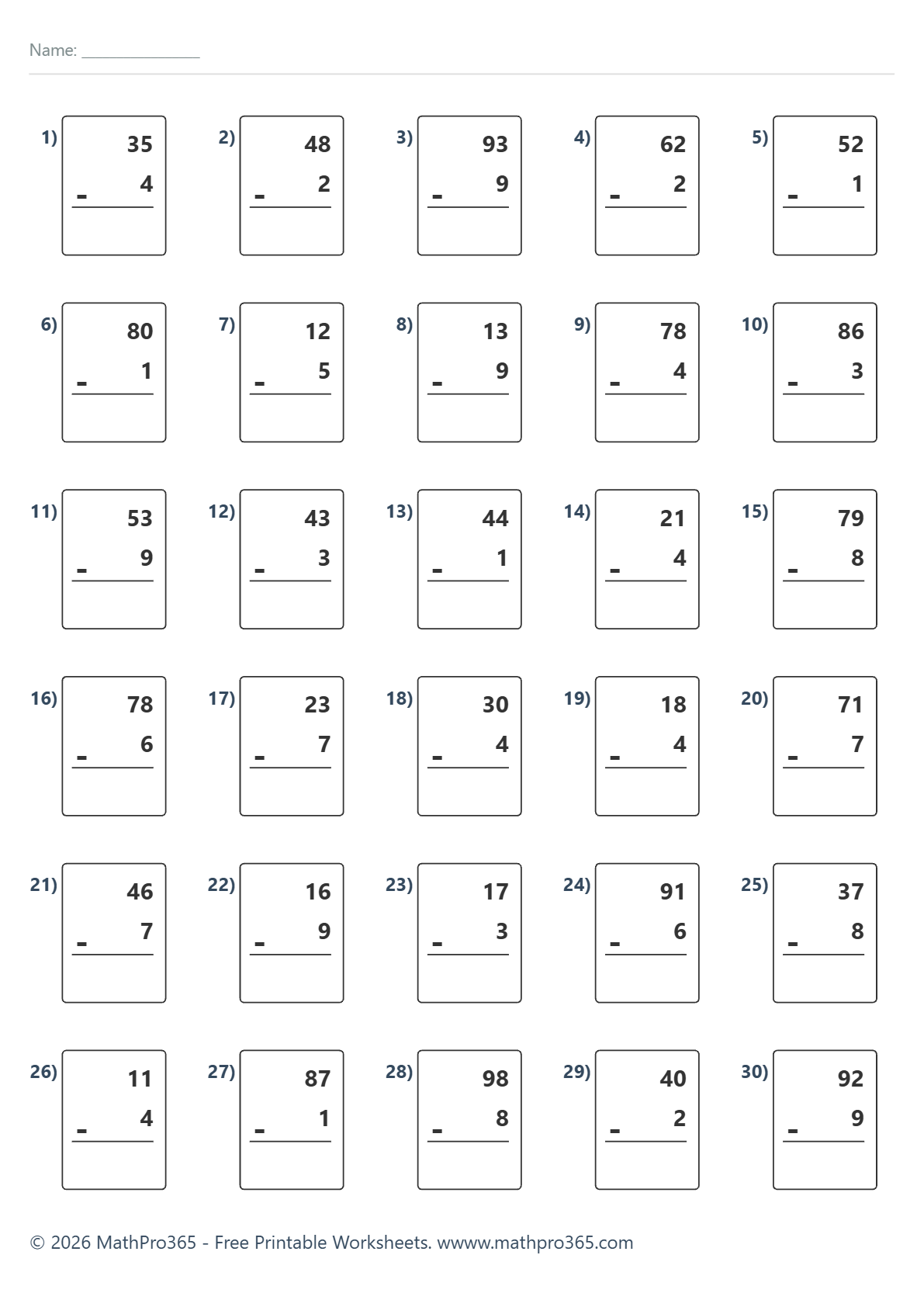
2 Digit Minus 1 Digit Subtraction Worksheet Grade 1 Free PDF
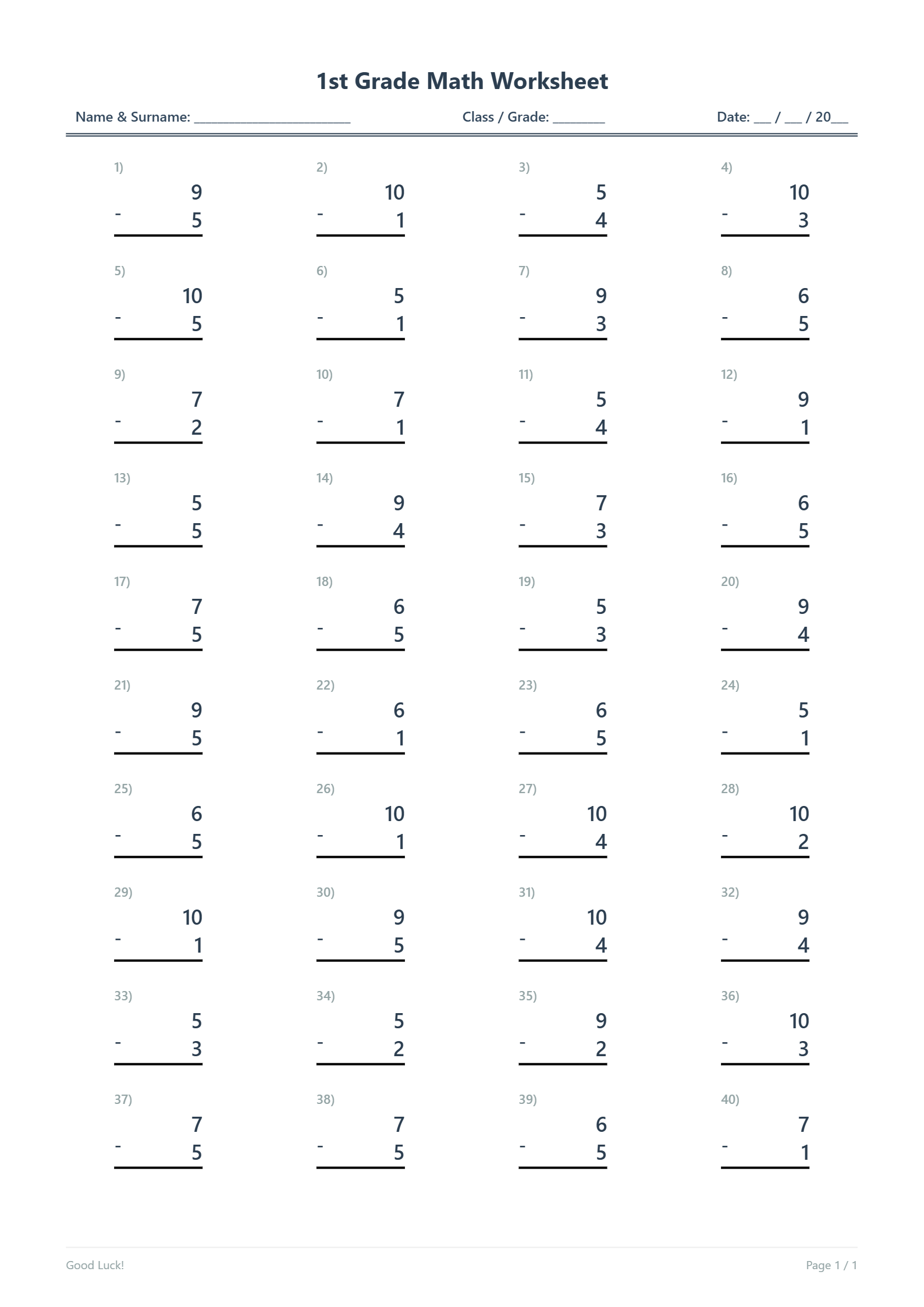
Single-Digit Subtraction Within 10 Worksheet Grade 1 Free PDF
Missing Numbers in Subtraction Worksheet for Grade 1
Grade 1 Subtraction Within 20 Worksheet
2 Digit (50-99) Minus 1 Digit (1-9) Subtraction Worksheet Grade 1 Sheet 2 Free PDF
Interactive worksheets can be customized before downloading.