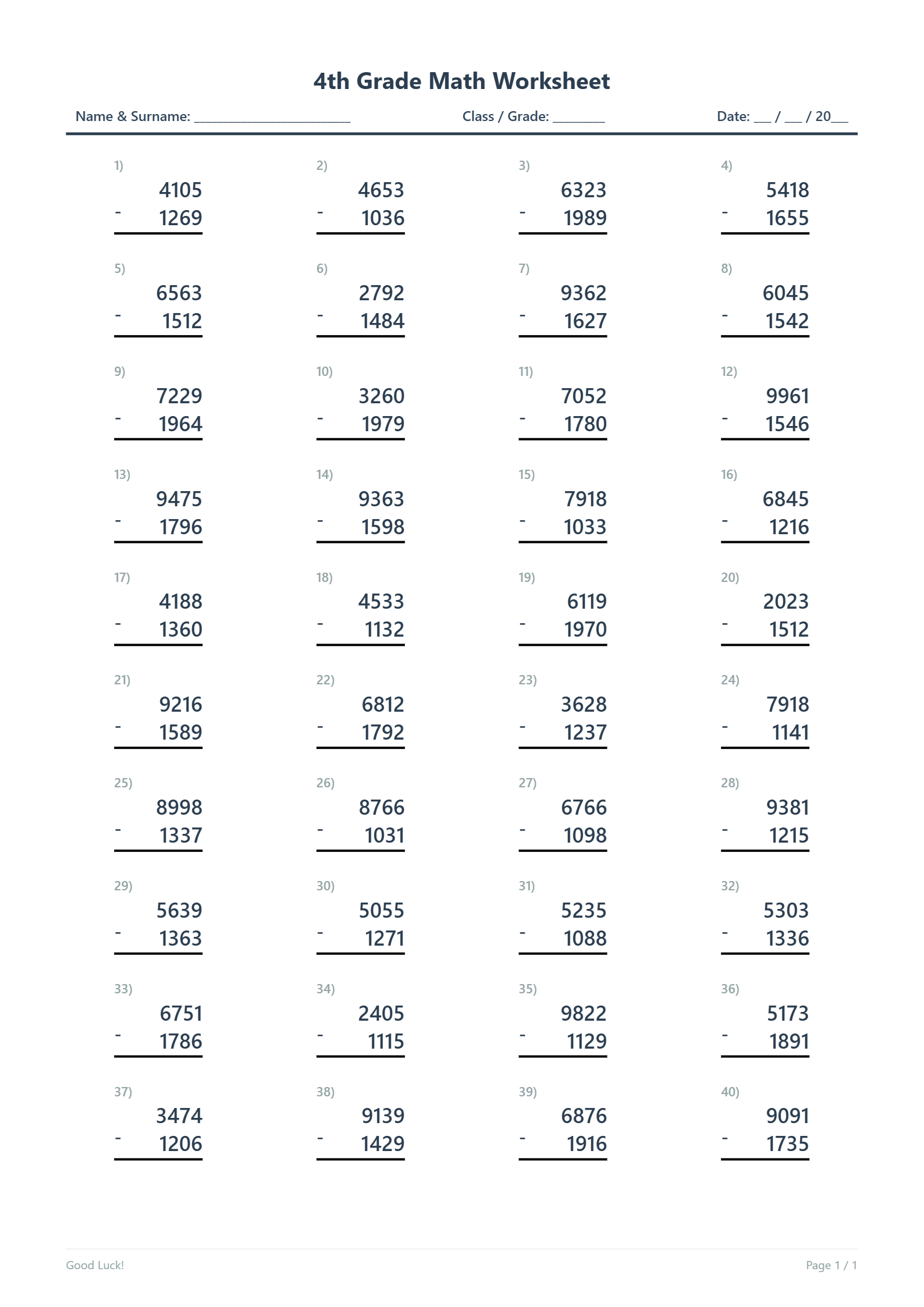
4th Grade 4-Digit Subtraction with Regrouping Worksheet – Free PDF
Updated: October 2026
Practice 4-digit subtraction with regrouping using 40 carefully designed problems for 4th grade students. This free PDF worksheet helps improve subtraction accuracy, borrowing skills, and math fluency.
More Subtraction Worksheets (Grade 4) →Mastering 4-Digit Subtraction with Regrouping in Grade 4
Subtracting large numbers is an important milestone for fourth-grade learners. This worksheet focuses on 4-digit subtraction with regrouping, giving students plenty of opportunities to practice borrowing across place values. As children become comfortable subtracting thousands, hundreds, tens, and ones, they strengthen both their computational skills and their confidence with larger numbers.
Each problem encourages students to think carefully about place value while applying subtraction strategies accurately. Regular practice helps transform challenging calculations into familiar routines that students can solve with increasing speed and precision.
Understanding Place Value Before Subtracting
Every successful subtraction problem begins with understanding place value. In a 4-digit number, each digit has a different value depending on its position:
- Thousands
- Hundreds
- Tens
- Ones
For example, in the number 6,845:
- 6 represents 6 thousands.
- 8 represents 8 hundreds.
- 4 represents 4 tens.
- 5 represents 5 ones.
Recognizing these values allows students to subtract one column at a time while regrouping whenever necessary.
How Regrouping Works
Regrouping happens when the top digit in a column is smaller than the digit below it. Instead of stopping, students borrow one group from the next place value to the left.
Consider this example:
5,418 − 1,655
Since 8 is smaller than 5 in the ones column, regrouping is needed. One ten becomes ten ones, allowing students to subtract correctly. Sometimes regrouping continues through multiple place values, making careful attention especially important.
Working through these steps slowly helps students avoid common calculation errors.
Building Strong Number Sense
Large-number subtraction is more than following a procedure. Students begin to recognize how numbers are related and develop a stronger understanding of numerical relationships.
As learners estimate answers before solving, they become better at judging whether their final answers are reasonable. For example, before solving 9,361 − 1,598, students may estimate:
9,400 − 1,600 ≈ 7,800
If the exact answer is close to this estimate, students gain confidence that their work is accurate.
Practical Strategies for Success
Many students benefit from following the same routine every time they solve a subtraction problem.
- Line up all digits carefully by place value.
- Begin subtracting from the ones column.
- Regroup only when necessary.
- Move left one column at a time.
- Check the final answer using estimation or addition.
Using a consistent process reduces careless mistakes and helps students become independent problem solvers.
Worked Example
Solve:
7,918 − 1,033
- Ones: 8 − 3 = 5
- Tens: 1 − 3 requires regrouping.
- Borrow from the hundreds.
- Complete subtraction column by column.
- Final answer: 6,885
Examples like this encourage students to think through each step instead of rushing.
Why Students Need Regular Practice
Repeated exposure to subtraction problems strengthens fluency. As students practice dozens of carefully selected questions, they begin recognizing regrouping patterns naturally.
This worksheet contains a wide variety of subtraction problems that require different regrouping situations. Some require borrowing once, while others involve regrouping across multiple place values. This variety prepares students for more advanced arithmetic in future grades.
Common Mistakes to Watch For
Even capable learners sometimes make predictable errors. Recognizing these mistakes helps teachers and parents provide timely support.
- Subtracting the smaller digit from the larger regardless of position.
- Forgetting to reduce the digit after borrowing.
- Misaligning digits by place value.
- Skipping regrouping when it is required.
- Making arithmetic errors after regrouping correctly.
Encouraging students to review each completed problem often catches these mistakes before they become habits.
Using the Worksheet in the Classroom
This subtraction worksheet fits naturally into many classroom settings. Teachers may use it during math centers, guided instruction, independent work, review lessons, or assessment activities.
One effective approach is to model two or three problems together before allowing students to complete the remaining questions independently. This gradual release supports learners with different confidence levels.
Ideas for Small-Group Instruction
Students who need additional support often benefit from working in small groups. Teachers can:
- Review place value using base-ten blocks.
- Model regrouping step by step.
- Discuss why borrowing works mathematically.
- Encourage students to explain each subtraction aloud.
These conversations deepen conceptual understanding rather than relying only on memorized procedures.
Helping Children Practice at Home
Parents play an important role in strengthening subtraction skills. Short practice sessions are usually more effective than long study periods.
Families might complete five problems each evening, discussing each regrouping step together. Celebrating steady improvement helps children stay motivated.
Parents can also encourage estimation before solving. Asking, "Should the answer be closer to 5,000 or 8,000?" develops reasoning alongside computation.
Homeschool Learning Ideas
Homeschool educators have the flexibility to adjust the pace based on student readiness. One lesson might begin with hands-on place value review before transitioning into written subtraction.
Children can explain their thinking after every problem, reinforcing mathematical vocabulary such as regroup, borrow, thousands, hundreds, tens, and ones.
Mixing worksheet practice with games, number cards, and mental math activities creates a balanced learning experience.
Real-Life Uses for 4-Digit Subtraction
Students often ask when they will use large-number subtraction outside school. The answer is: quite often.
Examples include:
- Comparing yearly savings amounts.
- Calculating remaining money after a purchase.
- Finding the difference between sports scores over multiple games.
- Measuring distances traveled during road trips.
- Comparing attendance at school events.
Understanding subtraction helps students make sense of everyday situations involving differences and remaining quantities.
Skills Developed Through This Worksheet
- Place value understanding
- Subtraction fluency
- Accurate regrouping
- Mathematical reasoning
- Problem-solving confidence
- Estimation skills
- Attention to detail
- Logical thinking
Assessment Opportunities
This worksheet provides useful information about student understanding. Teachers can quickly identify whether errors result from regrouping, place value confusion, arithmetic mistakes, or rushing.
Observing student work during completion offers valuable insight into their mathematical thinking. Students who consistently explain each borrowing step often demonstrate stronger conceptual understanding than those who rely entirely on memorized procedures.
Extension Activities
Students who complete the worksheet successfully can continue developing their skills through enrichment activities.
- Create original subtraction problems using four-digit numbers.
- Exchange problems with a partner.
- Estimate answers before solving.
- Check each solution using addition.
- Compare multiple solution methods.
These activities encourage flexible thinking while reinforcing subtraction accuracy.
Encouraging Mathematical Confidence
Confidence grows through consistent success. Rather than focusing only on speed, students should aim for careful, accurate work. Completing one problem correctly is more valuable than rushing through several with mistakes.
Teachers and parents can encourage children to explain each regrouping decision aloud. Verbalizing the process often strengthens understanding and reduces future errors.
Positive feedback for careful work, organized writing, and persistence helps students view challenging subtraction problems as opportunities to learn rather than obstacles.
Frequently Asked Questions
How can students tell when regrouping is needed?
Regrouping is required whenever the digit being subtracted is larger than the digit above it in the same place-value column.
Should students estimate before solving every problem?
Estimation is an excellent habit because it helps students predict a reasonable answer and identify mistakes after completing the subtraction.
What is the best way to check subtraction answers?
Students can add the difference to the smaller number. If the result matches the original larger number, the subtraction is correct.
How often should fourth graders practice 4-digit subtraction?
Short practice sessions several times each week are usually enough to build fluency while maintaining accuracy and confidence.
Download and Print
This printable Grade 4 subtraction worksheet offers meaningful practice with 4-digit subtraction and regrouping. Whether used in the classroom, during homeschool lessons, for homework, or as extra review, it helps students strengthen place value understanding, improve subtraction accuracy, and build confidence with larger numbers. Download, print, and enjoy engaging practice that supports steady mathematical growth.
Worksheet Preview
Today's Challenge
Frequently Asked Questions
Who is this worksheet for?
This worksheet is designed for Grade 4 students practicing subtraction skills.
Can I print this worksheet?
Yes. The worksheet is available as a printable PDF download.
Can teachers use this worksheet in class?
Yes. Teachers, homeschool users and parents can use it for classroom practice and homework.
Related Worksheets
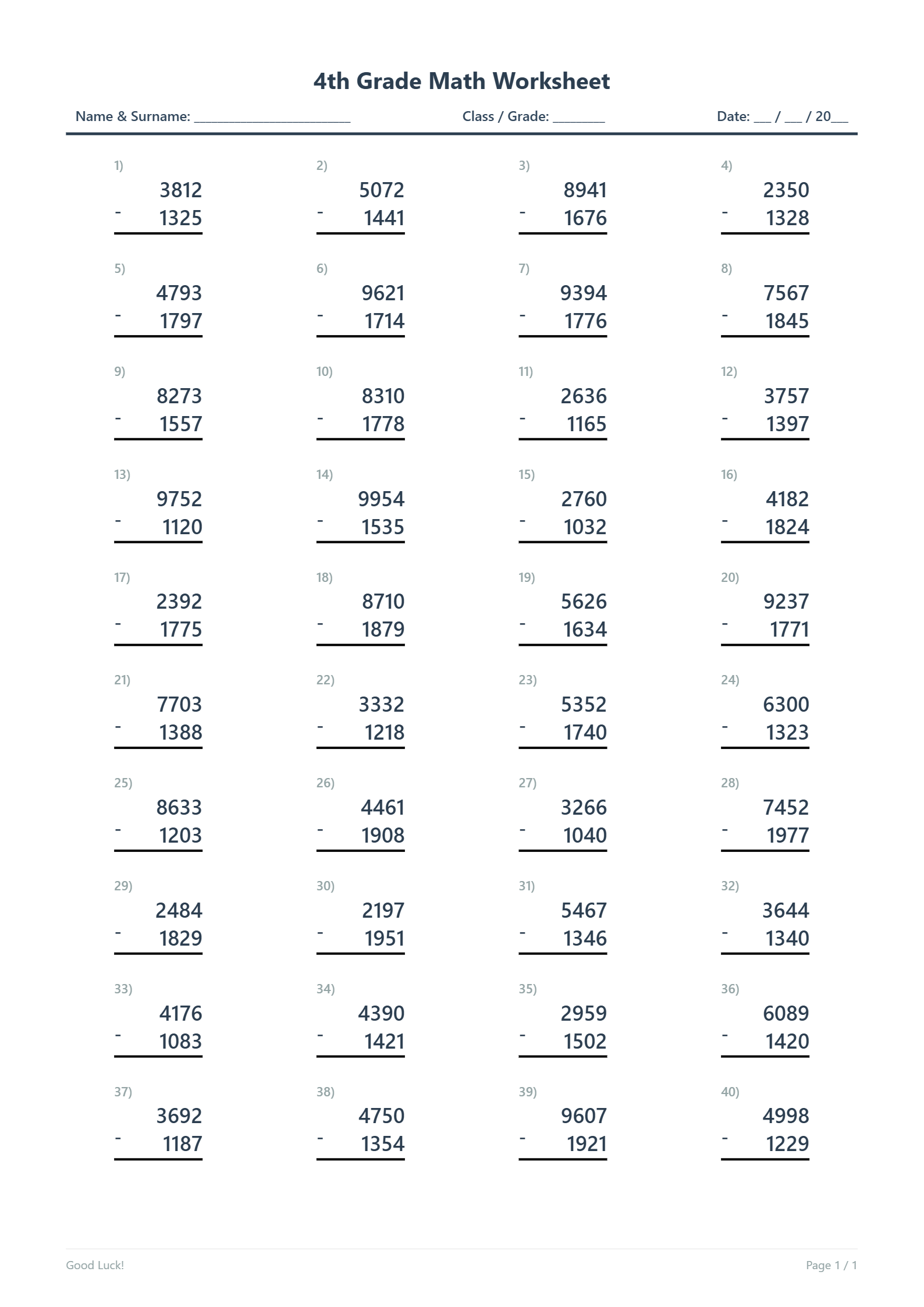
Subtraction 4 Digit With Regrouping Worksheet Grade 4 Free PDF
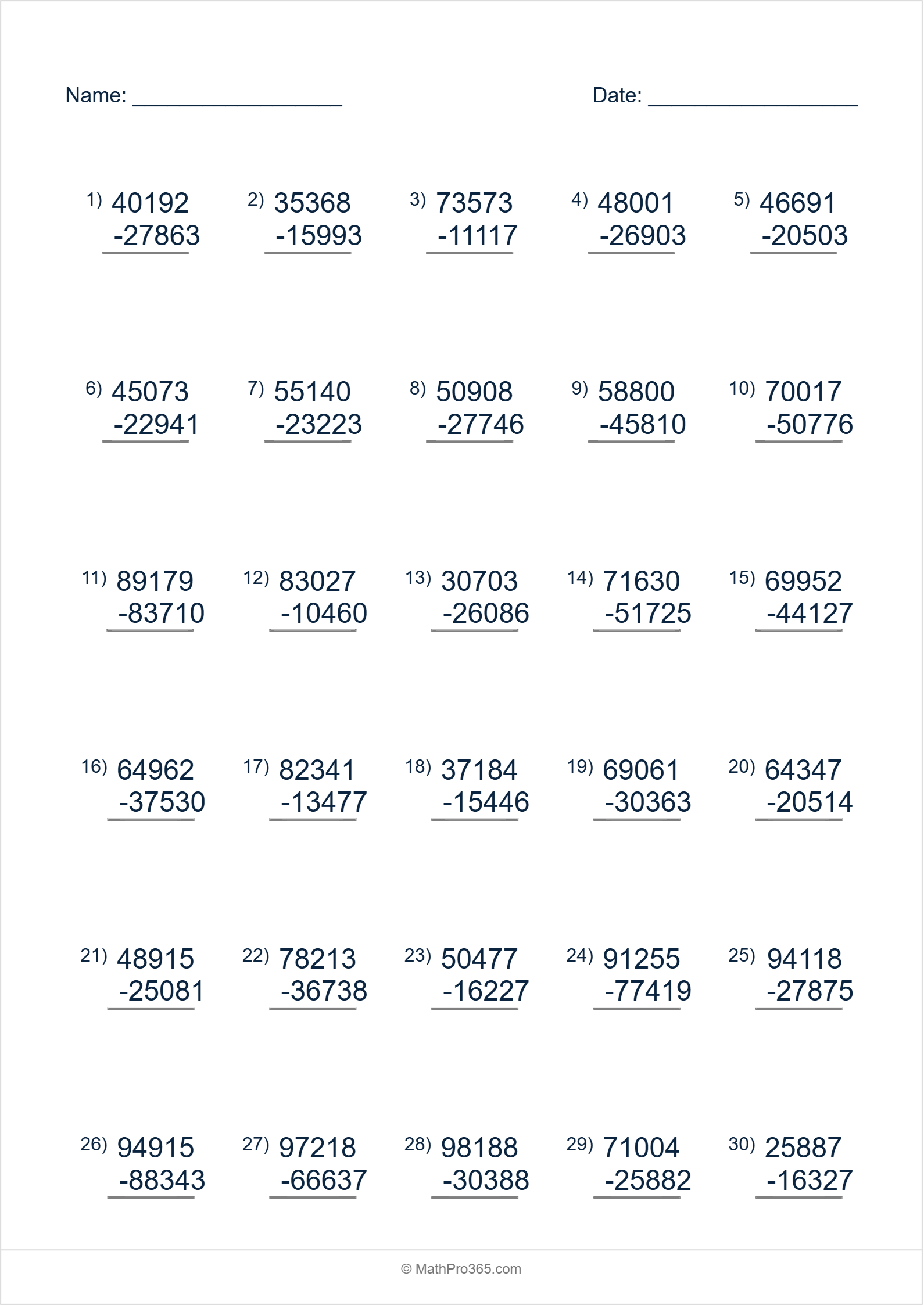
5-Digit Subtraction Practice Grade 4 Free PDF Worksheet
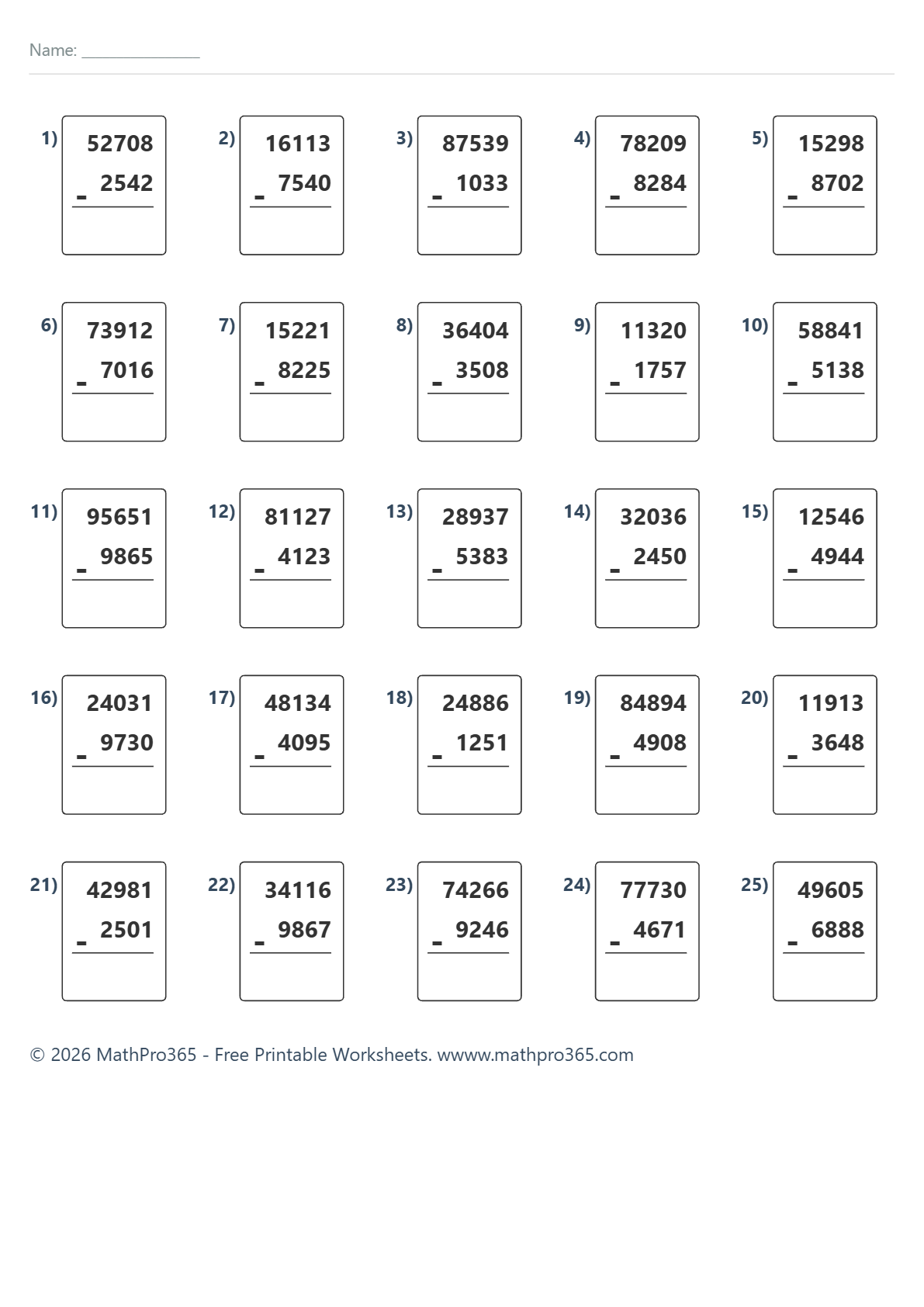
5 Digit Subtraction Without Regrouping Grade 4 Free Download PDF
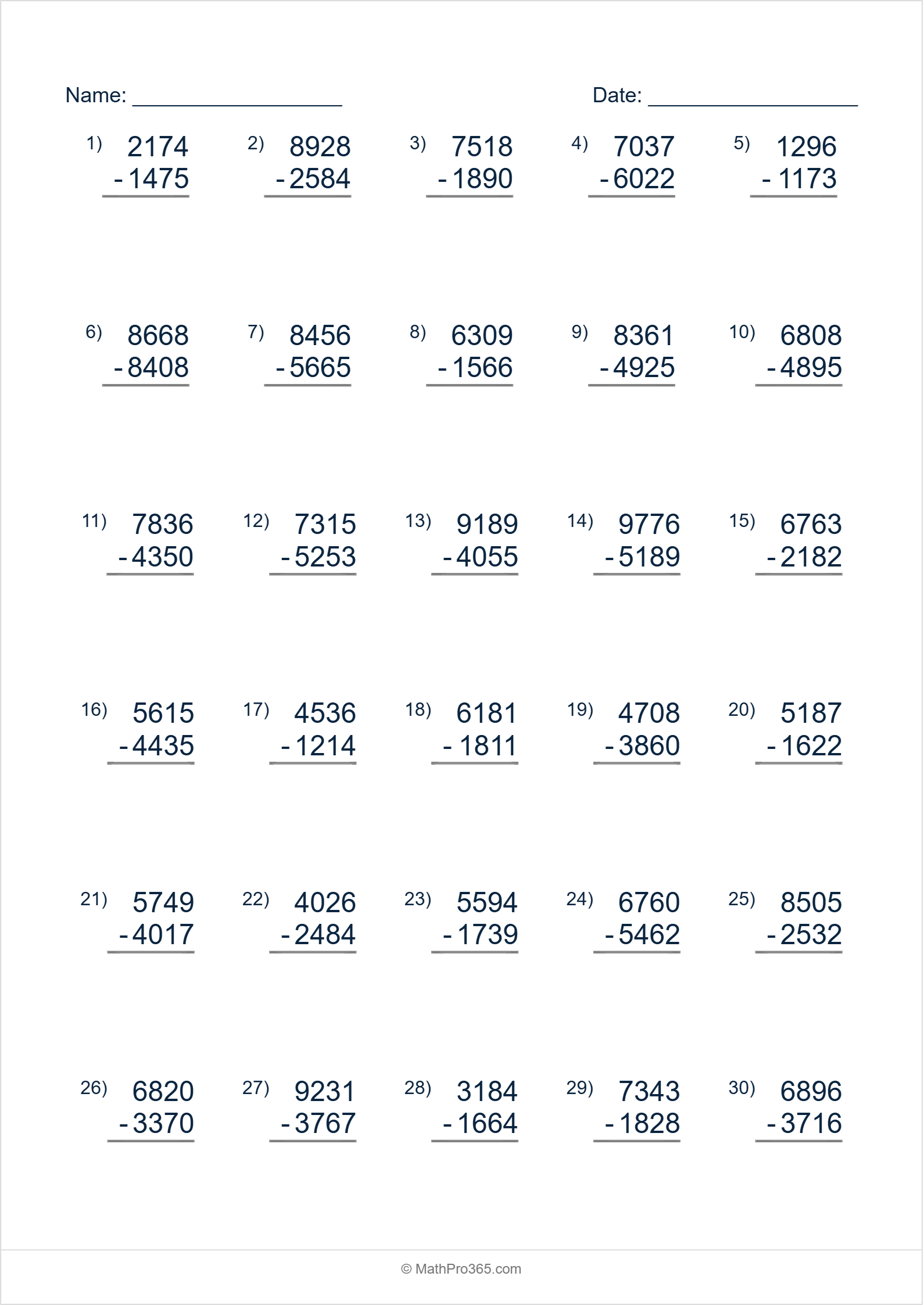
4-Digit Subtraction with Regrouping Worksheet | Free PDF
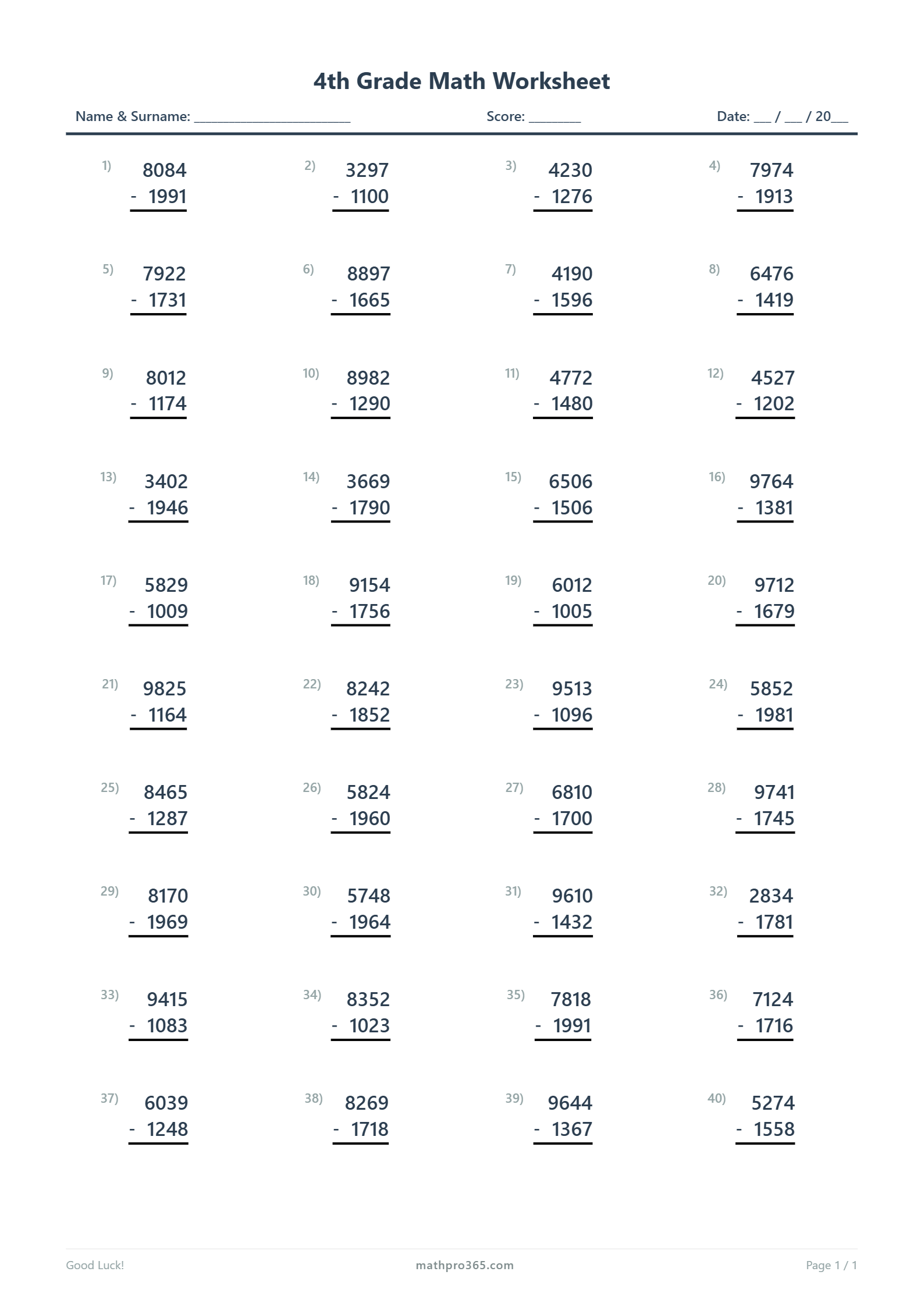
4th Grade 4-Digit Subtraction Worksheet - 40 Problems
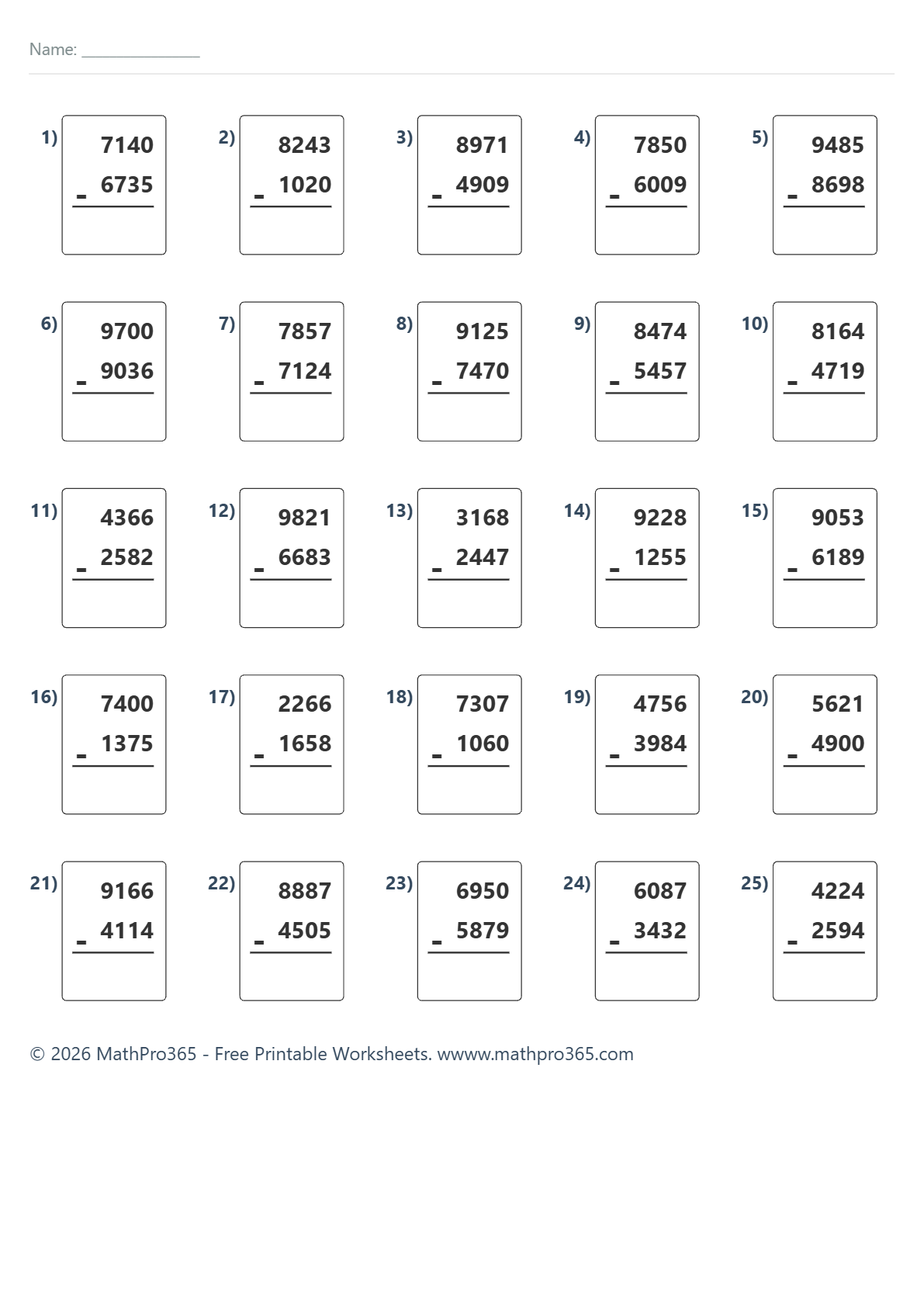
4-Digit Subtraction with Regrouping Grade 4 Free PDF Worksheet
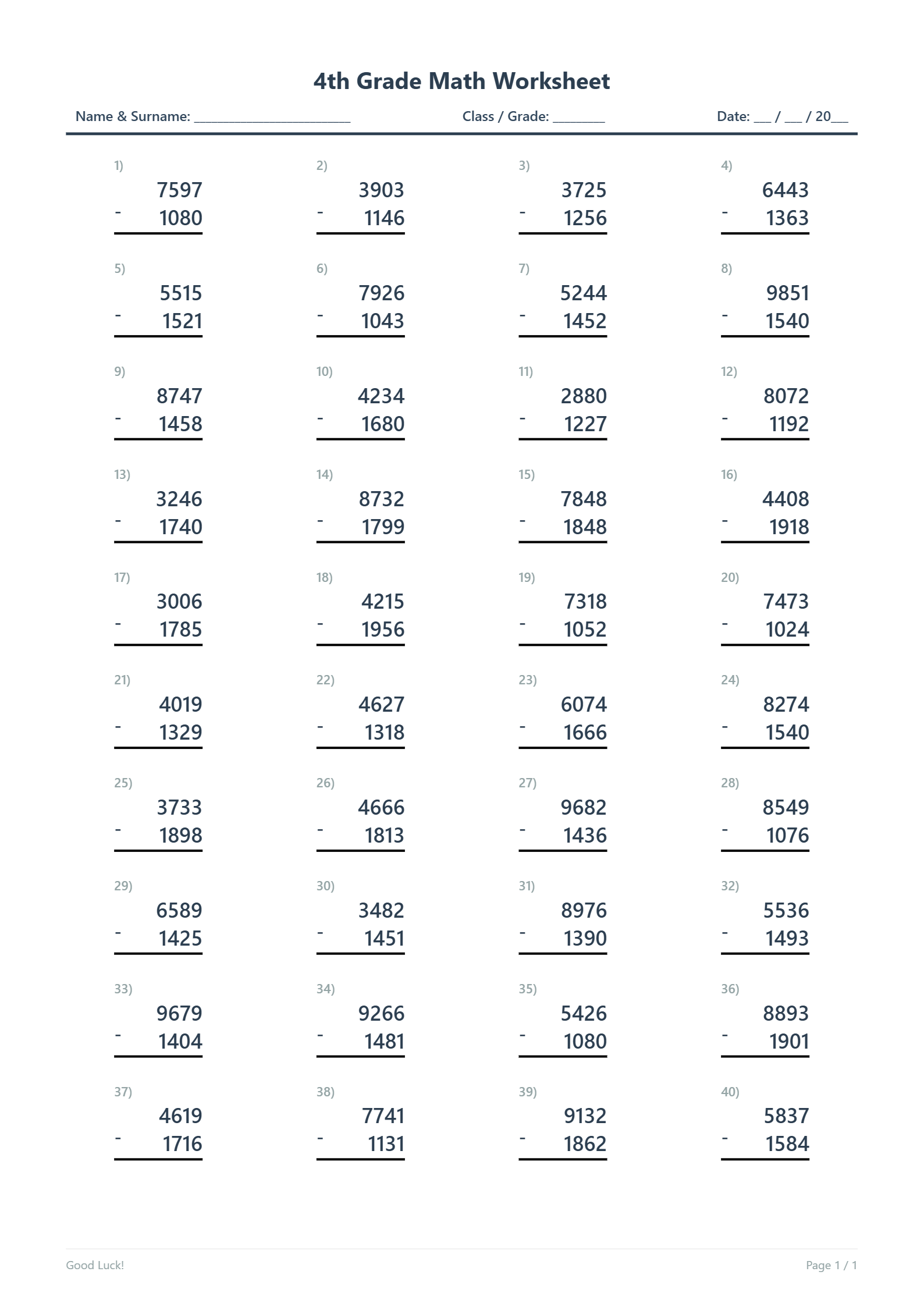
4-Digit Subtraction with Regrouping Grade 4 Free PDF
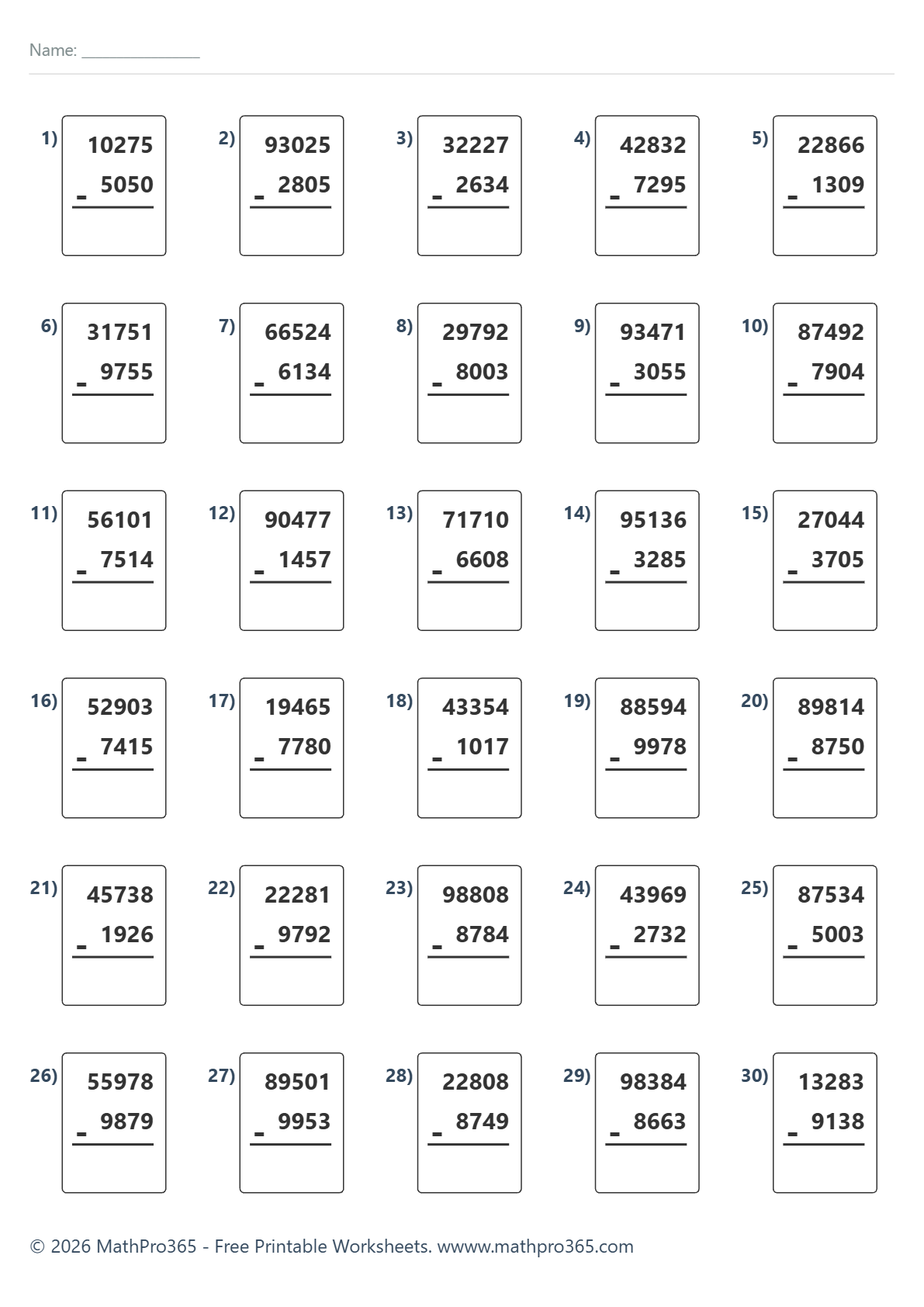
5-Digit Minus 4-Digit Subtraction Worksheet Grade 4 Free PDF
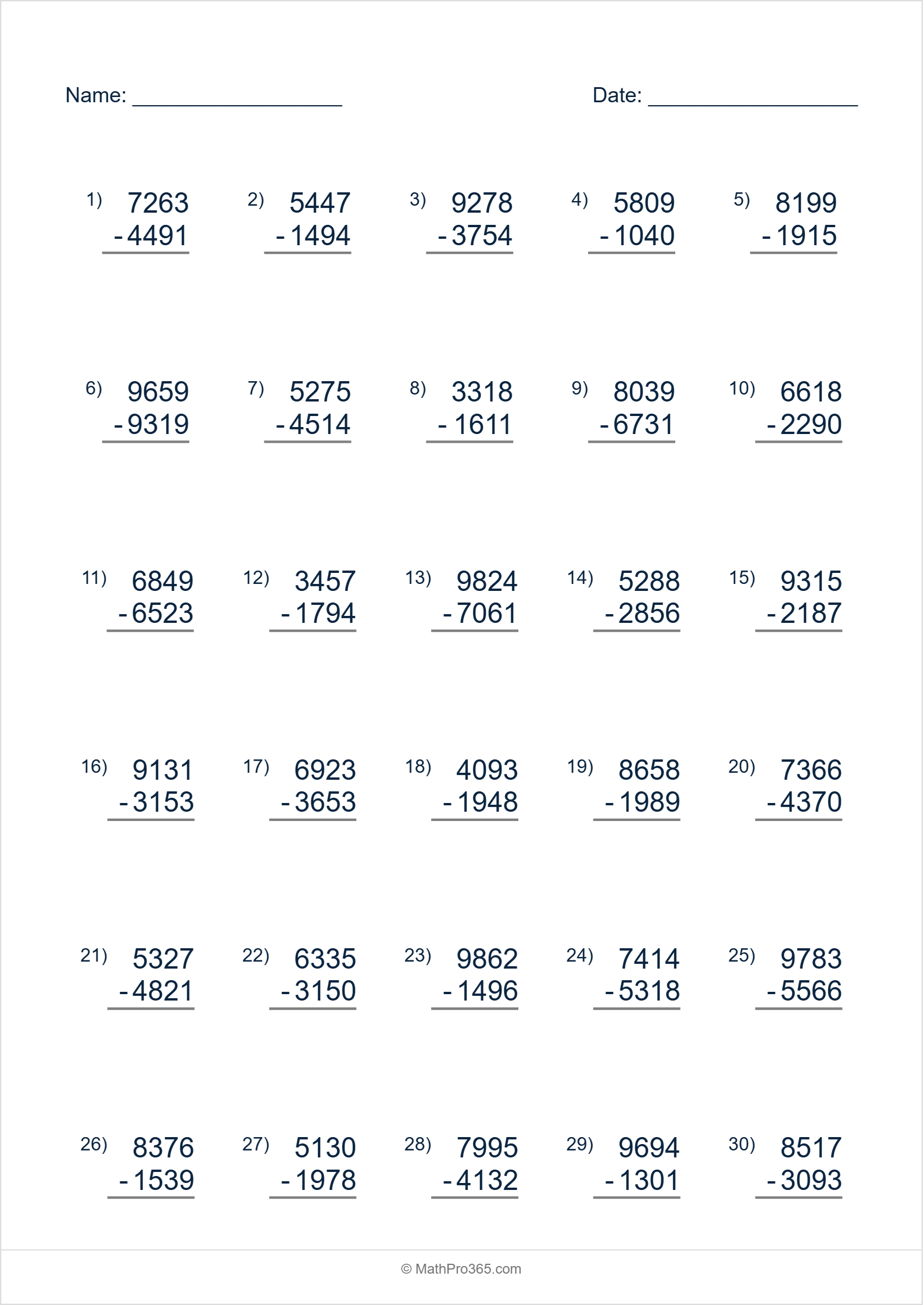
4 Digit Minus 4 Digit Subtraction Worksheet Grade 4 Free PDF
Interactive worksheets can be customized before downloading.