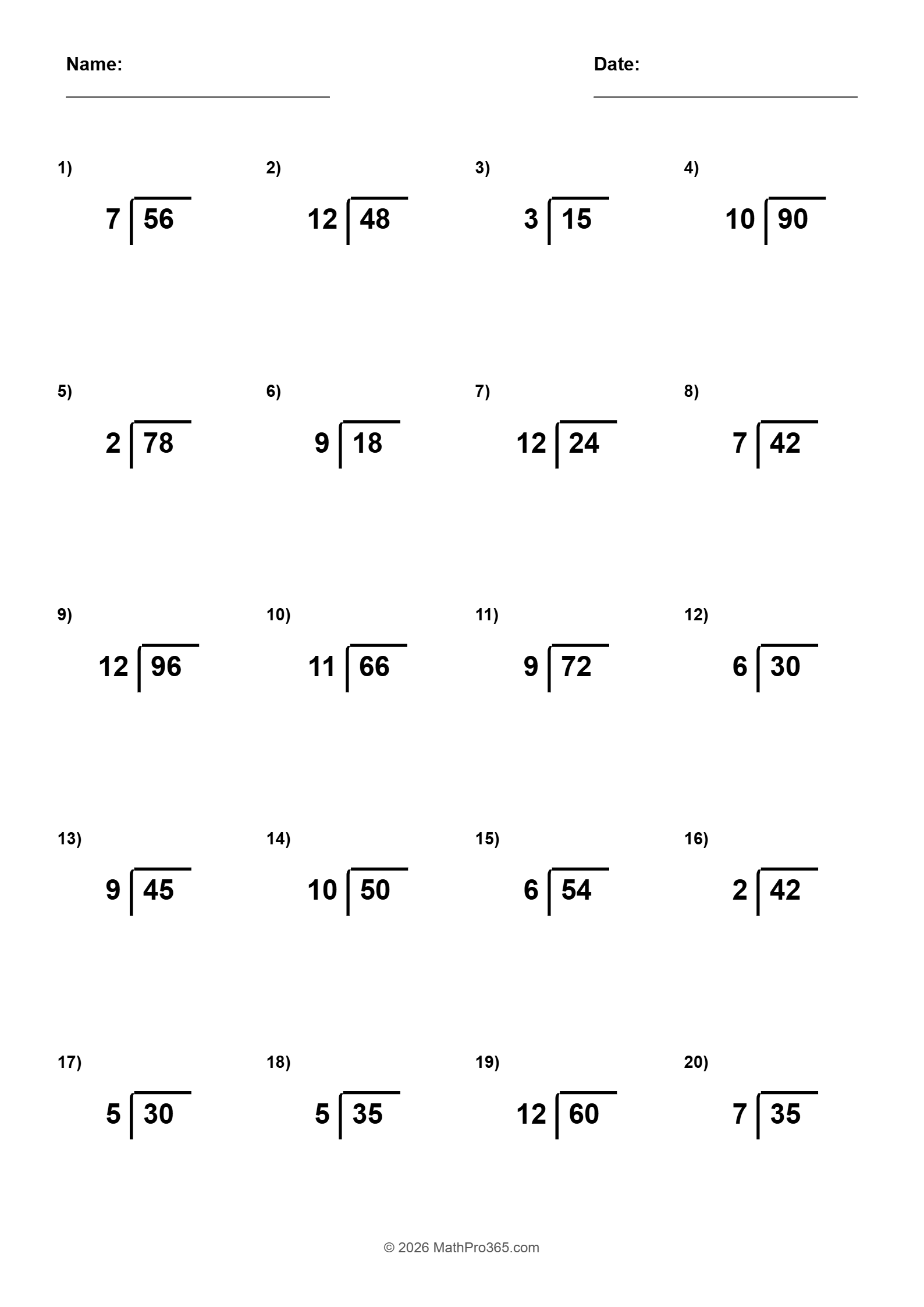
Basic Long Division Practice Worksheet | Grades 3-4
Updated: October 2026
Boost division fluency with this 20-problem long division worksheet. Perfect for 3rd and 4th-grade students mastering single and double-digit divisors.
More Division Worksheets (Grade 3) →ABOUT THE WORKSHEET
Mastering long division is a pivotal milestone in elementary mathematics. This basic long division practice worksheet is specifically designed to help students bridge the gap between simple mental division and more complex multi-step problems. By providing 20 diverse problems, students get the repetitive practice needed to build muscle memory for the division algorithm.
The worksheet features a mix of single-digit divisors (like 2, 3, 5, 7, 9) and common double-digit divisors (like 10, 11, 12). This variety ensures that learners are comfortable working with different number scales while reinforcing their multiplication table knowledge, which is the foundation of successful division.
QUICK DETAILS
- Grade Level: 3rd - 4th Grade
- Math Topic: Basic Long Division (Single & Double Digit Divisors)
- Question Count: 20 Problems
- Format: Printable PDF
STEP-BY-STEP SOLVED EXAMPLES
Understanding the process is key to accuracy. Here are three examples from the worksheet solved step-by-step.
Example 1: 56 ÷ 7
1. Ask how many times 7 goes into 56.
2. Since 7 × 8 = 56, the answer is exactly 8.
3. Place the 8 above the 6 in the dividend. There is no remainder.
Example 2: 78 ÷ 2
1. Divide the first digit: 2 goes into 7 three times (2 × 3 = 6).
2. Subtract 6 from 7 to get 1, then bring down the 8 to make 18.
3. Divide 18 by 2: 2 goes into 18 nine times (2 × 9 = 18).
4. The final quotient is 39.
Example 3: 60 ÷ 12
1. 12 is a two-digit divisor. Look at 60 as a whole.
2. Recall multiplication facts for 12: 12 × 5 = 60.
3. Place the 5 above the 0 in the dividend. The answer is 5.
TEACHER & PARENT TIPS
To help students struggle less, use the famous mnemonic "Does McDonald's Sell Burgers?" which stands for Divide, Multiply, Subtract, and Bring down. Encourage students to check their work by multiplying the quotient by the divisor; if they get the dividend, their answer is correct. For students who struggle with alignment, suggesting they use grid paper can help keep their columns straight and reduce calculation errors.
Worksheet Preview
Today's Challenge
Frequently Asked Questions
Who is this worksheet for?
This worksheet is designed for Grade 3 students practicing division skills.
Can I print this worksheet?
Yes. The worksheet is available as a printable PDF download.
Can teachers use this worksheet in class?
Yes. Teachers, homeschool users and parents can use it for classroom practice and homework.
Related Worksheets
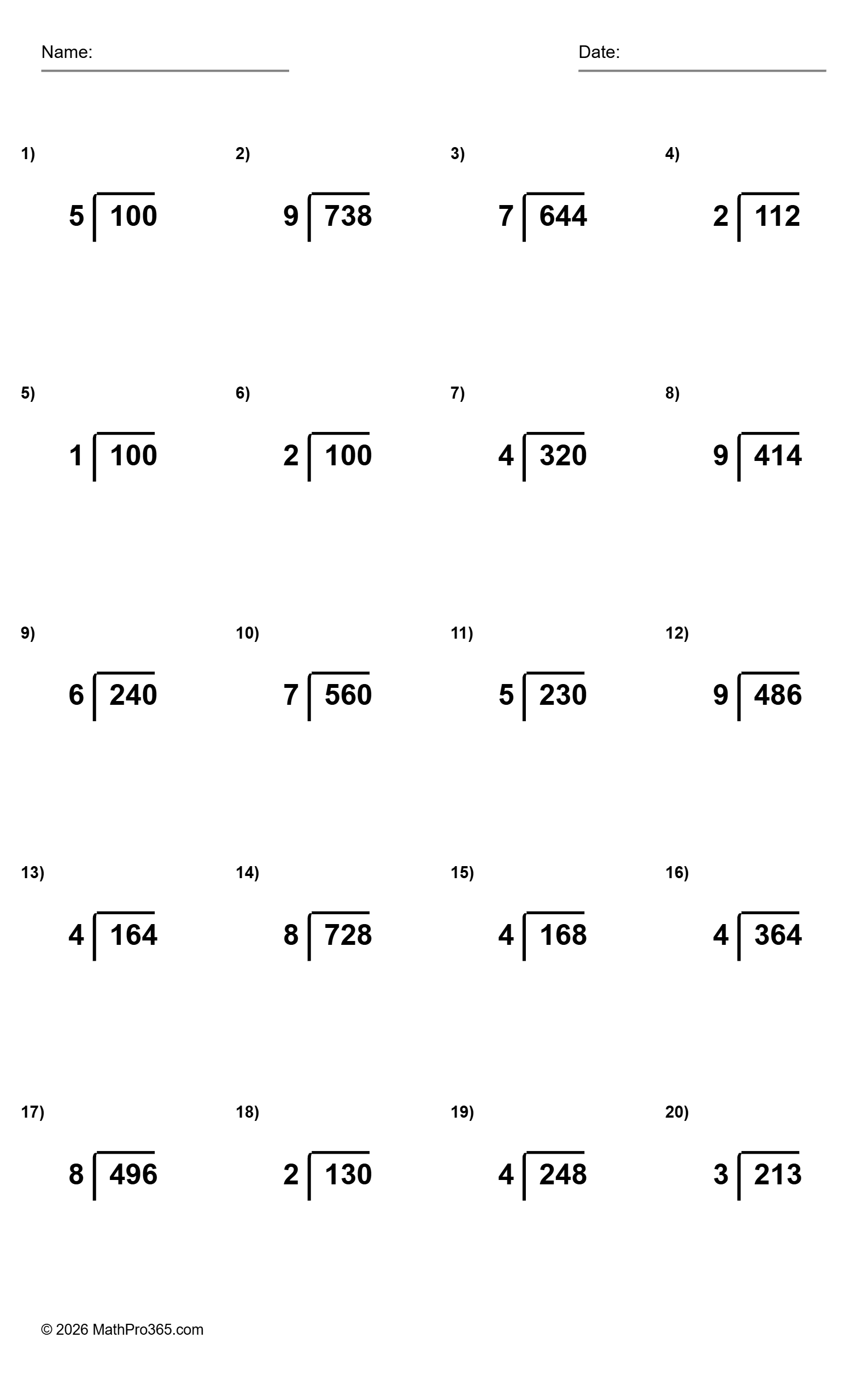
3 Digit Divided By 1 Digit Division Worksheet Grade 3 Free PDF
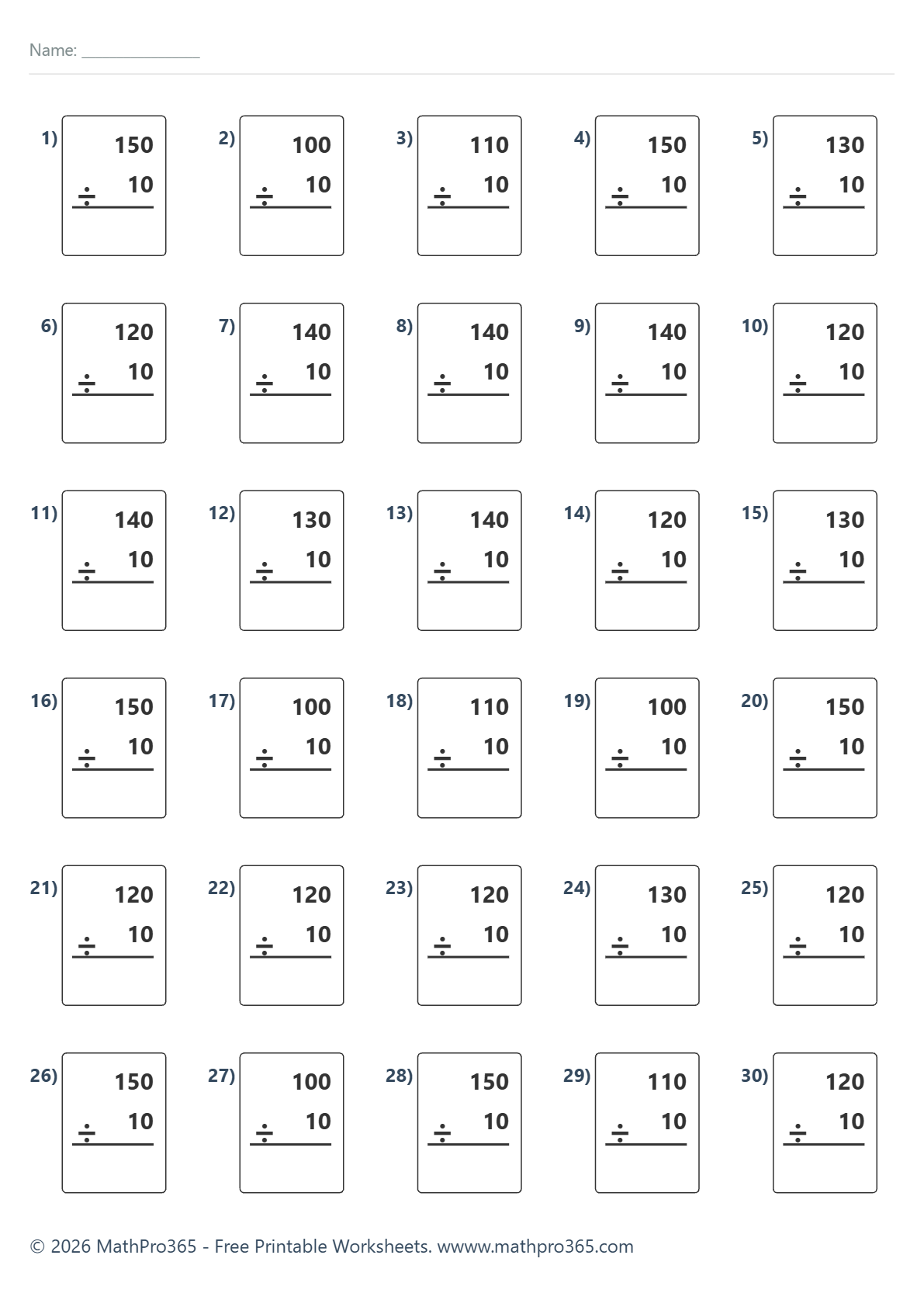
Division by 10 Three-Digit Numbers Worksheet Grade 3 Free PDF
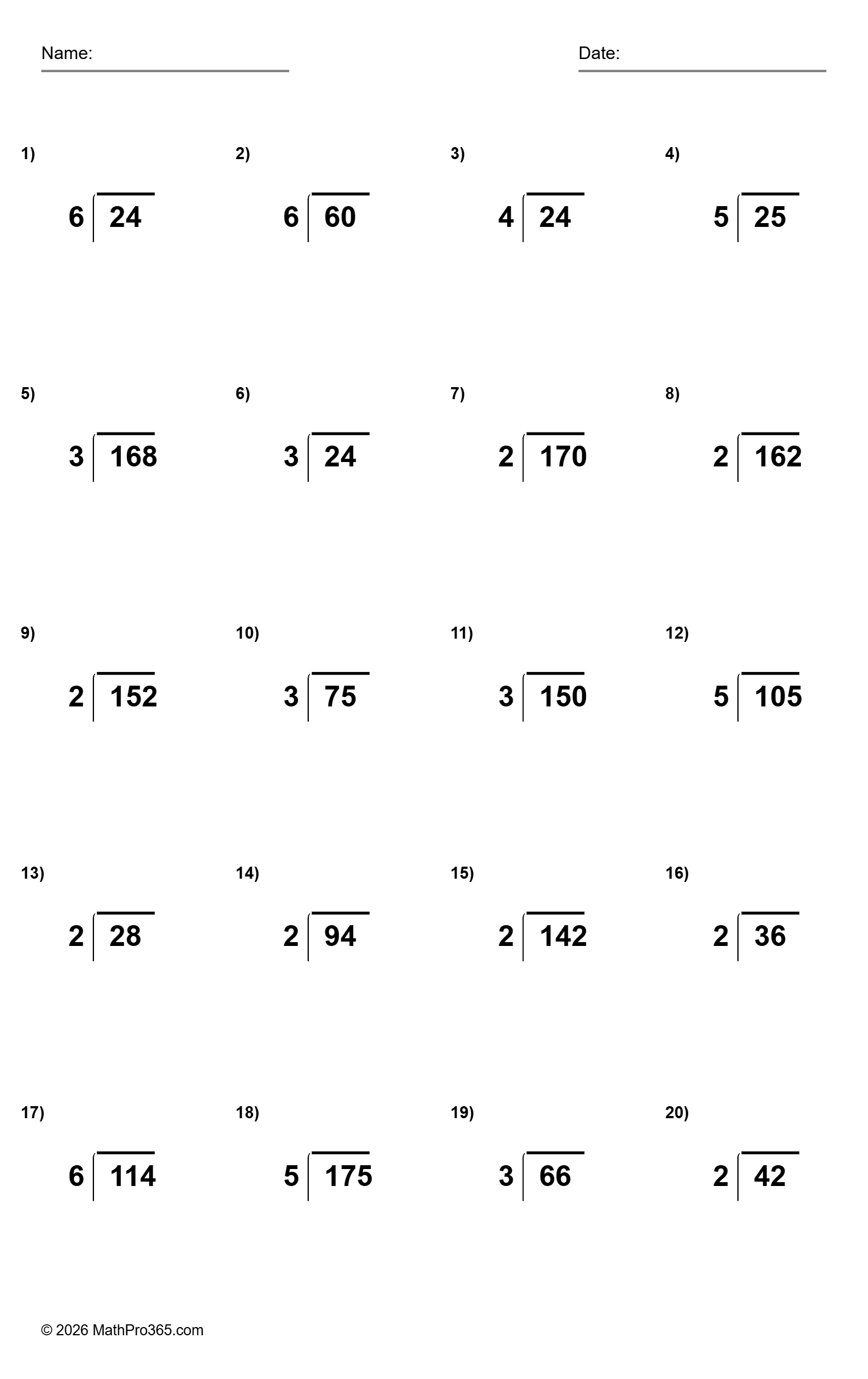
Free Grade 3 Division Worksheets with No Remainders (2 to 6 Divisors)
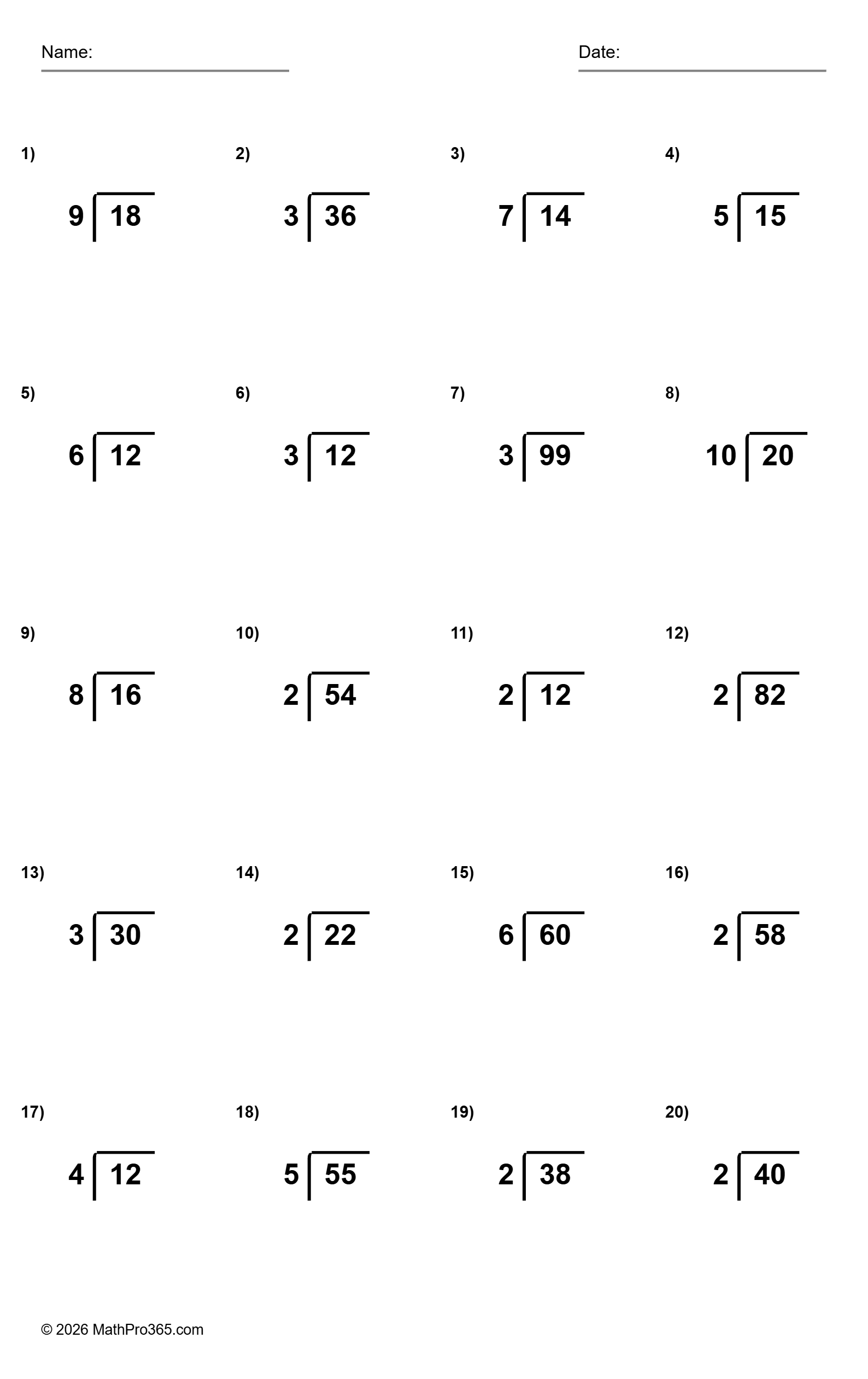
Basic Division Facts Up to 100 Worksheet Grade 3 Free PDF
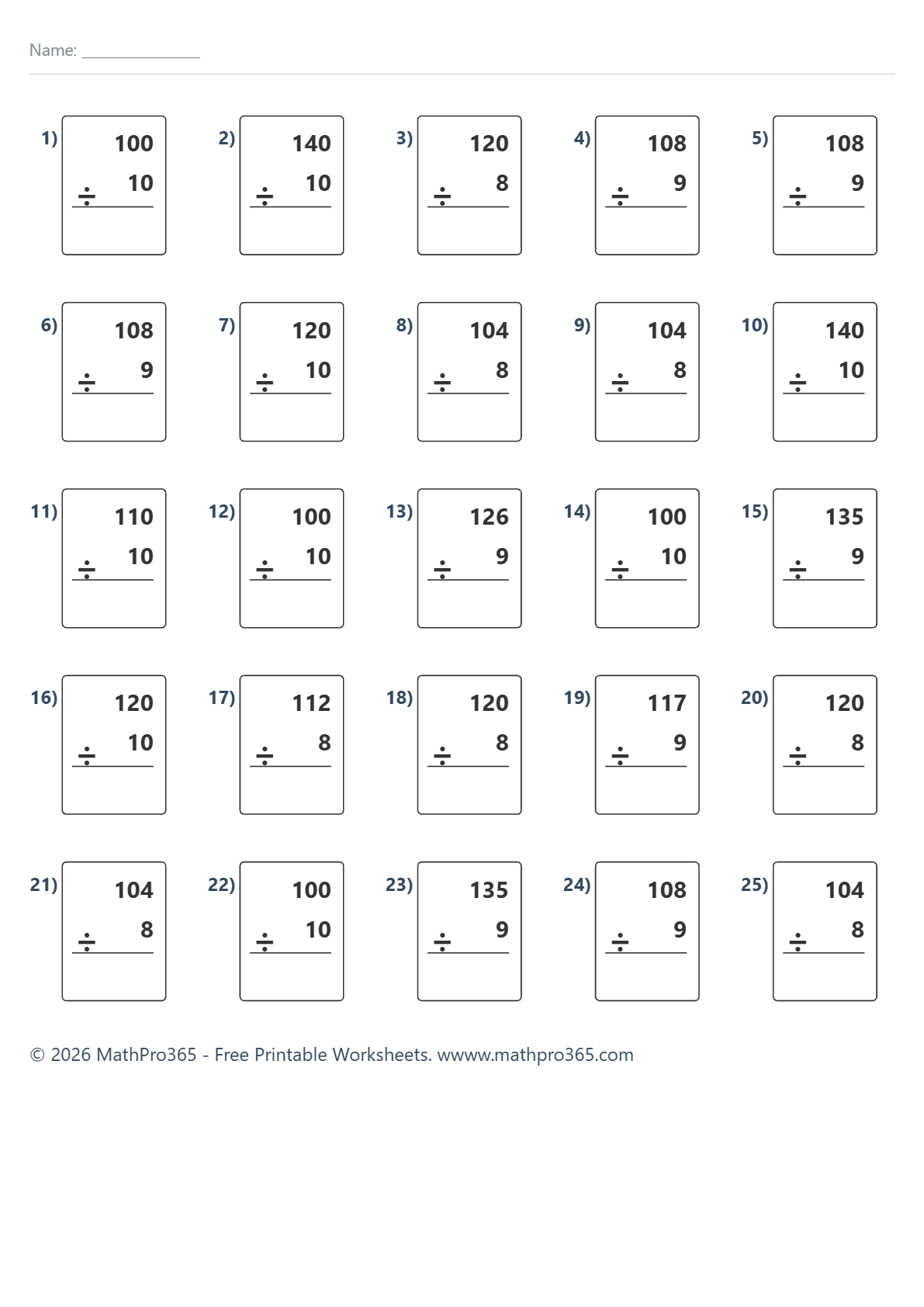
3-Digit Division with Divisors 8 9 and 10 Grade 3 Free PDF
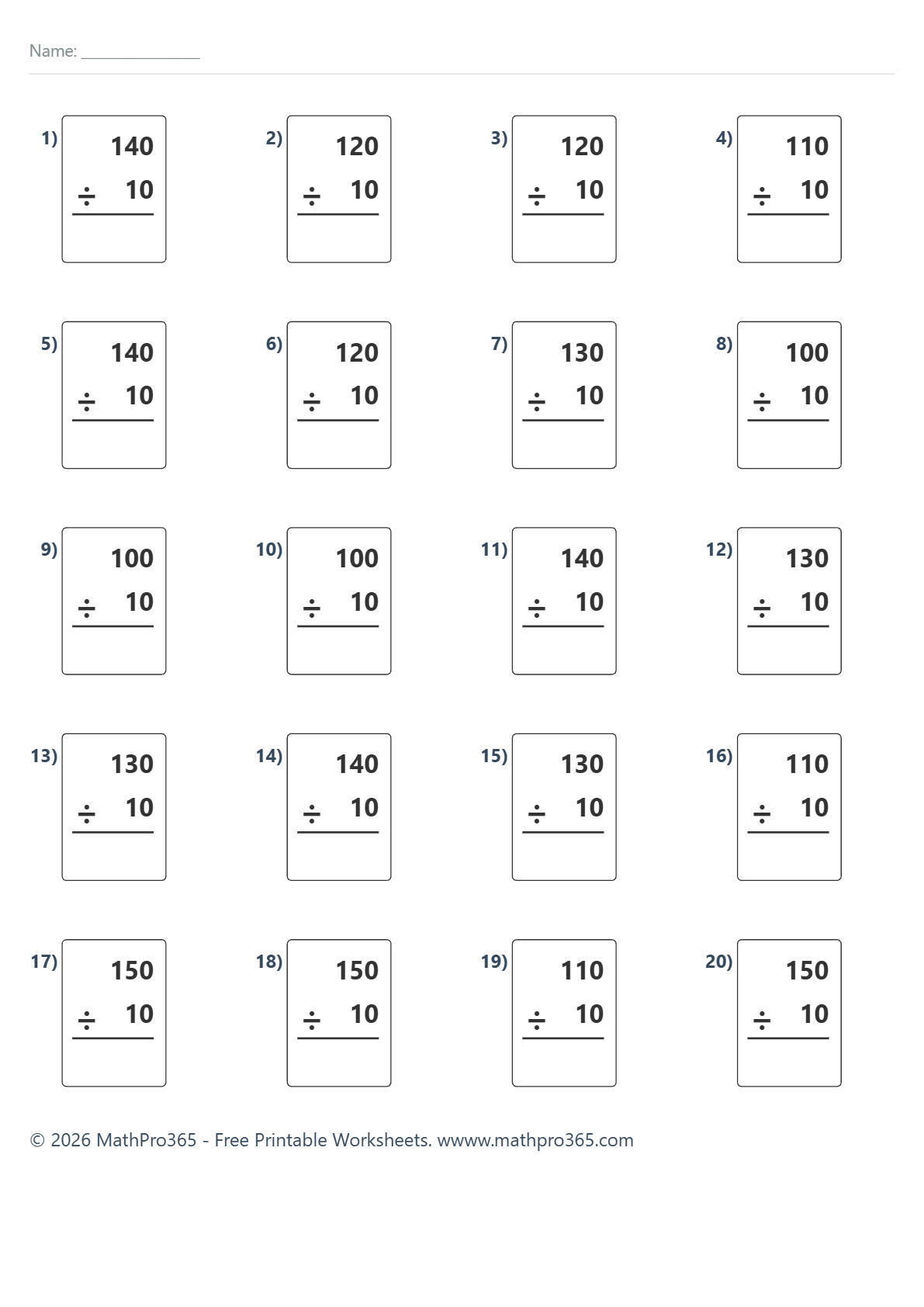
Grade 3 Division by 10 Worksheet (Three Digit Numbers) – Free Printable PDF
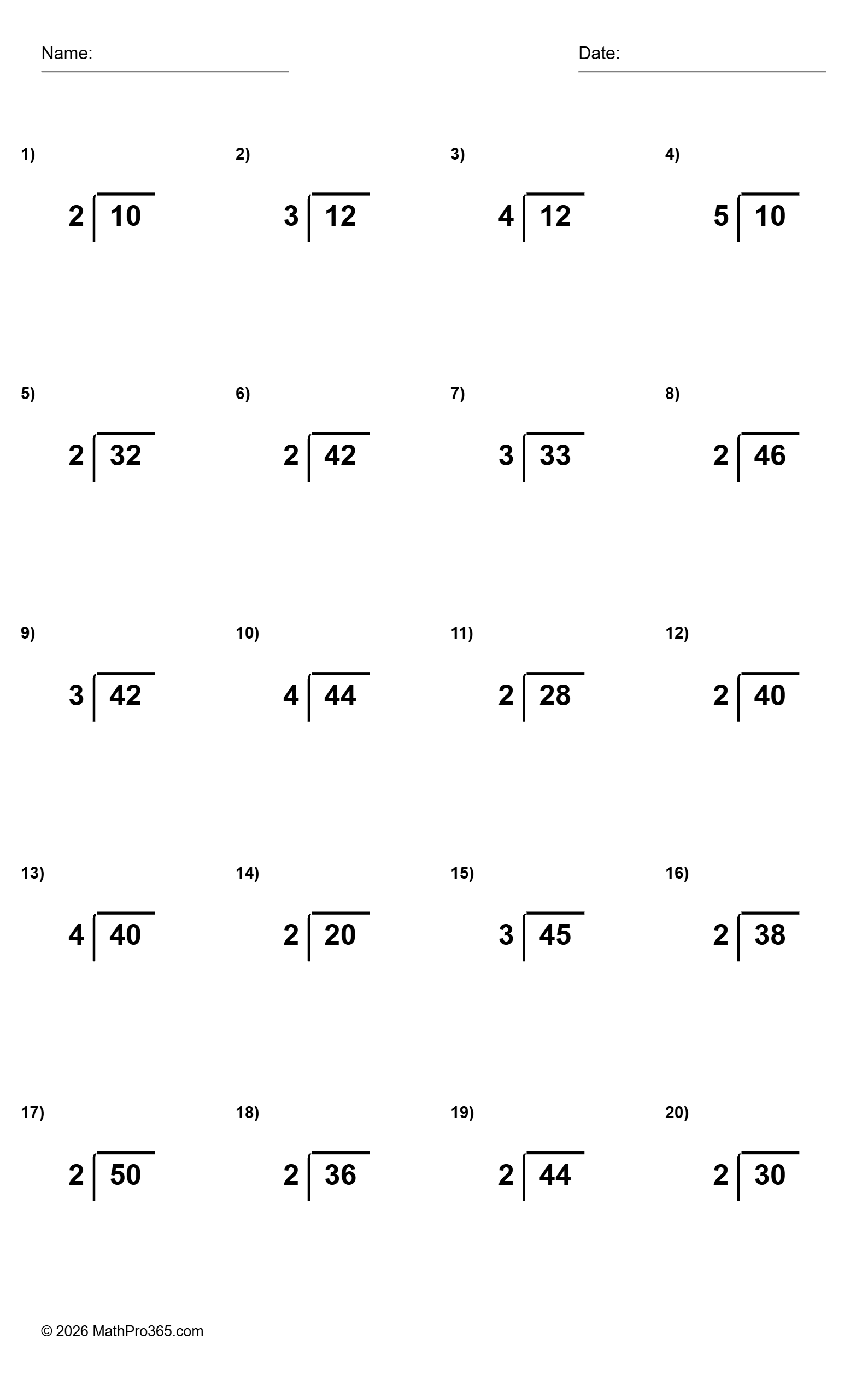
Basic Division Facts Worksheet Grade 3 Free PDF
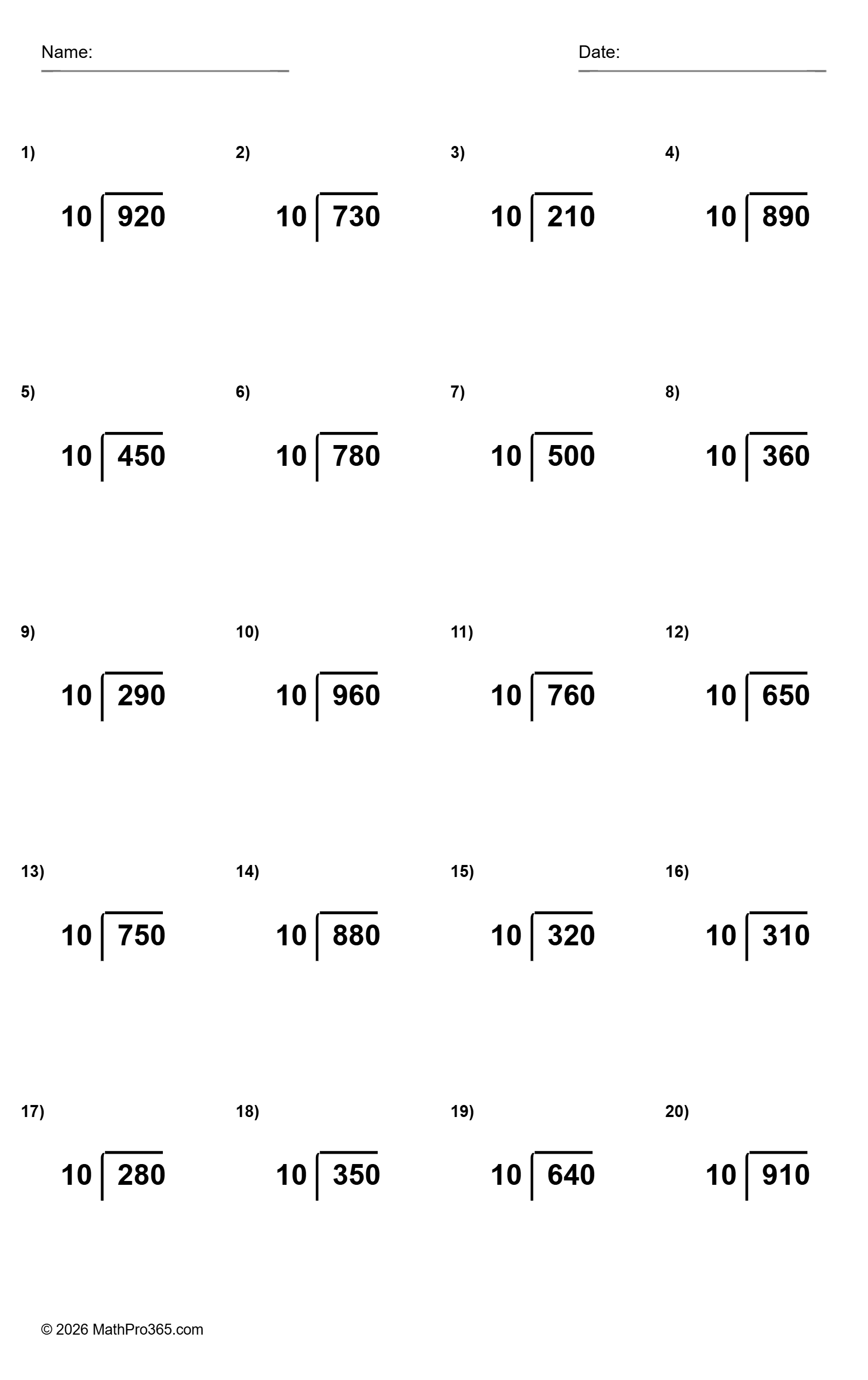
Grade 3 Division by 10 Long Division Worksheet
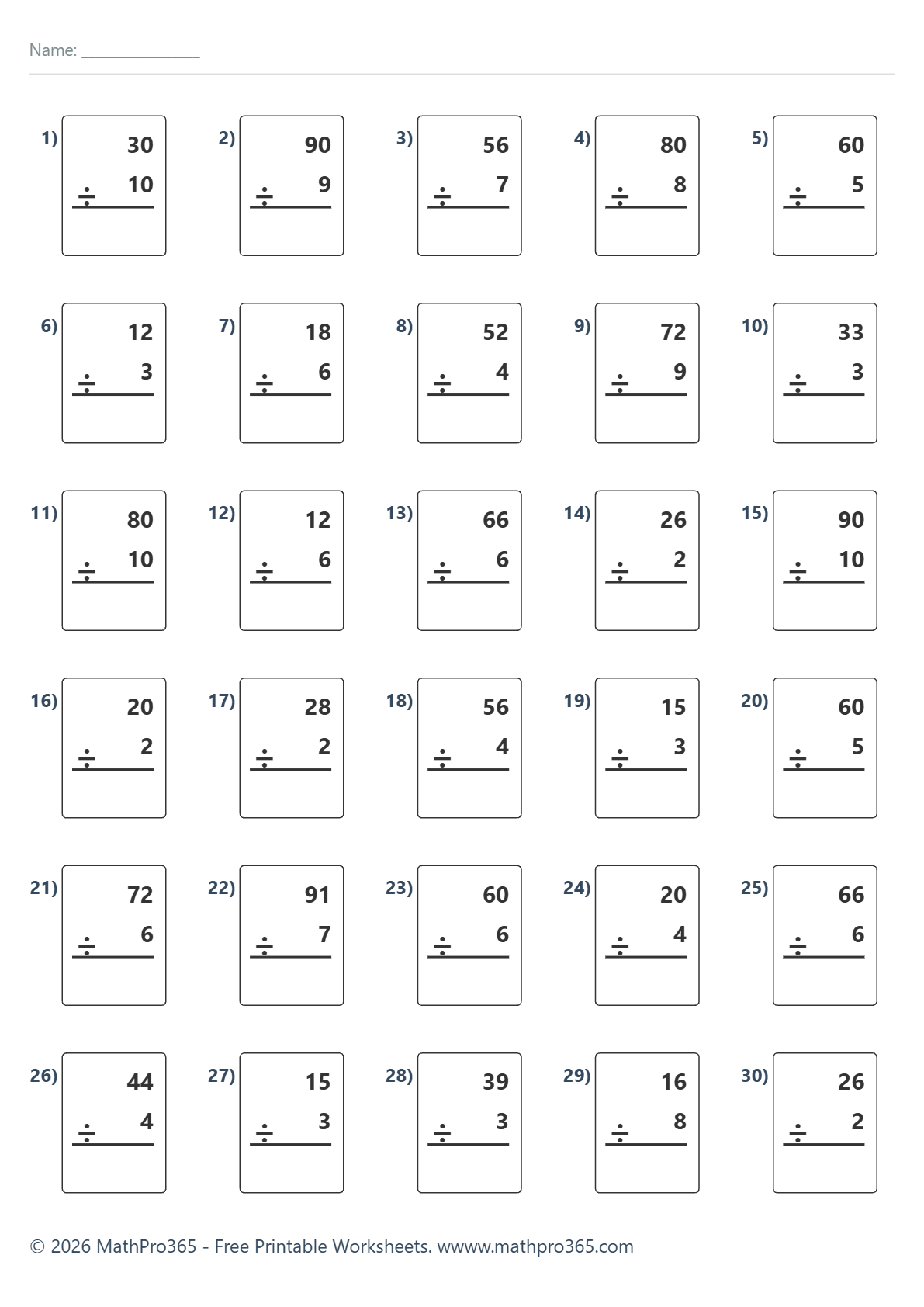
2 Digit by 1 Digit Division Worksheet Grade 3 Free PDF
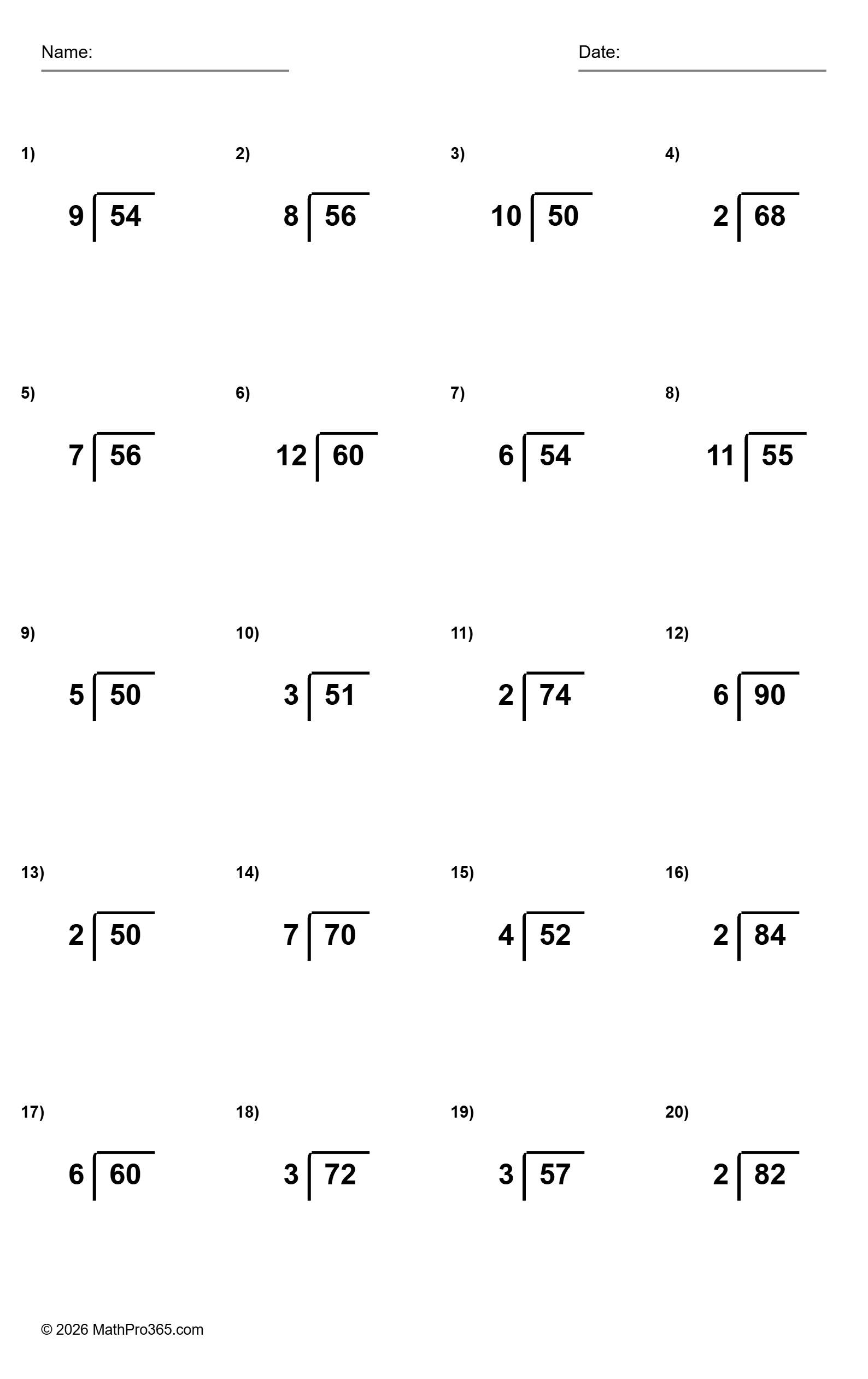
Division Without Remainder 2-Digit Dividends Worksheet Grade 3 Free PDF
Interactive worksheets can be customized before downloading.