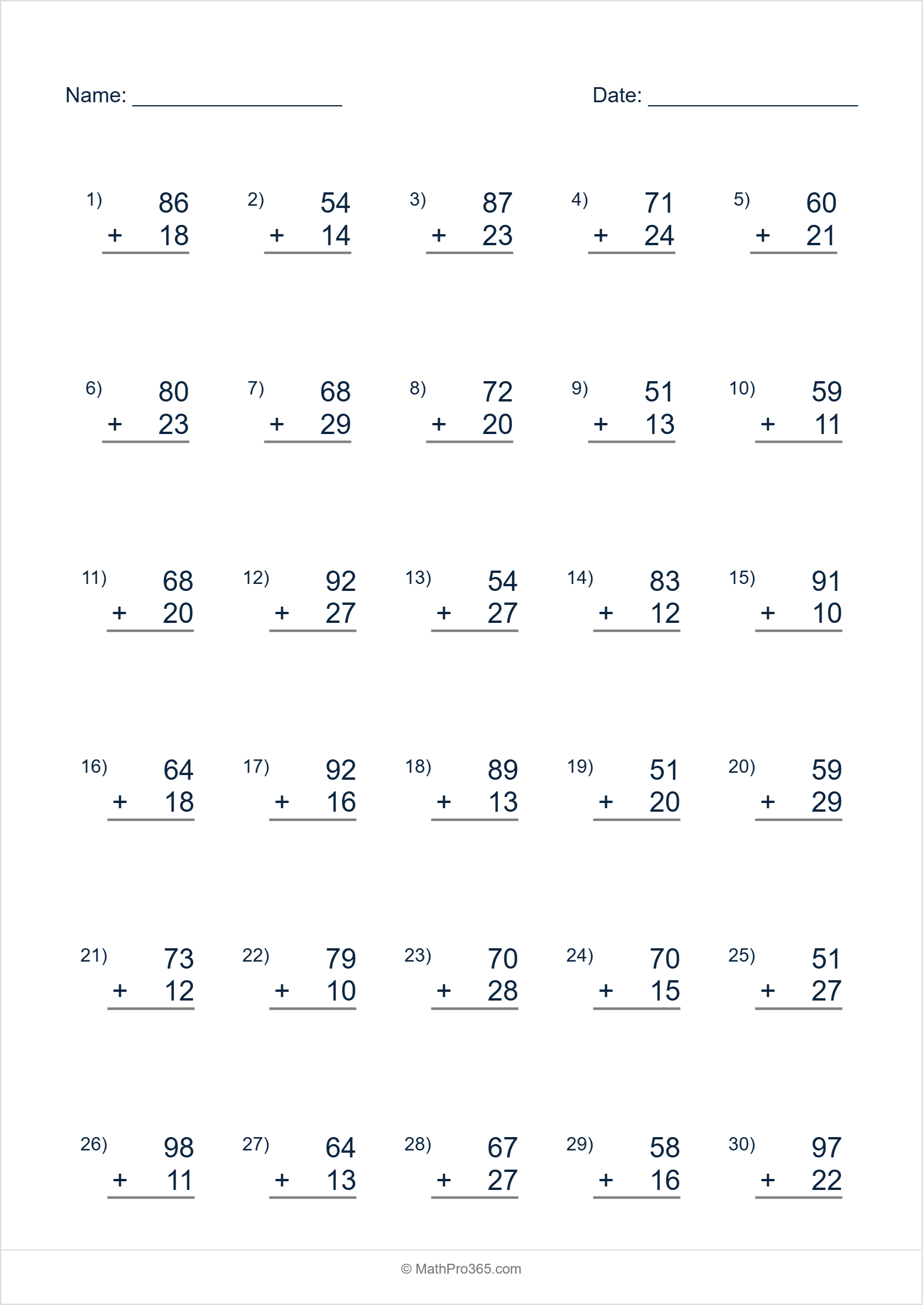
2 Digit (50-99) Plus 2 Digit (10-30) Addition Worksheet Grade 2 Sheet 6 Free PDF
Updated: October 2026
Printable activities like this printable worksheet make learning place value understanding more enjoyable for elementary students.
More Addition Worksheets (Grade 2) →2 Digit (50-99) Plus 2 Digit (10-30) Addition Worksheet Grade 2 Sheet 6 Free PDF
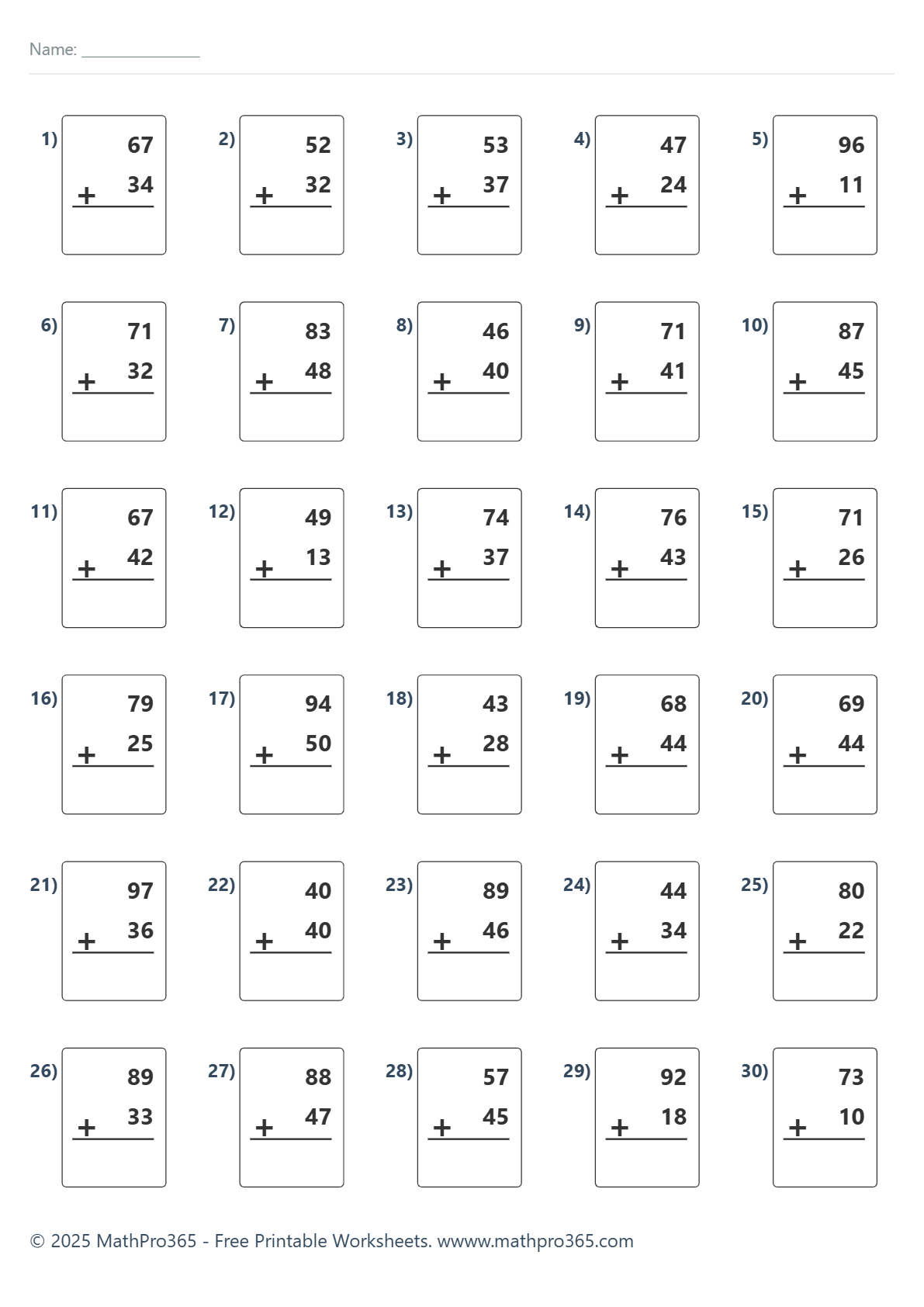
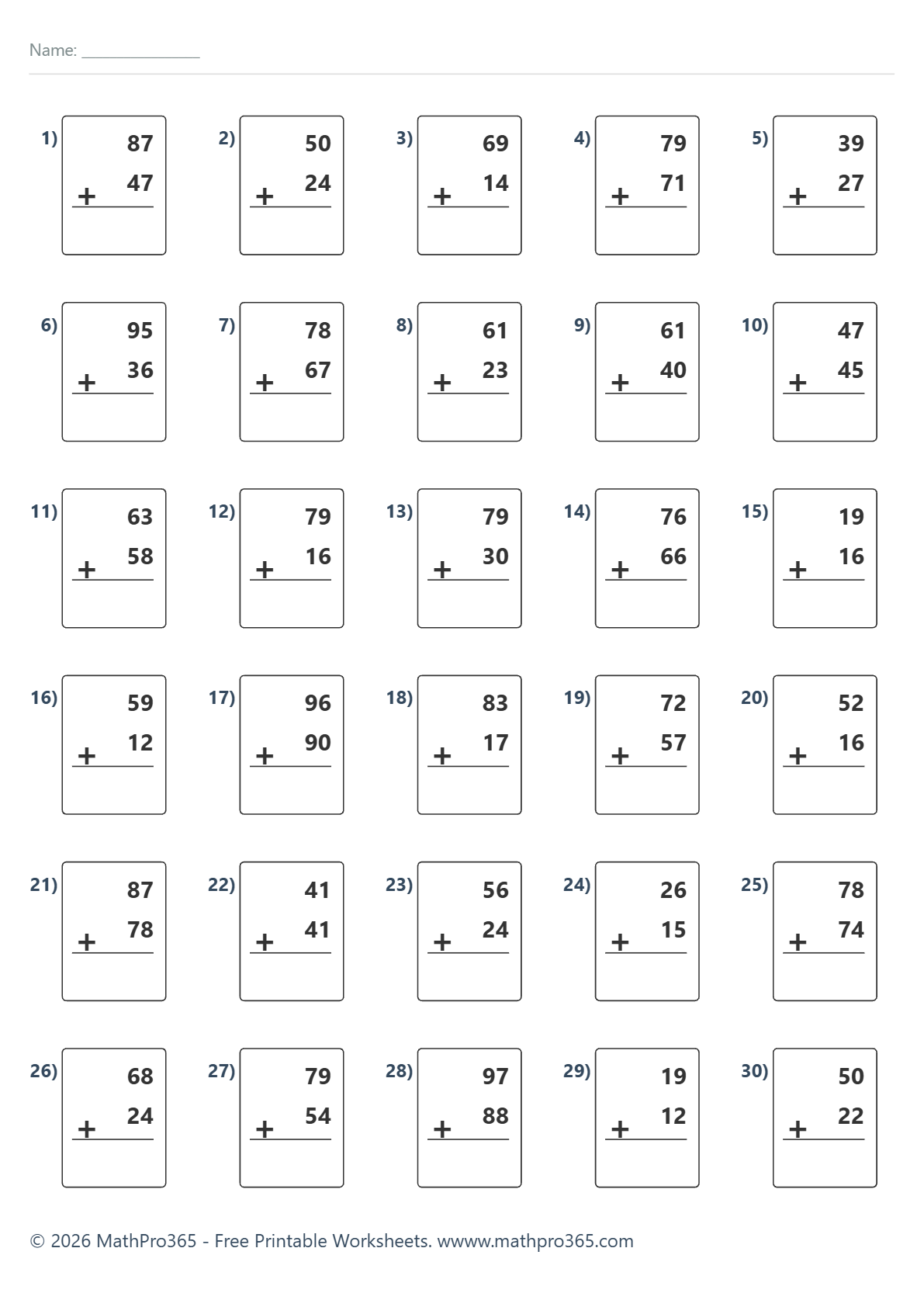
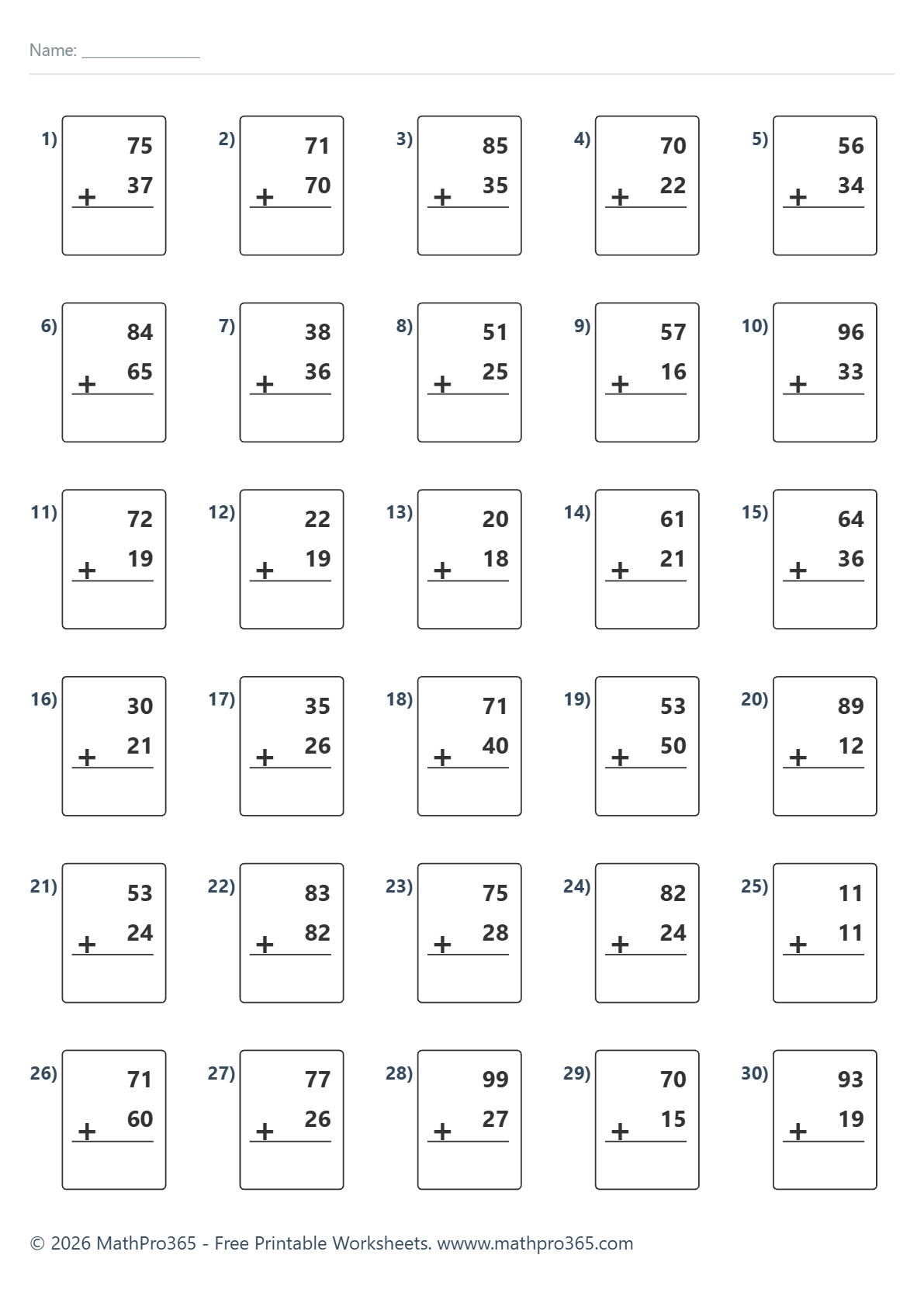
Building confidence with two-digit addition is an important milestone during Grade 2. As children become more comfortable working with numbers between 50 and 99, they also strengthen their understanding of place value, number relationships, and efficient calculation strategies. This printable worksheet offers a collection of carefully selected addition problems that encourage thoughtful practice while keeping the numbers appropriate for developing learners. The page contains 30 addition questions featuring a first number from 50–99 and a second number from 10–30, providing a balanced mix of straightforward sums and regrouping opportunities. :contentReference[oaicite:0]{index=0}
Why This Type of Practice Matters
Adding two-digit numbers is much more than finding the correct answer. Every problem encourages children to recognize the value of tens and ones, organize numbers correctly, and notice patterns in addition. These skills become the foundation for larger calculations later in elementary school.
The worksheet includes examples that sometimes require regrouping and sometimes do not. This variety keeps children thinking instead of relying on memorization. As they complete each problem, they gradually develop number sense and become more comfortable solving similar questions independently.
Regular practice also improves accuracy, confidence, and speed without sacrificing understanding. Short practice sessions several times a week are often more effective than one long session.
Using Place Value to Solve Problems
One of the strongest strategies for Grade 2 learners is separating each number into tens and ones.
For example:
- 71 + 24
Think of 71 as 70 + 1 and 24 as 20 + 4. Add the tens first: 70 + 20 = 90. Then add the ones: 1 + 4 = 5. Finally, combine them to make 95. - 60 + 21
Add the tens (60 + 20 = 80), then add the remaining 1 to get 81. - 83 + 12
Separate into tens and ones. Eight tens plus one ten equals nine tens, while three ones plus two ones equals five ones. The total is 95.
When children consistently think in tens and ones, they build flexible mathematical thinking that supports more advanced topics in later grades.
Understanding Regrouping
Some problems on this worksheet require regrouping, also called carrying. This happens when the ones column adds up to 10 or more.
Consider the example 68 + 29.
Start by adding the ones: 8 + 9 = 17 ones. Write down the 7 ones and regroup 1 ten. Next, add the tens: 6 tens + 2 tens + 1 regrouped ten = 9 tens. The answer is 97.
Another example is 87 + 23. The ones column equals 10, so regroup the extra ten before adding the tens column. The final answer becomes 110.
Encouraging children to explain why they regroup helps deepen understanding rather than simply following steps.
Helpful Mental Math Strategies
Although many children solve these problems using vertical addition, mental strategies are valuable as well.
- Count on by tens first, then add the ones.
- Look for friendly numbers that are easy to combine.
- Estimate before solving to check if the final answer is reasonable.
- Notice when adding 10, 20, or 30 mostly changes the tens digit.
For instance, with 79 + 10, only the tens place changes, giving an answer of 89. For 92 + 16, think of adding 10 first to make 102, then add the remaining 6 to reach 108.
Ideas for Teachers, Tutors, and Homeschool Families
This worksheet works well in many learning environments because it provides enough questions for meaningful practice without overwhelming children.
- Assign the entire page for independent practice after a lesson.
- Use only one or two rows for a quick warm-up activity.
- Have children circle every problem that requires regrouping.
- Encourage partners to compare methods after solving.
- Ask learners to estimate each answer before calculating exactly.
After the worksheet is complete, reviewing mistakes together often reveals valuable learning opportunities. Instead of simply correcting an answer, ask questions such as, "Did the ones add to more than 9?" or "Did you remember the regrouped ten?"
Encouraging Mathematical Confidence
Children become more successful in mathematics when they understand that mistakes are part of learning. If a learner struggles with regrouping, encourage them to use base-ten blocks, drawings, or expanded form before moving to the standard algorithm.
Celebrating small improvements can make a big difference. Finishing more problems accurately than last week, remembering to line up place values correctly, or solving a regrouping question independently are all signs of meaningful progress.
Consistent practice with numbers in the 50–99 and 10–30 ranges prepares learners for larger addition problems while reinforcing the essential concepts of place value and number relationships.
Frequently Asked Questions
1. Is this worksheet appropriate for all Grade 2 learners?
Yes. The problems are designed for Grade 2 students who are practicing two-digit addition. Since the worksheet contains both regrouping and non-regrouping questions, it supports children at different stages of mastery. More confident learners can complete the page independently, while others may benefit from guided practice.
2. How long should completing the worksheet take?
Most children finish the 30 questions in about 15 to 25 minutes, depending on their familiarity with two-digit addition. Some educators prefer dividing the page into smaller sections over several practice sessions to maintain focus and accuracy.
3. What should I do if regrouping is still confusing?
Return to place value models before expecting children to solve every problem using the standard written method. Base-ten blocks, bundled sticks, and simple drawings help learners visualize why ten ones become one ten during regrouping.
4. How can I make practice more engaging?
Try setting a personal accuracy goal instead of focusing only on speed. Children can also explain one completed problem aloud, create a similar addition problem for a partner, or color every answer greater than 100 after checking their work. These activities reinforce understanding while keeping practice enjoyable.
Download and Print
Print this Grade 2 two-digit addition worksheet for classroom lessons, homework, math centers, tutoring sessions, or homeschool instruction. The carefully selected problems featuring numbers from 50–99 added to numbers from 10–30 provide balanced practice with place value, regrouping, and mental math strategies. Keep extra copies available so children can revisit the page for review, improve fluency, and build lasting confidence with two-digit addition skills.
Worksheet Preview
Today's Challenge
Frequently Asked Questions
Who is this worksheet for?
This worksheet is designed for Grade 2 students practicing addition skills.
Can I print this worksheet?
Yes. The worksheet is available as a printable PDF download.
Can teachers use this worksheet in class?
Yes. Teachers, homeschool users and parents can use it for classroom practice and homework.
Related Worksheets
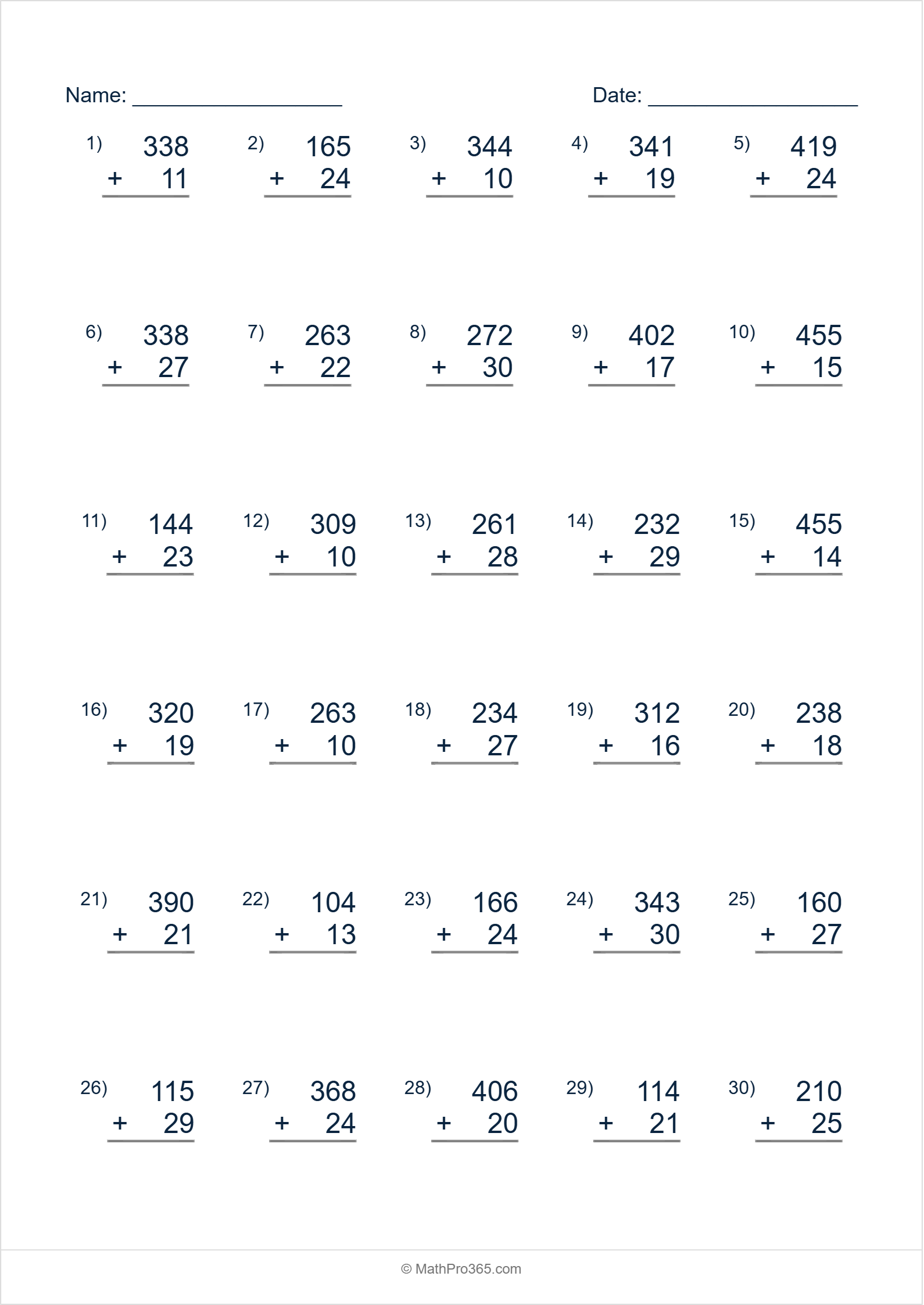
Grade 2 Math: 3-Digit Plus 2-Digit Addition Worksheet
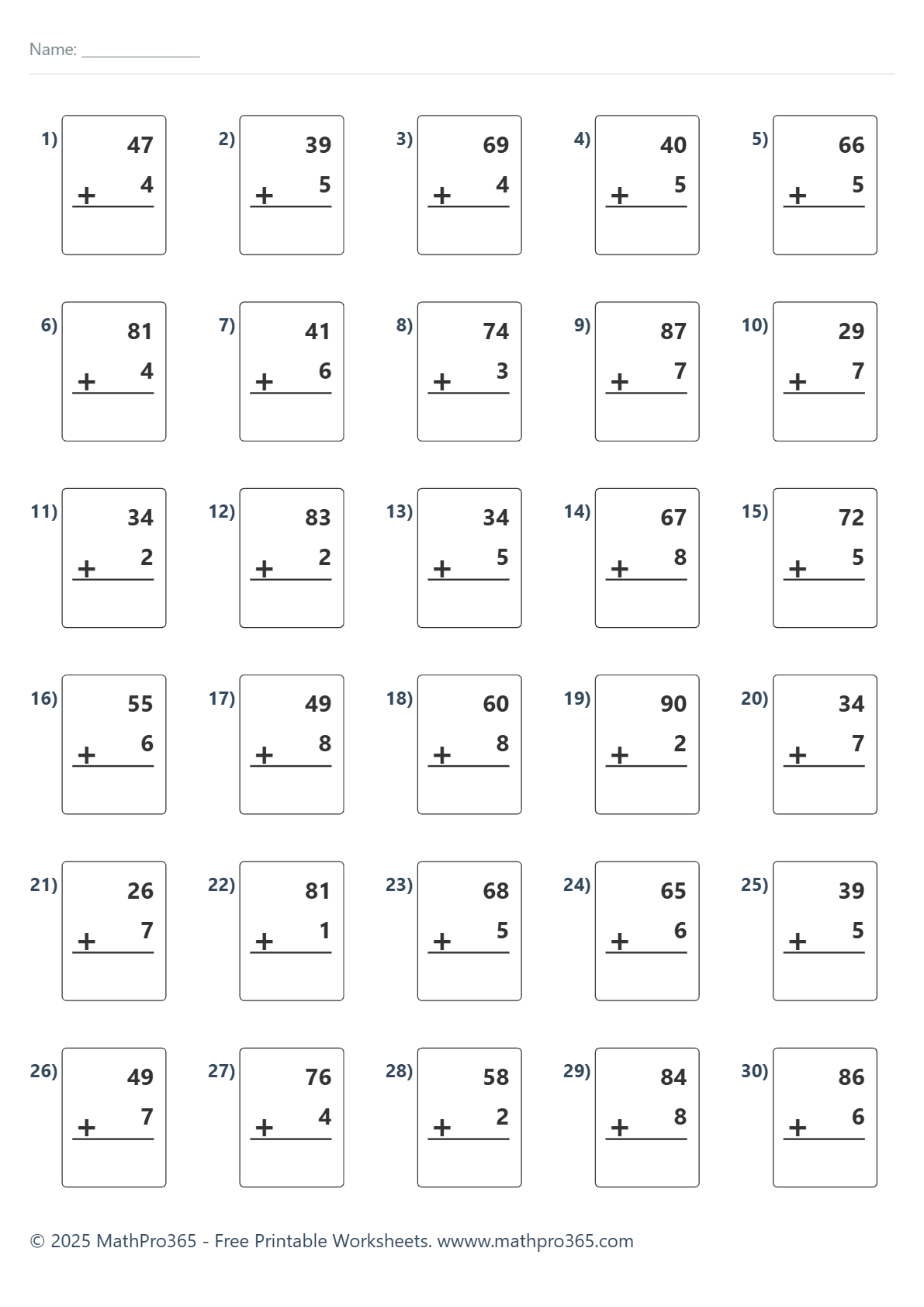
Addition Within 100 – 30 Practice Problems (Grade 2) – Free PDF
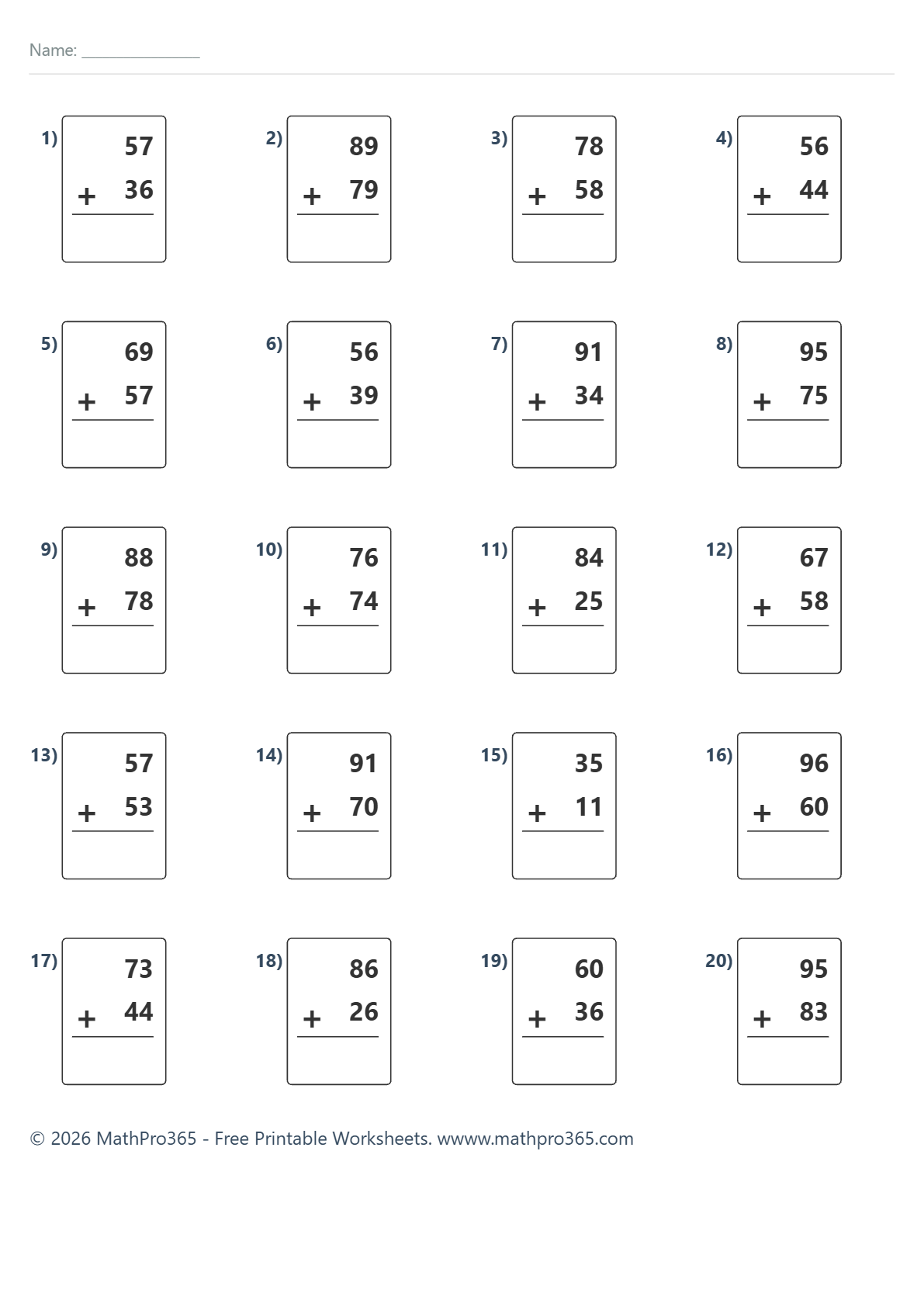
Two Digit Addition with Regrouping Grade 2 Free PDF
Subtraction Worksheets (Numbers 10-30) | 100 Problems
Grade 2 Addition: 3-Digit Plus 2-Digit Practice – Free PDF
Addition Within 100 — No Regrouping (30 Problems) – Free PDF
2-digit-subtraction-without-regrouping-grade-2
Advanced Addition Within 100 – 30 Practice Problems – Free PDF
2-Digit Addition with Regrouping Grade 2 Free PDF Worksheet
2 Digit Plus 2 Digit Addition Worksheet Grade 2 Free PDF
Interactive worksheets can be customized before downloading.